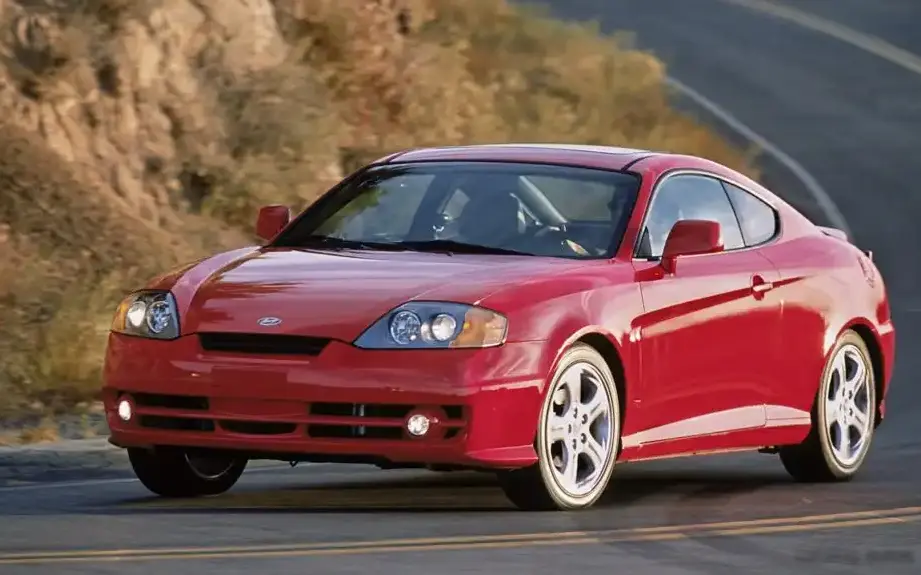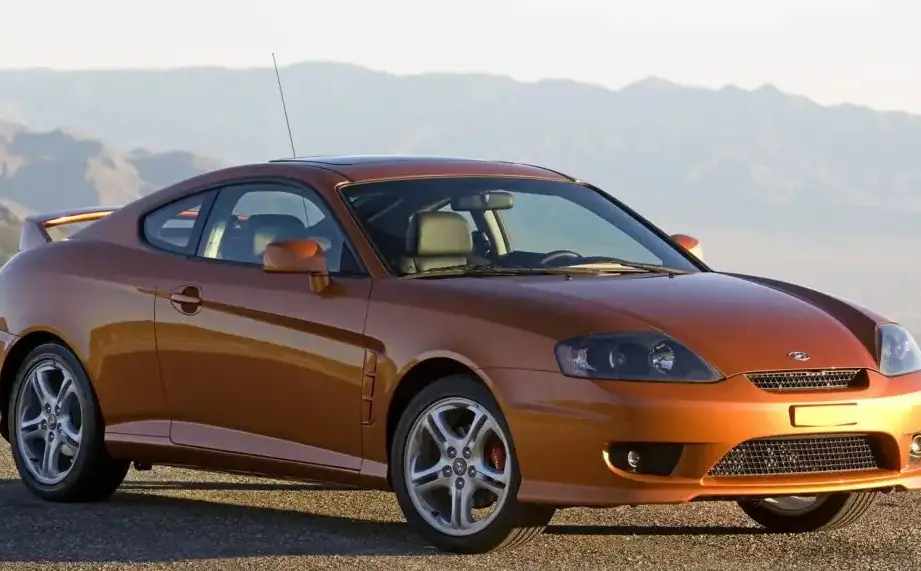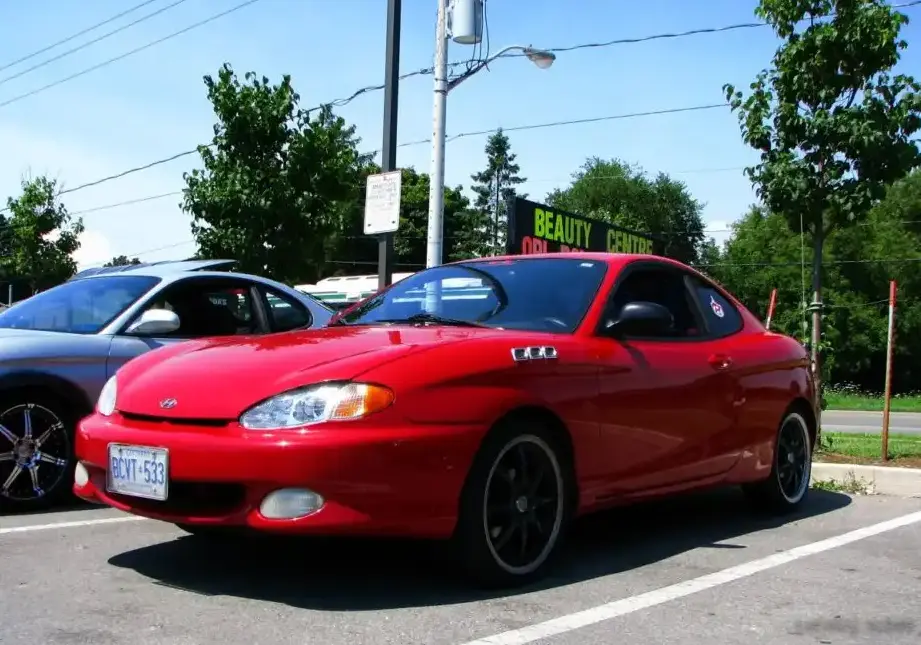
The 1999-2001 Hyundai Tiburon 2.0 i 16V represented a sweet spot in the RD generation’s lineup. Positioned above the base 1.6L model, it offered a noticeable performance increase without the premium price tag of the 2.7L V6. Built on Hyundai’s 1HX0 platform (shared with the Lantra/Avante), the Tiburon aimed to provide a stylish and affordable alternative to established Japanese and European sports coupes. The facelifted model, introduced in 1999, featured revised front and rear styling, along with minor interior updates, enhancing its visual appeal and modernizing the overall design.
Technical Specifications
| Brand | Hyundai |
| Model | Tiburon |
| Generation | Tiburon I (RD) |
| Type (Engine) | 2.0 i 16V (139 Hp) |
| Start of production | 1999 |
| End of production | 2001 |
| Powertrain Architecture | Internal Combustion engine |
| Body type | Coupe |
| Seats | 4 |
| Doors | 3 |
| Fuel consumption (urban) | 11.4 l/100 km (20.6 US mpg) |
| Fuel consumption (extra urban) | 7.3 l/100 km (32.2 US mpg) |
| Fuel Type | Petrol (Gasoline) |
| Acceleration 0 – 100 km/h | 8.6 sec |
| Acceleration 0 – 62 mph | 8.6 sec |
| Acceleration 0 – 60 mph | 8.2 sec |
| Maximum speed | 201 km/h (124.9 mph) |
| Weight-to-power ratio | 9 kg/Hp |
| Weight-to-torque ratio | 6.9 kg/Nm |
| Power | 139 Hp @ 6000 rpm |
| Torque | 182 Nm @ 4900 rpm (134.24 lb.-ft. @ 4900 rpm) |
| Engine layout | Front, Transverse |
| Engine Model/Code | Beta / G4GF |
| Engine displacement | 1975 cm3 (120.52 cu. in.) |
| Number of cylinders | 4 |
| Engine configuration | Inline |
| Cylinder Bore | 82 mm (3.23 in.) |
| Piston Stroke | 93.5 mm (3.68 in.) |
| Compression ratio | 10:1 |
| Number of valves per cylinder | 4 |
| Fuel injection system | Multi-port manifold injection |
| Engine aspiration | Naturally aspirated engine |
| Valvetrain | DOHC |
| Engine oil capacity | 4 l (4.23 US qt | 3.52 UK qt) |
| Coolant capacity | 6 l (6.34 US qt | 5.28 UK qt) |
| Kerb Weight | 1250 kg (2755.78 lbs.) |
| Max. weight | 1600 kg (3527.4 lbs.) |
| Max load | 350 kg (771.62 lbs.) |
| Trunk (boot) space – maximum | 362 l (12.78 cu. ft.) |
| Fuel tank capacity | 55 l (14.53 US gal | 12.1 UK gal) |
| Length | 4345 mm (171.06 in.) |
| Width | 1730 mm (68.11 in.) |
| Height | 1310 mm (51.57 in.) |
| Wheelbase | 2475 mm (97.44 in.) |
| Front track | 1465 mm (57.68 in.) |
| Rear (Back) track | 1450 mm (57.09 in.) |
| Drivetrain Architecture | Front wheel drive |
| Number of gears | 5 |
| Gearbox type | Manual transmission |
| Front suspension | Spring Strut |
| Rear suspension | Coil spring |
| Front brakes | Ventilated discs |
| Rear brakes | Disc |
| Assisting systems | ABS (Anti-lock braking system) |
| Steering type | Steering rack and pinion |
| Power steering | Hydraulic Steering |
| Tires size | 205/50 R15 |
Powertrain & Engine Architecture
At the heart of the Tiburon 2.0 i 16V lies the Hyundai Beta engine, specifically the G4GF code. This 1.975-liter inline-four cylinder engine utilizes a multi-port fuel injection system and a double overhead camshaft (DOHC) valvetrain. The 16 valves (four per cylinder) contribute to its respectable power output. The engine’s design prioritized reliability and ease of maintenance. The G4GF engine is known for its relatively simple construction, making it accessible for DIY repairs. The five-speed manual transmission was the standard offering, providing drivers with direct control over the engine’s power. The transmission’s gear ratios were tuned for a balance between acceleration and fuel efficiency, though it wasn’t particularly sporty compared to some contemporary rivals.
Driving Characteristics
The 2.0-liter Tiburon offered a reasonably engaging driving experience, particularly for its price point. While not a high-performance machine, the 139 horsepower engine provided adequate acceleration for everyday driving and even some spirited maneuvers. The 0-60 mph time of around 8.2 seconds was competitive within its class. The manual transmission allowed for precise gear changes, and the engine responded well to being revved. Compared to the base 1.6L model, the 2.0L offered a significant improvement in both acceleration and overall responsiveness. However, it lacked the outright power and torque of the 2.7L V6, which delivered a more visceral and exhilarating driving experience. The suspension, while comfortable for daily commuting, wasn’t particularly firm, resulting in some body roll during cornering.
Equipment & Trim Levels
The 1999-2001 Tiburon 2.0 i 16V typically came standard with features such as power windows, power locks, and air conditioning. The interior featured cloth upholstery and a relatively basic dashboard layout. Optional extras included a sunroof, upgraded audio system, and alloy wheels. The trim level varied slightly depending on the market, but generally, the 2.0L model offered a step up in interior appointments compared to the base model. The focus was on providing a functional and comfortable interior rather than luxurious amenities.
Chassis & Braking
The Tiburon RD utilized a front-engine, front-wheel-drive layout. The front suspension consisted of a MacPherson strut setup, while the rear employed a coil spring arrangement. The braking system featured ventilated discs on the front wheels and solid discs on the rear. Anti-lock Braking System (ABS) was standard, enhancing safety and control during emergency braking situations. The chassis was designed to provide a balance between ride comfort and handling stability. The relatively lightweight construction of the Tiburon contributed to its agility, but the suspension setup wasn’t optimized for aggressive cornering.
Market Reception & Comparison
The Tiburon 2.0 i 16V was generally well-received by automotive critics as a stylish and affordable coupe. It was praised for its attractive design, comfortable interior, and reasonable performance. However, some reviewers noted that the handling wasn’t as sharp as some of its competitors, and the interior materials were somewhat basic. In terms of fuel economy, the 2.0L model offered a good balance between performance and efficiency, achieving around 20-32 mpg depending on driving conditions. Compared to the 1.6L model, the 2.0L offered a significant performance upgrade for a relatively modest price increase. The V6 model, while more powerful, was considerably more expensive and less fuel-efficient.
Legacy
The Hyundai Tiburon RD, particularly the 2.0 i 16V variant, has developed a modest following among enthusiasts. The Beta engine is known for its durability and relatively simple maintenance requirements. While not a particularly rare or valuable classic, well-maintained examples are becoming increasingly sought after by collectors and those looking for an affordable and stylish coupe. The Tiburon’s legacy lies in its role as Hyundai’s first serious attempt to compete in the sporty coupe segment, paving the way for future models like the Genesis Coupe. Today, the Tiburon 2.0 i 16V represents a relatively affordable entry point into the world of classic coupes, offering a unique blend of style, performance, and reliability.