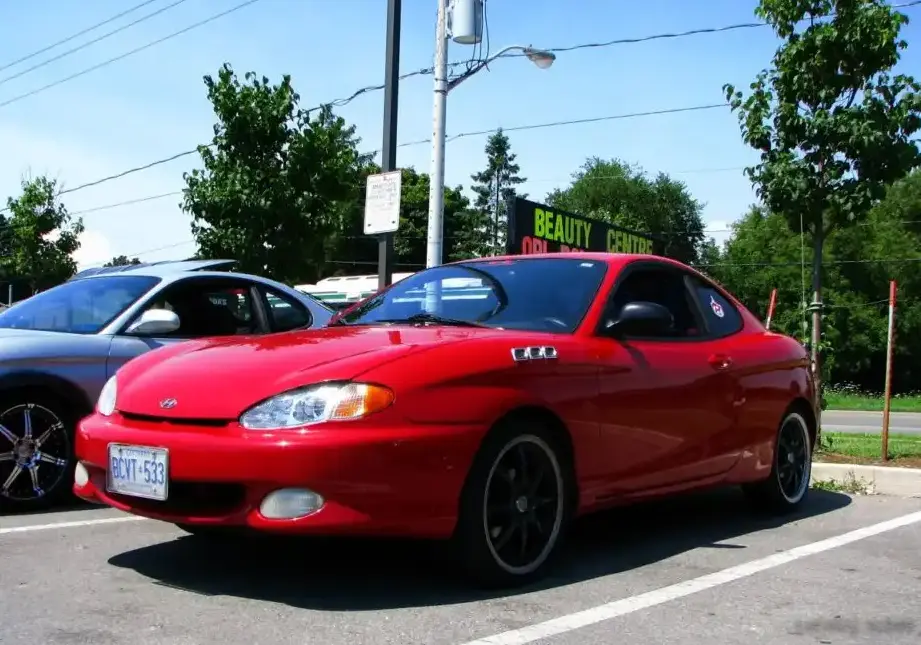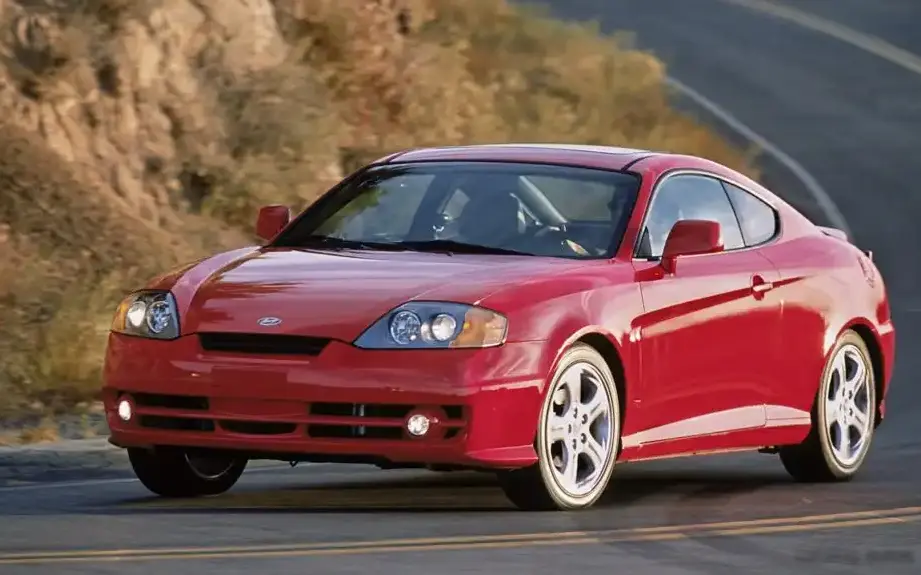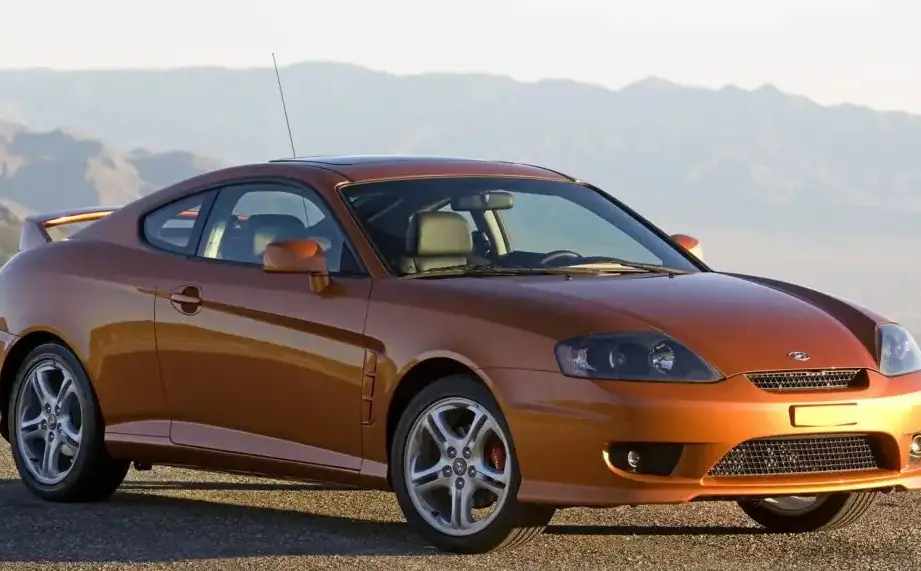
The Hyundai Tiburon II, specifically the facelifted version produced from 2004 to 2006 (designated GK), represented a significant step forward for Hyundai’s sporty coupe ambitions. This iteration of the Tiburon aimed to offer a more refined and powerful experience than its predecessor, targeting a demographic seeking an affordable, stylish, and relatively capable sports coupe. The 2.7-liter V6 engine paired with a 6-speed manual transmission was positioned as the performance-oriented trim within the GK lineup, sitting above the base 2.0-liter models and offering a more engaging driving experience. It was Hyundai’s attempt to directly compete with established players like the Honda Prelude and Mitsubishi Eclipse, though often at a more accessible price point.
Technical Specifications
| Brand | Hyundai |
| Model | Tiburon |
| Generation | Tiburon II (GK, facelift 2004) |
| Type (Engine) | 2.7 V6 (172 Hp) Manual 6-speed |
| Start of production | September, 2004 |
| End of production | 2006 |
| Powertrain Architecture | Internal Combustion engine |
| Body type | Coupe |
| Seats | 4 |
| Doors | 3 |
| Fuel consumption (economy) – urban (EPA) | 13.1 l/100 km (18 US mpg, 21.6 UK mpg) |
| Fuel consumption (economy) – extra urban (EPA) | 9 l/100 km (26.1 US mpg, 31.4 UK mpg) |
| Fuel Type | Petrol (Gasoline) |
| Weight-to-power ratio | 7.9 kg/Hp, 127 Hp/tonne |
| Weight-to-torque ratio | 5.5 kg/Nm, 180.9 Nm/tonne |
| Power | 172 Hp @ 6000 rpm |
| Power per litre | 64.8 Hp/l |
| Torque | 245 Nm @ 3800 rpm (180.7 lb.-ft. @ 3800 rpm) |
| Engine layout | Front, Transverse |
| Engine Model/Code | Delta / G6BA |
| Engine displacement | 2656 cm3 (162.08 cu. in.) |
| Number of cylinders | 6 |
| Engine configuration | V-engine |
| Cylinder Bore | 86.7 mm (3.41 in.) |
| Piston Stroke | 75 mm (2.95 in.) |
| Compression ratio | 10:1 |
| Number of valves per cylinder | 4 |
| Fuel injection system | Multi-port manifold injection |
| Engine aspiration | Naturally aspirated engine |
| Valvetrain | DOHC |
| Engine oil capacity | 4.5 l (4.76 US qt | 3.96 UK qt) |
| Coolant | 8 l (8.45 US qt | 7.04 UK qt) |
| Kerb Weight | 1354 kg (2985.06 lbs.) |
| Trunk (boot) space – minimum | 419 l (14.8 cu. ft.) |
| Fuel tank capacity | 55 l (14.53 US gal | 12.1 UK gal) |
| Length | 4395 mm (173.03 in.) |
| Width | 1760 mm (69.29 in.) |
| Height | 1330 mm (52.36 in.) |
| Wheelbase | 2530 mm (99.61 in.) |
| Front track | 1490 mm (58.66 in.) |
| Rear (Back) track | 1490 mm (58.66 in.) |
| Drivetrain Architecture | The Internal combustion engine (ICE) drives the front wheels of the vehicle. |
| Drive wheel | Front wheel drive |
| Number of gears and type of gearbox | 6 gears, manual transmission |
| Front suspension | Independent, type McPherson with coil spring and anti-roll bar |
| Rear suspension | Independent multi-link spring suspension with stabilizer |
| Front brakes | Ventilated discs |
| Rear brakes | Disc |
| Assisting systems | ABS (Anti-lock braking system) |
| Steering type | Steering rack and pinion |
| Power steering | Hydraulic Steering |
| Tires size | 215/45 R17 |
| Wheel rims size | 7J x 17 |
Powertrain & Engine Architecture
The heart of the 2004-2006 Tiburon 2.7 V6 was the Hyundai Delta engine, specifically the G6BA code. This 2.7-liter, 60-degree V6 engine utilized a cast iron block with an aluminum cylinder head. It featured dual overhead camshafts (DOHC) and four valves per cylinder, contributing to its respectable power output for its displacement. The engine employed multi-point fuel injection, delivering fuel directly to each intake port. The 6-speed manual transmission, a relatively uncommon feature in this class at the time, was sourced from Hyundai and designed to handle the engine’s torque output. The transmission’s gear ratios were tuned for a balance between acceleration and highway cruising, though some reviewers noted a slightly long first gear. The engine’s design prioritized smooth operation and reasonable fuel efficiency over outright performance, making it a comfortable daily driver.
Driving Characteristics
The 2.7L V6 with the 6-speed manual offered a noticeable improvement in driving experience compared to the base 2.0L Tiburon. While not a track-focused sports car, the V6 provided ample power for spirited driving and confident highway merging. The 6-speed transmission allowed drivers to keep the engine in its optimal power band, resulting in brisk acceleration. The steering was reasonably precise, though lacking in ultimate feel. The suspension, tuned for comfort, provided a compliant ride, but could exhibit some body roll during aggressive cornering. Compared to automatic versions of the same engine, the manual transmission offered greater control and a more engaging driving experience. The manual also extracted slightly better fuel economy.
Equipment & Trim Levels
The 2.7 V6 manual Tiburon typically came well-equipped, though specific features varied depending on optional packages. Standard equipment generally included air conditioning, power windows and locks, a CD player with multiple speakers, and alloy wheels. Higher trim levels added features such as a sunroof, leather upholstery, upgraded audio systems, and automatic climate control. The interior design was modern for its time, with a driver-focused layout and reasonably comfortable seating. The dashboard featured analog gauges and a center console with easy-to-reach controls.
Chassis & Braking
The Tiburon II utilized a front-wheel-drive platform with an independent McPherson strut suspension in the front and an independent multi-link suspension in the rear. This setup aimed to provide a balance between ride comfort and handling. The front suspension incorporated a stabilizer bar to reduce body roll. Braking duties were handled by ventilated discs in the front and solid discs in the rear. Anti-lock brakes (ABS) were standard, enhancing safety and control during emergency braking situations. The chassis was relatively lightweight, contributing to the car’s agility.
Market Reception & Comparison
The 2004-2006 Hyundai Tiburon 2.7 V6 manual received generally positive reviews from automotive critics. It was praised for its stylish design, comfortable interior, and strong engine performance. However, some reviewers criticized its handling as being somewhat soft and lacking the precision of more focused sports coupes. Compared to the 2.0-liter Tiburon, the V6 offered a significant performance upgrade, but at a higher price point. It also offered better fuel economy than some of its V6-powered competitors, such as the Ford Mustang. Reliability was generally considered good, though some owners reported minor issues with the cooling system.
Legacy
The Hyundai Tiburon II, particularly the 2.7 V6 manual variant, holds a modest but dedicated following among enthusiasts. The G6BA engine is known for its durability and relatively simple maintenance requirements. While not a collector’s item, well-maintained examples of this Tiburon can be found on the used car market at affordable prices. The Tiburon II represented a pivotal moment for Hyundai, demonstrating the brand’s growing ability to produce stylish and competent vehicles that could compete with established automakers. It paved the way for Hyundai’s future success in the sports coupe segment, ultimately leading to the development of the more sophisticated Genesis Coupe.