
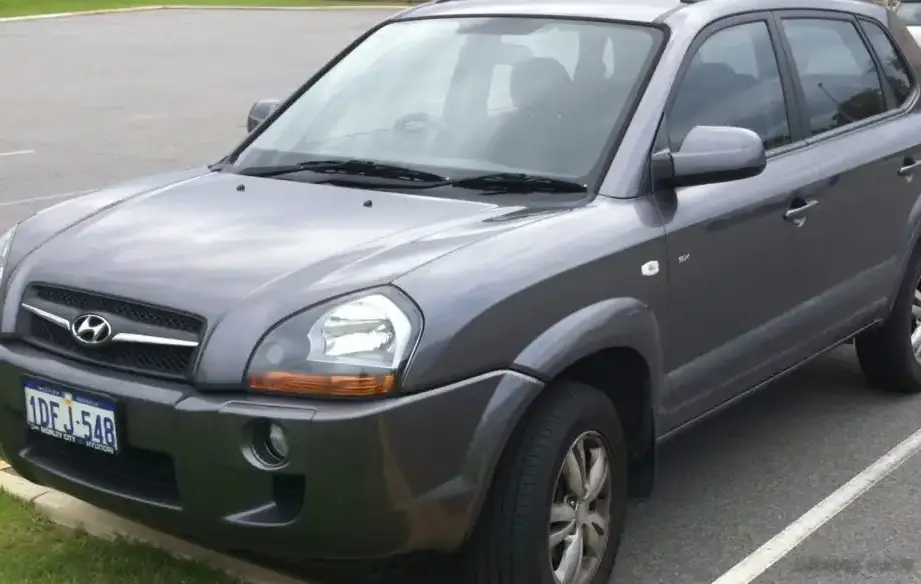
The Hyundai Tucson I 2.0 CRDi 4WD Automatic, produced between 2006 and 2008, represents a significant entry for Hyundai into the increasingly popular compact SUV segment in Europe and other international markets. Positioned as a mid-range offering within the first-generation Tucson (codenamed JM), this variant combined a fuel-efficient diesel engine with the convenience of an automatic transmission and the added capability of all-wheel drive. It aimed to appeal to buyers seeking a practical, comfortable, and capable vehicle for both daily commuting and occasional off-road excursions. The Tucson I, launched in 2004, was Hyundai’s first purpose-built SUV, moving away from adapting existing passenger car platforms.
Technical Specifications
| Brand | Hyundai |
| Model | Tucson |
| Generation | Tucson I |
| Type | 2.0 16V CRDi 4WD (140 Hp) Automatic |
| Start of production | 2006 |
| End of production | 2008 |
| Powertrain Architecture | Internal Combustion engine |
| Body type | SUV |
| Seats | 5 |
| Doors | 5 |
| Fuel consumption (urban) | 10.3 l/100 km (22.8 US mpg) |
| Fuel consumption (extra urban) | 6.6 l/100 km (35.6 US mpg) |
| Fuel Type | Diesel |
| Acceleration 0 – 100 km/h | 12.8 sec |
| Acceleration 0 – 62 mph | 12.8 sec |
| Acceleration 0 – 60 mph | 12.2 sec |
| Maximum speed | 178 km/h (110.6 mph) |
| Weight-to-power ratio | 11.5 kg/Hp |
| Weight-to-torque ratio | 5.3 kg/Nm |
| Power | 140 Hp @ 4000 rpm |
| Torque | 305 Nm @ 1800 rpm (224.96 lb.-ft. @ 1800 rpm) |
| Engine layout | Front, Transverse |
| Engine Model/Code | D4EA |
| Engine displacement | 1991 cm3 (121.5 cu. in.) |
| Number of cylinders | 4 |
| Engine configuration | Inline |
| Cylinder Bore | 83 mm (3.27 in.) |
| Piston Stroke | 92 mm (3.62 in.) |
| Compression ratio | 17.5:1 |
| Number of valves per cylinder | 4 |
| Fuel injection system | Diesel Commonrail |
| Engine aspiration | Turbocharger, Intercooler |
| Engine oil capacity | 5.9 l (6.23 US qt | 5.19 UK qt) |
| Coolant capacity | 8.7 l (9.19 US qt | 7.65 UK qt) |
| Kerb Weight | 1610 kg (3549.44 lbs.) |
| Max. weight | 2210 kg (4872.22 lbs.) |
| Max load | 600 kg (1322.77 lbs.) |
| Trunk (boot) space – minimum | 480 l (16.95 cu. ft.) |
| Trunk (boot) space – maximum | 1856 l (65.54 cu. ft.) |
| Fuel tank capacity | 58 l (15.32 US gal | 12.76 UK gal) |
| Length | 4325 mm (170.28 in.) |
| Width | 1830 mm (72.05 in.) |
| Height | 1730 mm (68.11 in.) |
| Wheelbase | 2630 mm (103.54 in.) |
| Front track | 1550 mm (61.02 in.) |
| Rear track | 1550 mm (61.02 in.) |
| Drive wheel | All wheel drive (4×4) |
| Number of gears | 4 |
| Gearbox type | Automatic transmission |
| Front suspension | Independent, McPherson with coil spring and anti-roll bar |
| Rear suspension | Independent multi-link with stabilizer |
| Front brakes | Disc |
| Rear brakes | Disc |
| Assisting systems | ABS (Anti-lock braking system) |
| Steering type | Steering rack and pinion |
| Tires size | 235/60 R16 |
| Wheel rims size | 16 |
Powertrain & Engine Architecture
The heart of the Tucson I 2.0 CRDi 4WD Automatic is the Hyundai D4EA engine, a 1991cc inline-four cylinder diesel. This engine utilizes a second-generation common-rail direct injection system, delivering fuel at extremely high pressure for improved combustion efficiency and reduced emissions. A turbocharger with an intercooler further enhances performance, boosting power output to 140 horsepower at 4000 rpm and generating a substantial 305 Nm (224.96 lb-ft) of torque at a low 1800 rpm. The engine features a 17.5:1 compression ratio and four valves per cylinder, contributing to its efficiency and power delivery. The automatic transmission is a conventional four-speed unit, chosen for its ease of use and suitability for everyday driving. While not offering the responsiveness of a manual gearbox, it provided a smoother driving experience, particularly in urban environments.
Driving Characteristics
The 2.0 CRDi Automatic Tucson offered a comfortable and capable driving experience. The readily available torque from the diesel engine meant that the vehicle felt responsive in most situations, despite the relatively modest horsepower figure. The four-speed automatic transmission, while adequate, wasn’t particularly quick-shifting, and could sometimes feel sluggish during rapid acceleration. Compared to the manual transmission versions of the 2.0 CRDi, the automatic suffered a slight performance penalty, with a marginally slower 0-60 mph time. However, the all-wheel-drive system provided enhanced traction and stability, particularly on slippery surfaces, making it a more confident option for drivers in inclement weather or those who occasionally ventured off the paved road. The gear ratios were tuned for fuel economy and relaxed cruising rather than outright performance.
Equipment & Trim Levels
The 2.0 CRDi 4WD Automatic trim typically included features such as air conditioning, power windows, central locking, and an integrated audio system. Safety features included ABS brakes and dual front airbags. Higher trim levels offered options like leather upholstery, sunroof, alloy wheels, and upgraded audio systems. Interior appointments were generally functional and durable, reflecting the Tucson’s focus on practicality. The dashboard layout was straightforward and easy to use, with clearly labeled controls. The automatic transmission selector was a traditional column-mounted shifter.
Chassis & Braking
The Tucson I employed a fully independent suspension system, with McPherson struts at the front and a multi-link setup at the rear. This configuration provided a good balance between ride comfort and handling. Stabilizer bars were fitted to both axles to reduce body roll during cornering. Braking duties were handled by disc brakes on all four wheels, providing adequate stopping power for the vehicle’s weight. The all-wheel-drive system utilized a viscous coupling to distribute torque between the front and rear axles, automatically adjusting to changing road conditions.
Market Reception & Comparison
The Hyundai Tucson I 2.0 CRDi 4WD Automatic was generally well-received by automotive critics as a competent and value-for-money SUV. It offered a compelling alternative to established competitors like the Honda CR-V and Toyota RAV4, often undercutting them on price. Fuel economy was a strong point, with the diesel engine delivering respectable mileage for its class. However, some reviewers noted that the automatic transmission could feel a bit dated and lacked the refinement of some competitors. Compared to the higher-powered 2.7-liter V6 gasoline engine option available in some markets, the 2.0 CRDi offered significantly better fuel economy but less outright performance. The 2.0 CRDi manual transmission version provided a more engaging driving experience and slightly better fuel consumption.
Legacy
The Hyundai Tucson I 2.0 CRDi 4WD Automatic has proven to be a relatively reliable vehicle, with the D4EA engine generally regarded as durable and long-lasting. Common issues include wear and tear on suspension components and potential problems with the turbocharger over time. The automatic transmission, if properly maintained, is generally dependable. Today, these vehicles can be found on the used car market at affordable prices, making them an attractive option for budget-conscious buyers seeking a practical and capable SUV. The Tucson I laid the foundation for Hyundai’s success in the SUV segment, paving the way for subsequent generations of the Tucson that have become increasingly popular worldwide.
