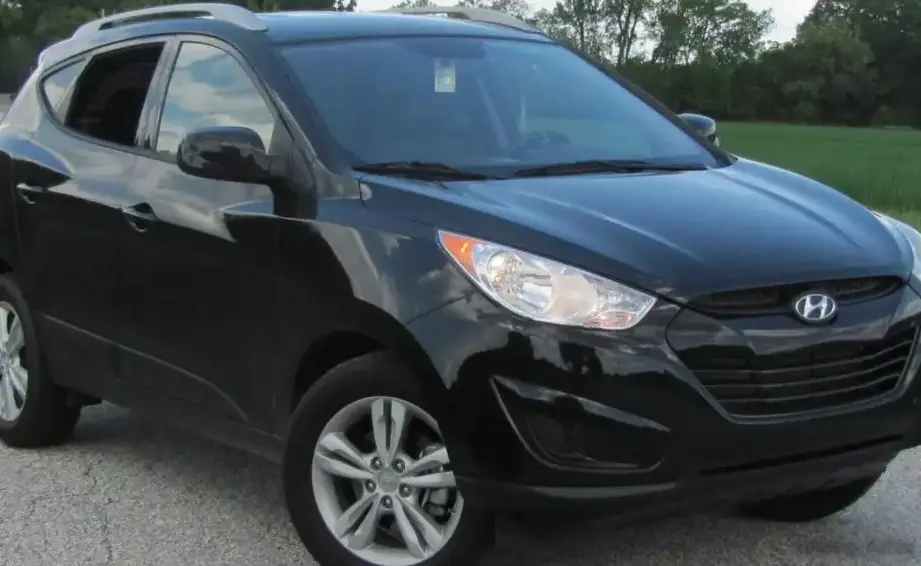
The Hyundai Tucson II 2.4 AWD Shiftronic, produced from 2009 to 2013, represented a significant step forward for Hyundai in the increasingly competitive compact SUV segment. Positioned as a mid-range offering within the Tucson II lineup (internally designated as the JM generation), this variant combined a 2.4-liter inline-four engine with a six-speed automatic transmission and Hyundai’s all-wheel-drive system. It aimed to provide a balance of practicality, comfort, and all-weather capability for American families. The Tucson II, as a whole, was Hyundai’s second attempt at a dedicated SUV, building upon the lessons learned from the first generation and offering a more refined and feature-rich package.
Technical Specifications
| Brand | Hyundai |
| Model | Tucson |
| Generation | Tucson II |
| Type (Engine) | 2.4 (176 Hp) AWD SHIFTRONIC |
| Start of production | 2009 |
| End of production | 2013 |
| Powertrain Architecture | Internal Combustion engine |
| Body type | SUV |
| Seats | 5 |
| Doors | 5 |
| Fuel consumption (urban) | 11.2 l/100 km (21 US mpg) |
| Fuel consumption (extra urban) | 8.4 l/100 km (28 US mpg) |
| Fuel consumption (combined) | 9.8 l/100 km (24 US mpg) |
| Fuel Type | Petrol (Gasoline) |
| Emission standard | ULEV |
| Power | 176 Hp @ 6000 rpm |
| Torque | 228 Nm @ 4000 rpm (168.16 lb.-ft. @ 4000 rpm) |
| Engine layout | Front, Transverse |
| Engine Model/Code | G4KE |
| Engine displacement | 2359 cm3 (143.96 cu. in.) |
| Number of cylinders | 4 |
| Engine configuration | Inline |
| Cylinder Bore | 88 mm (3.46 in.) |
| Piston Stroke | 97 mm (3.82 in.) |
| Compression ratio | 10.5:1 |
| Number of valves per cylinder | 4 |
| Fuel injection system | Multi-port manifold injection |
| Engine aspiration | Naturally aspirated engine |
| Valvetrain | DOHC, CVVT |
| Engine oil capacity | 4.6 l (4.86 US qt | 4.05 UK qt) |
| Coolant capacity | 6.8 l (7.19 US qt | 5.98 UK qt) |
| Trunk (boot) space – minimum | 728 l (25.71 cu. ft.) |
| Trunk (boot) space – maximum | 1580 l (55.8 cu. ft.) |
| Fuel tank capacity | 55 l (14.53 US gal | 12.1 UK gal) |
| Length | 4399 mm (173.19 in.) |
| Width | 1821 mm (71.69 in.) |
| Height | 1656 mm (65.2 in.) |
| Wheelbase | 2639 mm (103.9 in.) |
| Front track | 1585 mm (62.4 in.) |
| Rear track | 1585 mm (62.4 in.) |
| Drag coefficient (Cd) | 0.37 |
| Minimum turning circle | 10.6 m (34.78 ft.) |
| Drivetrain Architecture | All wheel drive (4×4) |
| Number of gears | 6 |
| Gearbox type | Automatic transmission Shiftronic |
| Front suspension | Independent, type McPherson with coil spring and anti-roll bar |
| Rear suspension | Independent multi-link spring suspension with stabilizer |
| Front brakes | Ventilated discs |
| Rear brakes | Disc |
| Assisting systems | ABS (Anti-lock braking system) |
| Steering type | Steering rack and pinion |
| Power steering | Electric Steering |
| Tires size | 225/60 R17; 225/55 R18 |
| Wheel rims size | 6.5J x 17; 6.5J x 18 |
Powertrain & Engine Architecture
The heart of the Tucson II 2.4 AWD Shiftronic is the Hyundai G4KE engine, a 2.4-liter inline-four cylinder gasoline engine. This engine utilizes multi-point fuel injection and a double overhead camshaft (DOHC) valvetrain with continuously variable valve timing (CVVT) on both intake and exhaust camshafts. The CVVT system optimizes engine performance and fuel efficiency by adjusting valve timing based on engine load and speed. The G4KE produces 176 horsepower at 6000 rpm and 228 Nm (168 lb-ft) of torque at 4000 rpm. The engine is transversely mounted in the front of the vehicle. Paired with this engine is a six-speed automatic transmission marketed by Hyundai as “Shiftronic.” This transmission offered a degree of manual control, allowing drivers to select gears, though it wasn’t a full manual mode. The Shiftronic transmission was designed to provide smooth shifts and contribute to the vehicle’s overall refinement.
Driving Characteristics
The 2.4-liter engine and six-speed automatic combination in the Tucson II delivered adequate, but not particularly sporty, performance. Acceleration was reasonable for everyday driving, but the vehicle didn’t feel particularly quick. The automatic transmission was tuned for comfort and fuel economy, resulting in relatively conservative gear ratios. Compared to the available V6 engine option in some markets, the 2.4-liter felt noticeably less powerful. However, it offered a significant improvement in fuel economy. The all-wheel-drive system provided enhanced traction in inclement weather, making it a practical choice for drivers in regions with snow or rain. The Shiftronic transmission, while offering some manual control, wasn’t known for its responsiveness or sporty feel.
Equipment & Trim Levels
The 2.4 AWD Shiftronic trim typically included standard features such as air conditioning, power windows and locks, a CD player with auxiliary input, and basic cloth upholstery. Higher trim levels, often denoted by “Limited” or “Luxury” packages, added features like leather upholstery, a sunroof, upgraded audio systems, and automatic climate control. Optional extras included a navigation system, backup sensors, and heated front seats. Safety features such as ABS, electronic stability control, and multiple airbags were standard across the range.
Chassis & Braking
The Tucson II utilized a McPherson strut front suspension and an independent multi-link rear suspension. This setup aimed to provide a comfortable ride and predictable handling. The front suspension incorporated a coil spring and anti-roll bar to reduce body roll during cornering. The rear suspension also featured a stabilizer bar. Braking duties were handled by ventilated discs at the front and solid discs at the rear. The ABS system helped to prevent wheel lockup during hard braking, enhancing safety. The all-wheel-drive system employed a dynamic torque split, automatically distributing power between the front and rear axles based on traction conditions.
Market Reception & Comparison
The Hyundai Tucson II 2.4 AWD Shiftronic was generally well-received by automotive critics as a practical and well-equipped compact SUV. It was praised for its comfortable ride, spacious interior, and generous warranty. However, some reviewers noted that the 2.4-liter engine lacked the power of some competitors, and the Shiftronic transmission wasn’t as refined as some other automatic transmissions on the market. Compared to the V6-equipped Tucson II, the 2.4-liter offered better fuel economy (around 24 mpg combined) but significantly less performance. Against rivals like the Honda CR-V and Toyota RAV4, the Tucson II offered a competitive value proposition, often undercutting them in price while offering a similar level of features.
Legacy
The Hyundai Tucson II 2.4 AWD Shiftronic has proven to be a relatively reliable vehicle in the used car market. The G4KE engine is generally considered durable, and the Shiftronic transmission, while not without its quirks, has a reasonable track record for longevity. Common issues reported by owners include minor oil leaks and occasional sensor failures. Today, these vehicles are often found with relatively high mileage, and their affordability makes them an attractive option for budget-conscious buyers seeking a practical and capable compact SUV. The Tucson II helped establish Hyundai as a serious contender in the SUV segment, paving the way for the continued success of the Tucson nameplate.