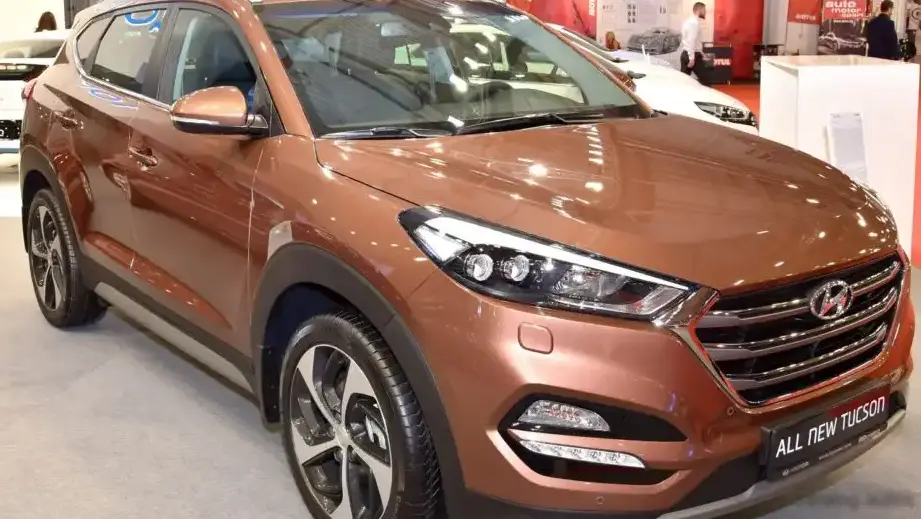
The Hyundai Tucson Fuel Cell, produced from 2015 to 2018, represents Hyundai’s early foray into hydrogen-powered vehicles. This variant of the third-generation Tucson (codenamed TL) was a significant step towards zero-emission motoring, offering a practical SUV body style powered by a fuel cell electric vehicle (FCEV) powertrain. It was primarily marketed in regions with developing hydrogen infrastructure, such as California in the United States, and served as a technology demonstrator for Hyundai’s commitment to alternative fuels. The Tucson Fuel Cell occupied a unique niche, being neither a traditional gasoline vehicle nor a battery electric vehicle, but rather a vehicle that generates its own electricity through an onboard fuel cell stack.
Technical Specifications
| Brand | Hyundai |
| Model | Tucson |
| Generation | Tucson III |
| Type (Engine) | 0.95 kWh (134 Hp) Fuel Cell |
| Start of production | 2015 |
| End of production | 2018 |
| Powertrain Architecture | FCEV (Fuel Cell Electric Vehicle) |
| Body type | SUV |
| Seats | 5 |
| Doors | 5 |
| Fuel Type | Hydrogen |
| Weight-to-power ratio | 13.9 kg/Hp, 72 Hp/tonne |
| Gross battery capacity | 0.95 kWh |
| Electric motor power | 134 Hp @ 5000 rpm |
| Electric motor Torque | 300 Nm @ 1000 rpm (221.27 lb.-ft. @ 1000 rpm) |
| System power | 134 Hp @ 5000 rpm |
| Kerb Weight | 1860 kg (4100.6 lbs) |
| Max. weight | 2250 kg (4960.4 lbs) |
| Max load | 390 kg (859.8 lbs) |
| Trunk (boot) space – minimum | 674 l (23.8 cu. ft) |
| Trunk (boot) space – maximum | 1523 l (53.78 cu. ft) |
| Length | 4410 mm (173.62 in) |
| Width | 1821 mm (71.69 in) |
| Height | 1656 mm (65.2 in) |
| Wheelbase | 2639 mm (103.9 in) |
| Front track | 1584 mm (62.36 in) |
| Rear (Back) track | 1595 mm (62.8 in) |
| Ride height (ground clearance) | 165 mm (6.5 in) |
| Drag coefficient (Cd) | 0.35 |
| Minimum turning circle (turning diameter) | 10.6 m (34.78 ft) |
| Drive wheel | Front wheel drive |
| Number of gears and type of gearbox | 1 gears, automatic transmission |
| Front suspension | Independent, type McPherson with coil spring and anti-roll bar |
| Rear suspension | Torsion |
| Front brakes | Ventilated discs |
| Rear brakes | Ventilated discs |
| Assisting systems | ABS (Anti-lock braking system) |
Powertrain & Engine Architecture
The Tucson Fuel Cell doesn’t utilize a conventional internal combustion engine. Instead, it employs a 48kW (134 hp) electric motor powered by a 1.6 kWh lithium-ion battery pack. This battery acts as a buffer, providing supplemental power during acceleration and recapturing energy during braking. The core of the system is the fuel cell stack, which combines hydrogen gas with oxygen from the air to produce electricity, with water as the only emission. The fuel cell stack itself has a power output of 95 kW. The hydrogen is stored in a reinforced carbon-fiber tank capable of holding 5.6 kg of hydrogen at 700 bar (10,000 psi). The single-speed automatic transmission delivers power to the front wheels. The system operates at 240V.
Driving Characteristics
The driving experience of the Tucson Fuel Cell is remarkably similar to that of a conventional electric vehicle. Acceleration is linear and smooth, with peak torque available almost instantly. While 134 horsepower isn’t a particularly high output, the instant torque delivery provides adequate performance for everyday driving situations. The single-speed automatic transmission simplifies operation, and the vehicle offers a quiet and refined driving experience. Range is dependent on driving conditions and hydrogen consumption, but Hyundai initially estimated a range of approximately 426 miles (686 km) on a full tank of hydrogen. Compared to the gasoline-powered Tucson models, the Fuel Cell variant offers a quieter and more environmentally friendly driving experience, albeit with the limitation of hydrogen refueling infrastructure.
Equipment & Trim Levels
The Tucson Fuel Cell was generally well-equipped, reflecting its position as a technology showcase. Standard features included leather upholstery, heated front seats, a touchscreen infotainment system with navigation, rearview camera, and a suite of safety features like lane departure warning and blind-spot monitoring. Given its limited production run and target market, the Tucson Fuel Cell wasn’t offered with a wide range of trim levels or optional extras. The focus was on demonstrating the viability of the technology rather than offering extensive customization options. The interior design largely mirrored that of the standard Tucson, with minor tweaks to accommodate the fuel cell system components.
Chassis & Braking
The chassis of the Tucson Fuel Cell is largely based on the standard Tucson, with modifications to accommodate the hydrogen tank and fuel cell stack. The front suspension utilizes a McPherson strut design with coil springs and an anti-roll bar, while the rear suspension employs a torsion beam setup. Braking is provided by ventilated disc brakes on all four wheels, coupled with an anti-lock braking system (ABS). The added weight of the fuel cell components (approximately 280 kg / 617 lbs compared to a gasoline Tucson) slightly impacted handling, but the vehicle remained reasonably agile and comfortable for everyday driving. The steering feel was typical of the Tucson range – light and easy to maneuver.
Market Reception & Comparison
The Hyundai Tucson Fuel Cell received generally positive reviews from critics, who praised its innovative technology and smooth driving experience. However, its limited range, the scarcity of hydrogen refueling stations, and the high cost of hydrogen fuel were significant drawbacks. Compared to the gasoline-powered Tucson models, the Fuel Cell variant offered zero tailpipe emissions but came with the practical challenges of hydrogen infrastructure. Compared to battery electric vehicles (BEVs) of the same era, the Tucson Fuel Cell offered a longer range and faster refueling times (approximately 5 minutes), but BEVs had a more established charging infrastructure. The initial lease price was relatively high, reflecting the cost of the technology.
Legacy
The Hyundai Tucson Fuel Cell served as a crucial stepping stone in Hyundai’s development of hydrogen fuel cell technology. The lessons learned from this vehicle informed the development of the Hyundai Nexo, a second-generation fuel cell vehicle with improved range, performance, and infrastructure compatibility. While the Tucson Fuel Cell didn’t achieve widespread commercial success due to the limitations of hydrogen infrastructure, it demonstrated Hyundai’s commitment to sustainable transportation and paved the way for future advancements in fuel cell technology. On the used car market, Tucson Fuel Cell vehicles are rare and typically command a relatively low price, reflecting the ongoing challenges associated with hydrogen refueling and maintenance. The powertrain, while innovative, requires specialized servicing and the long-term durability of the fuel cell stack remains a key consideration for potential buyers.