Technical Specifications
| Brand | Hyundai |
| Model | Tucson |
| Generation | Tucson III |
| Type (Engine) | 1.6 T-GDI (177 Hp) 4WD |
| Start of production | 2015 |
| End of production | 2018 |
| Powertrain Architecture | Internal Combustion engine |
| Body type | SUV |
| Seats | 5 |
| Doors | 5 |
| Fuel consumption (urban) | 10 l/100 km (23.5 US mpg) |
| Fuel consumption (extra urban) | 6.2 l/100 km (37.9 US mpg) |
| Fuel consumption (combined) | 7.6 l/100 km (30.9 US mpg) |
| CO2 emissions | 177 g/km |
| Fuel Type | Petrol (Gasoline) |
| Acceleration 0 – 100 km/h | 9.2 sec |
| Acceleration 0 – 62 mph | 9.2 sec |
| Acceleration 0 – 60 mph | 8.7 sec |
| Maximum speed | 203 km/h (126.14 mph) |
| Emission standard | Euro 6 |
| Weight-to-power ratio | 8.5 kg/Hp |
| Weight-to-torque ratio | 5.7 kg/Nm |
| Power | 177 Hp @ 5500 rpm |
| Torque | 265 Nm @ 1500-4250 rpm (195.45 lb.-ft.) |
| Engine layout | Front, Transverse |
| Engine Model/Code | Gamma II / G4FJ |
| Engine displacement | 1591 cm3 (97.09 cu. in.) |
| Number of cylinders | 4 |
| Engine configuration | Inline |
| Cylinder Bore | 77 mm (3.03 in.) |
| Piston Stroke | 85.44 mm (3.36 in.) |
| Compression ratio | 11:1 |
| Number of valves per cylinder | 4 |
| Fuel injection system | Direct injection |
| Engine aspiration | Turbocharger, Intercooler |
| Valvetrain | DOHC |
| Engine oil capacity | 4.5 l (4.76 US qt | 3.96 UK qt) |
| Coolant | 7.5 l (7.93 US qt | 6.6 UK qt) |
| Kerb Weight | 1508 kg (3324.57 lbs.) |
| Max. weight | 2170 kg (4784.03 lbs.) |
| Max load | 662 kg (1459.46 lbs.) |
| Trunk (boot) space – minimum | 513 l (18.12 cu. ft.) |
| Trunk (boot) space – maximum | 1503 l (53.08 cu. ft.) |
| Fuel tank capacity | 62 l (16.38 US gal | 13.64 UK gal) |
| Max. roof load | 100 kg (220.46 lbs.) |
| Permitted trailer load with brakes (12%) | 1400 kg (3086.47 lbs.) |
| Permitted trailer load without brakes | 650 kg (1433 lbs.) |
| Length | 4475 mm (176.18 in.) |
| Width | 1850 mm (72.83 in.) |
| Height | 1655 mm (65.16 in.) |
| Wheelbase | 2670 mm (105.12 in.) |
| Front track | 1604-1608 mm (63.15 – 63.31 in.) |
| Rear (Back) track | 1615-1620 mm (63.58 – 63.78 in.) |
| Ride height (ground clearance) | 172 mm (6.77 in.) |
| Minimum turning circle | 10.6 m (34.78 ft.) |
| Drive wheel | All wheel drive (4×4) |
| Number of gears and type of gearbox | 6 gears, manual transmission |
| Front suspension | Independent type McPherson |
| Rear suspension | Semi-independent, coil spring |
| Front brakes | Ventilated discs |
| Rear brakes | Disc |
| Assisting systems | ABS (Anti-lock braking system) |
| Steering type | Steering rack and pinion |
| Tires size | 215/70 R16; 225/60 R17; 245/45 R19 |
| Wheel rims size | 6.5J x 16; 7.0J x 17; 7.5J x 19 |
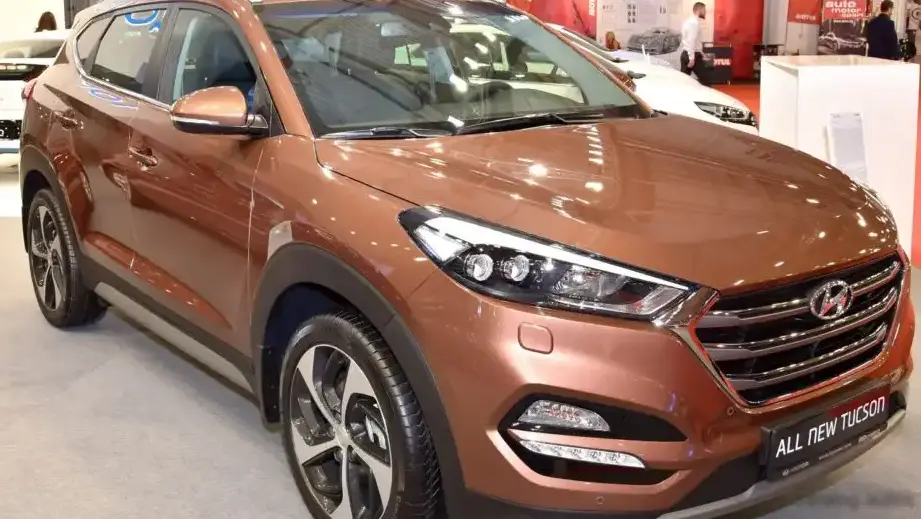
The Hyundai Tucson III, launched in 2015, represented a significant redesign for Hyundai’s popular compact SUV. Building upon the success of the second-generation model, the Tucson III offered a more sophisticated design, improved interior quality, and a wider range of engine options. The 1.6 T-GDI 4WD variant, introduced as part of the facelift in 2018, was specifically aimed at buyers who desired a more efficient and responsive driving experience without sacrificing the practicality and security of all-wheel drive. This model sat in the middle of the Tucson III range, offering a step up in performance from the base 1.6 GDI engine, but remaining more accessible than the more powerful 2.0-liter options.
Powertrain & Engine Architecture
At the heart of the Tucson III 1.6 T-GDI 4WD lies the Hyundai Gamma II engine, specifically the G4FJ code. This 1.6-liter inline-four cylinder engine utilizes direct fuel injection and a single scroll turbocharger with an intercooler to deliver 177 horsepower at 5500 rpm and 265 Nm (195 lb-ft) of torque between 1500 and 4250 rpm. The direct injection system optimizes fuel delivery for improved efficiency and power output. The engine features a dual continuously variable valve timing (D-CVVT) system, enhancing both performance and fuel economy. The 6-speed manual transmission was standard, providing drivers with precise control over gear selection. The all-wheel-drive system is an on-demand system, primarily operating in front-wheel drive to maximize fuel efficiency, and automatically engaging the rear wheels when traction is lost.
Driving Characteristics
The 1.6 T-GDI engine provides a noticeable improvement in performance compared to the naturally aspirated 1.6 GDI engine. While not a sports car, the turbocharger provides a good amount of low-end torque, making it responsive in everyday driving situations. The 0-60 mph time of around 8.7 seconds is respectable for a compact SUV. The manual transmission allows for engaging driving, but the gear ratios are tuned for fuel efficiency rather than outright acceleration. Compared to the higher-output 2.0-liter engines, the 1.6 T-GDI feels less powerful, particularly when fully loaded or tackling steep inclines. However, the lighter engine weight contributes to improved handling and a more balanced feel. The all-wheel-drive system provides enhanced grip and stability in adverse weather conditions.
Equipment & Trim Levels
The 1.6 T-GDI 4WD typically came equipped with a solid range of standard features. These included air conditioning, power windows and mirrors, a touchscreen infotainment system with Bluetooth connectivity, and a rearview camera. Higher trim levels added features such as leather upholstery, heated front seats, a panoramic sunroof, and advanced safety systems like lane departure warning and automatic emergency braking. Interior upholstery was typically cloth on the base models, with leather options available on higher trims. Dashboard configuration was consistent across the range, featuring a modern and user-friendly design.
Chassis & Braking
The Tucson III utilizes a McPherson strut front suspension and a multi-link rear suspension, providing a comfortable and controlled ride. The suspension is tuned to prioritize comfort over sporty handling. Braking duties are handled by ventilated discs on the front wheels and solid discs on the rear. Anti-lock Braking System (ABS) is standard, along with Electronic Stability Control (ESC). The 1.6 T-GDI 4WD models typically featured slightly larger brake rotors compared to the base models to accommodate the increased weight and performance.
Market Reception & Comparison
The Hyundai Tucson III 1.6 T-GDI 4WD was generally well-received by automotive critics. It was praised for its stylish design, comfortable interior, and efficient engine. The all-wheel-drive system was also a significant selling point, particularly in regions with harsh winters. Compared to the 2.0-liter gasoline and diesel options, the 1.6 T-GDI offered a good balance of performance and fuel economy. The diesel models (particularly the 1.7 CRDi) offered superior fuel economy, but the 1.6 T-GDI provided a smoother and quieter driving experience. Reliability reports have been generally positive, with few major issues reported with the engine or transmission.
Legacy
The Hyundai Tucson III 1.6 T-GDI 4WD has proven to be a reliable and durable vehicle. On the used car market, these models hold their value reasonably well, thanks to their reputation for dependability and fuel efficiency. The Gamma II engine has a generally good track record, although regular maintenance, including oil changes and timing belt replacements (where applicable), is crucial for long-term reliability. The Tucson III, and particularly this 1.6 T-GDI variant, helped solidify Hyundai’s position as a major player in the compact SUV segment, paving the way for the continued success of the Tucson nameplate.