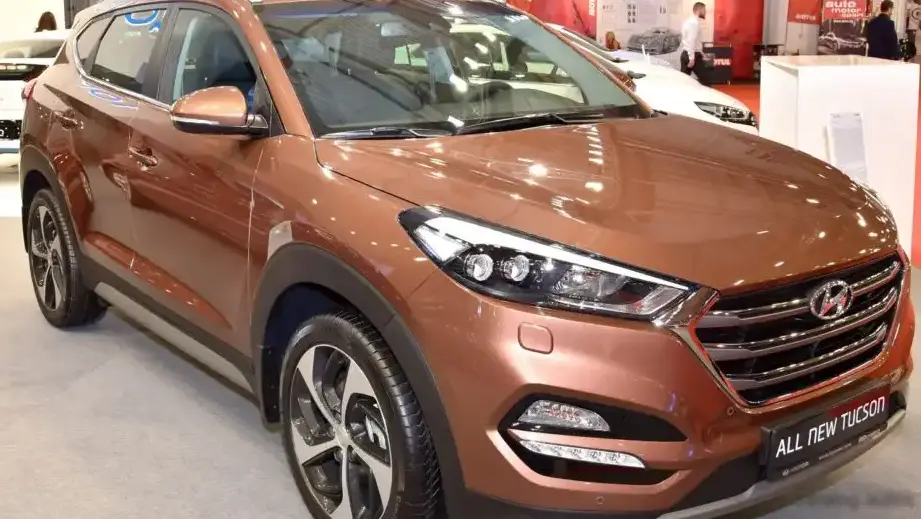
The Hyundai Tucson III 2.0 MPI (153 Hp) SHIFTRONIC was a popular configuration of Hyundai’s third-generation Tucson compact SUV, produced from 2015 to 2018. Positioned as a mid-range offering within the Tucson III lineup, it aimed to balance affordability with a reasonable level of equipment and performance. This variant served as a key volume seller for Hyundai in markets where fuel efficiency and practicality were prioritized, offering a gasoline-powered alternative to the diesel options available in Europe and other regions. It was built on the Hyundai-Kia platform known as the 07P, also shared with the Kia Sportage of the same generation.
Technical Specifications
| Brand | Hyundai |
| Model | Tucson |
| Generation | Tucson III |
| Type (Engine) | 2.0 MPI (153 Hp) SHIFTRONIC |
| Start of production | 2015 |
| End of production | 2018 |
| Powertrain Architecture | Internal Combustion engine |
| Body type | SUV |
| Seats | 5 |
| Doors | 5 |
| Fuel consumption (urban) | 10.9-11.5 l/100 km (21.6 – 20.5 US mpg) |
| Fuel consumption (extra urban) | 6.1-6.3 l/100 km (38.6 – 37.3 US mpg) |
| Fuel consumption (combined) | 7.9-8.2 l/100 km (29.8 – 28.7 US mpg) |
| CO2 emissions | 182-190 g/km |
| Fuel Type | Petrol (Gasoline) |
| Acceleration 0 – 100 km/h | 11.1 sec |
| Acceleration 0 – 62 mph | 11.1 sec |
| Acceleration 0 – 60 mph | 10.5 sec |
| Maximum speed | 181 km/h (112.47 mph) |
| Weight-to-power ratio | 9.3 kg/Hp |
| Weight-to-torque ratio | 7.4 kg/Nm |
| Power | 153 Hp @ 6200 rpm |
| Torque | 192 Nm @ 4000 rpm (141.61 lb.-ft. @ 4000 rpm) |
| Engine layout | Front, Transverse |
| Engine Model/Code | Nu / G4NA |
| Engine displacement | 1999 cm3 (121.99 cu. in.) |
| Number of cylinders | 4 |
| Engine configuration | Inline |
| Cylinder Bore | 81 mm (3.19 in.) |
| Piston Stroke | 97 mm (3.82 in.) |
| Compression ratio | 10.3:1 |
| Number of valves per cylinder | 4 |
| Fuel injection system | Multi-port manifold injection |
| Engine aspiration | Naturally aspirated engine |
| Valvetrain | DOHC, D-CVVT |
| Engine oil capacity | 4 l (4.23 US qt | 3.52 UK qt) |
| Coolant | 7.3 l (7.71 US qt | 6.42 UK qt) |
| Kerb Weight | 1426-1588 kg (3143.79 – 3500.94 lbs.) |
| Max. weight | 2090 kg (4607.66 lbs.) |
| Max load | 502-664 kg (1106.72 – 1463.87 lbs.) |
| Trunk (boot) space – minimum | 488 l (17.23 cu. ft.) |
| Trunk (boot) space – maximum | 1478 l (52.2 cu. ft.) |
| Fuel tank capacity | 62 l (16.38 US gal | 13.64 UK gal) |
| Max. roof load | 100 kg (220.46 lbs.) |
| Permitted trailer load with brakes (12%) | 1600 kg (3527.4 lbs.) |
| Permitted trailer load without brakes | 750 kg (1653.47 lbs.) |
| Permitted towbar download | 120 kg (264.55 lbs.) |
| Length | 4475 mm (176.18 in.) |
| Width | 1850 mm (72.83 in.) |
| Height | 1660 mm (65.35 in.) |
| Wheelbase | 2670 mm (105.12 in.) |
| Front track | 1608 mm (63.31 in.) |
| Rear (Back) track | 1620 mm (63.78 in.) |
| Ride height (ground clearance) | 172 mm (6.77 in.) |
| Minimum turning circle (turning diameter) | 10.6 m (34.78 ft.) |
| Approach angle | 17.9° |
| Departure angle | 24.5° |
| Ramp-over (brakeover) angle | 19.5° |
| Drivetrain Architecture | The Internal combustion engine (ICE) drives the front wheels of the vehicle. |
| Drive wheel | Front wheel drive |
| Number of gears and type of gearbox | 6 gears, automatic transmission SHIFTRONIC |
| Front suspension | Independent, type McPherson with coil spring and anti-roll bar |
| Rear suspension | Independent multi-link spring suspension with stabilizer |
| Front brakes | Ventilated discs, 305×25 mm |
| Rear brakes | Disc, 302×10 mm |
| Assisting systems | ABS (Anti-lock braking system) |
| Steering type | Steering rack and pinion |
| Power steering | Electric Steering |
| Tires size | 225/60 R17; 225/55 R18; 245/45 R19 |
| Wheel rims size | 7J x 17; 7J x 18; 7.5J x 19 |
Powertrain & Engine Architecture
The heart of the Tucson III 2.0 MPI SHIFTRONIC is Hyundai’s Nu family of inline-four cylinder gasoline engines. Specifically, the G4NA engine code designates this 1999cc unit. This engine utilizes a naturally aspirated configuration with multi-point fuel injection and a double overhead camshaft (DOHC) valvetrain incorporating Hyundai’s Dual Continuously Variable Valve Timing (D-CVVT) technology. D-CVVT optimizes valve timing based on engine load and speed, improving both fuel efficiency and power output. The engine produces 153 horsepower at 6200 rpm and 192 Nm (141.61 lb-ft) of torque at 4000 rpm. The ‘SHIFTRONIC’ designation refers to the six-speed automatic transmission, which offered a degree of manual control allowing the driver to select gears, though it wasn’t a full manual mode. This transmission was designed for smooth operation and fuel efficiency, prioritizing comfort over outright performance.
Driving Characteristics
The 2.0 MPI SHIFTRONIC Tucson III delivered adequate, but not exhilarating, performance. Acceleration from 0-60 mph took around 10.5 seconds, and the top speed was approximately 112 mph. The automatic transmission, while smooth, could feel somewhat hesitant during quick acceleration or overtaking maneuvers. The gear ratios were tuned for fuel economy, meaning the engine often operated at lower RPMs, which could result in a lack of responsiveness. Compared to the available diesel engines or even the more powerful gasoline options in the Tucson III range, this variant felt noticeably less potent. However, it provided a comfortable and predictable driving experience, well-suited for everyday commuting and family use.
Equipment & Trim Levels
The 2.0 MPI SHIFTRONIC trim typically included standard features such as air conditioning, power windows and locks, a basic audio system with USB connectivity, and steel wheels with wheel covers. Higher trim levels, often denoted by ‘SE’ or ‘Limited’ packages, added features like alloy wheels, a touchscreen infotainment system with navigation, a rearview camera, heated front seats, and automatic climate control. Interior upholstery was generally cloth, with leather options available on higher trims. Safety features included ABS, electronic stability control, and multiple airbags.
Chassis & Braking
The Tucson III utilized a front-wheel-drive layout as standard, with all-wheel drive available as an option. The suspension consisted of independent McPherson struts at the front and an independent multi-link setup at the rear, providing a comfortable ride quality. Braking duties were handled by ventilated discs at the front and solid discs at the rear. The braking system was adequate for the vehicle’s weight and performance, and ABS was standard. Stabilizer bars were fitted to both the front and rear axles to reduce body roll during cornering.
Market Reception & Comparison
The 2.0 MPI SHIFTRONIC Tucson III was generally well-received as a practical and affordable compact SUV. Critics praised its comfortable ride, spacious interior, and good value for money. However, some reviewers noted its lack of outright performance and the somewhat dated feel of the interior compared to some competitors. Compared to the diesel variants, the 2.0 MPI offered lower fuel economy but a smoother and quieter driving experience. Against competitors like the Honda CR-V and Toyota RAV4, the Tucson III offered a competitive price point and a longer warranty, but often lacked the refinement and brand recognition of its Japanese rivals.
Legacy
The Hyundai Tucson III 2.0 MPI SHIFTRONIC has proven to be a relatively reliable vehicle in the used car market. The Nu engine family is generally considered durable, although regular maintenance, including oil changes and timing belt replacements (where applicable), is crucial. The automatic transmission has also demonstrated good longevity with proper servicing. Today, these Tucsons represent an affordable entry point into the compact SUV segment, offering a practical and dependable option for budget-conscious buyers. While not a performance standout, its blend of comfort, space, and value continues to make it a popular choice in the used car market.