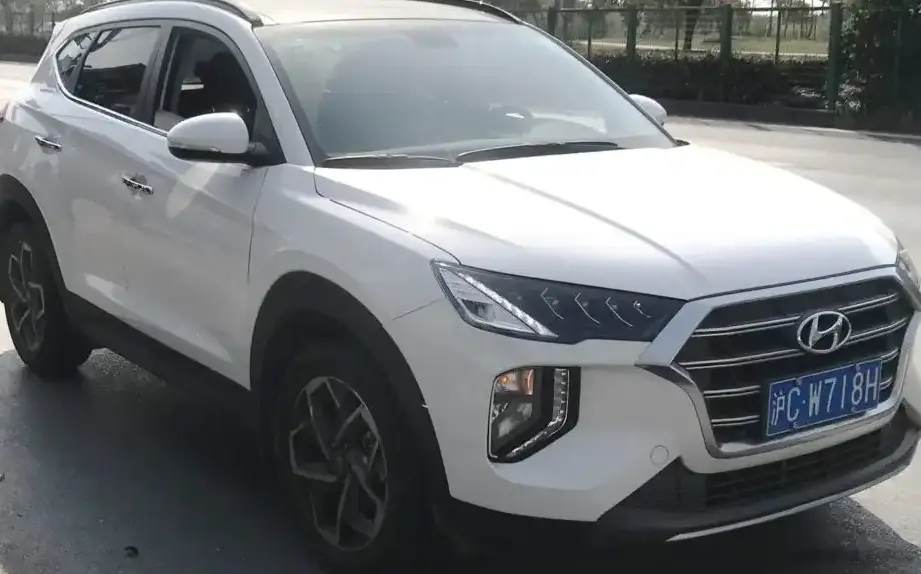
The Hyundai Tucson III facelift, specifically the 280 TGDi variant produced for the Chinese market between 2019 and 2020, represents a mid-cycle refresh of the popular compact SUV. This version is characterized by its 1.6-liter turbocharged gasoline engine producing 130 horsepower, paired with a seven-speed dual-clutch transmission (DCT) and an all-wheel-drive (AWD) system. It occupied a middle ground within the Tucson III lineup in China, offering a balance between performance, fuel efficiency, and features. The Tucson III itself is based on the Hyundai-Kia K platform (HX10), shared with the Kia Sportage, and aimed to provide a more sophisticated and spacious option in the competitive Chinese SUV market.
Technical Specifications
| Brand | Hyundai |
| Model | Tucson |
| Generation | Tucson III (facelift 2019, China) |
| Type (Engine) | 280 TGDi (130 Hp) AWD DCT |
| Start of production | 2019 |
| End of production | 2020 |
| Powertrain Architecture | Internal Combustion engine |
| Body type | SUV |
| Seats | 5 |
| Doors | 5 |
| Fuel consumption (combined) | 7.2 l/100 km (32.7 US mpg, 39.2 UK mpg, 13.9 km/l) |
| Fuel Type | Petrol (Gasoline) |
| Maximum speed | 195 km/h (121.17 mph) |
| Weight-to-power ratio | 12.7 kg/Hp, 78.5 Hp/tonne |
| Weight-to-torque ratio | 6.3 kg/Nm, 159.9 Nm/tonne |
| Power | 130 Hp @ 5500 rpm |
| Power per litre | 81.7 Hp/l |
| Torque | 265 Nm @ 1500-4500 rpm (195.45 lb.-ft. @ 1500-4500 rpm) |
| Engine layout | Front, Transverse |
| Engine displacement | 1591 cm3 (97.09 cu. in.) |
| Number of cylinders | 4 |
| Engine configuration | Inline |
| Fuel injection system | Direct injection |
| Engine aspiration | Turbocharger, Intercooler |
| Kerb Weight | 1657 kg (3653.06 lbs.) |
| Fuel tank capacity | 62 l (16.38 US gal | 13.64 UK gal) |
| Length | 4545 mm (178.94 in.) |
| Width | 1850 mm (72.83 in.) |
| Height | 1670 mm (65.75 in.) |
| Wheelbase | 2670 mm (105.12 in.) |
| Ride height (ground clearance) | 182 mm (7.17 in.) |
| Drivetrain Architecture | All wheel drive (4×4). ICE drives front wheels, rear wheels engaged via clutch. |
| Number of gears and type of gearbox | 7 gears, automatic transmission DCT |
| Front suspension | Independent type McPherson |
| Rear suspension | Independent multi-link suspension |
| Steering type | Steering rack and pinion |
| Power steering | Electric Steering |
| Tires size | 225/55 R18 |
| Wheel rims size | 18 |
Powertrain & Engine Architecture
The heart of the 280 TGDi Tucson is Hyundai’s 1.6-liter (1591cc) inline-four cylinder gasoline engine, designated as the Gamma II TGDi. This engine utilizes direct fuel injection and a single turbocharger with an intercooler to boost power and efficiency. The engine code is specific to the Chinese market variant. The direct injection system allows for precise fuel delivery, optimizing combustion and reducing emissions. The turbocharger provides increased air intake, resulting in a broader torque curve. The engine is paired with a seven-speed dual-clutch transmission (DCT), offering quicker and smoother gear changes compared to a traditional automatic transmission. The DCT contributes to improved fuel economy and a more engaging driving experience. The all-wheel-drive system operates as a part-time system, primarily driving the front wheels but engaging the rear wheels when traction is needed, enhancing stability and control in various driving conditions.
Driving Characteristics
The 130 horsepower output and 265 Nm (195 lb-ft) of torque provide adequate performance for everyday driving. While not a particularly sporty setup, the turbocharger helps deliver a usable amount of power across a wide RPM range, with peak torque available from 1500 to 4500 rpm. The DCT contributes to responsive acceleration, although some drivers may notice slight hesitation at low speeds. Compared to higher-output Tucson variants available in other markets, such as those with larger engines, the 280 TGDi feels less powerful, especially when fully loaded or tackling steep inclines. However, the DCT’s gear ratios are well-tuned for both city and highway driving, providing a comfortable and efficient experience. The AWD system enhances grip and stability, particularly on slippery surfaces, making it a suitable choice for regions with inclement weather.
Equipment & Trim Levels
The 280 TGDi trim level in China typically included a generous array of standard features. These commonly included automatic climate control, a touchscreen infotainment system with smartphone integration (Apple CarPlay and Android Auto), rear parking sensors, and a rearview camera. Interior upholstery was generally cloth or a combination of cloth and leatherette, depending on optional packages. Higher trim levels offered features like leather seats, a panoramic sunroof, and advanced driver-assistance systems (ADAS) such as lane departure warning and automatic emergency braking. Optional extras often included a premium sound system, navigation, and heated/ventilated front seats.
Chassis & Braking
The Tucson III utilizes a McPherson strut front suspension and a multi-link rear suspension, providing a comfortable ride and decent handling characteristics. The suspension is tuned to prioritize comfort over outright sportiness. The 280 TGDi variant typically featured disc brakes on all four wheels, providing adequate stopping power. The electronic stability control (ESC) system and anti-lock braking system (ABS) are standard, enhancing safety. The steering is electrically assisted, offering a light and easy driving experience. The 18-inch alloy wheels and 225/55 R18 tires contribute to a balanced ride and handling feel.
Market Reception & Comparison
The Hyundai Tucson III facelift, including the 280 TGDi variant, was generally well-received in the Chinese market. Critics praised its stylish design, spacious interior, and comprehensive feature list. The 1.6-liter turbo engine offered a good balance between performance and fuel economy, making it an attractive option for buyers seeking a practical and efficient SUV. Compared to other Tucson trims in China, the 280 TGDi offered a more affordable entry point into the turbocharged engine range. It competed directly with other compact SUVs from brands like Honda, Toyota, and Nissan, offering a compelling alternative with its modern features and competitive pricing. Fuel economy figures of around 7.2 l/100km were considered competitive for its class.
Legacy
The 1.6-liter TGDi engine and seven-speed DCT combination have proven to be relatively reliable in the Hyundai-Kia lineup, although some owners have reported minor issues with the turbocharger and DCT over the long term. Regular maintenance, including oil changes and DCT fluid replacements, is crucial for ensuring longevity. As a used car, the 280 TGDi Tucson III facelift represents a good value proposition, offering a well-equipped and reasonably efficient SUV at a competitive price point. Its all-wheel-drive system and comfortable ride make it a practical choice for a variety of driving conditions. The availability of spare parts and qualified technicians is generally good, ensuring that maintenance and repairs can be carried out without significant difficulty.