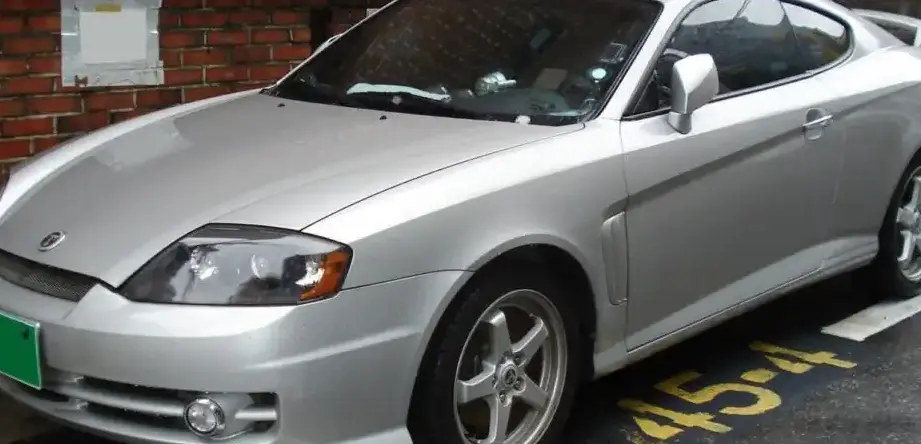
The Hyundai Tuscani I 2.0i 16V Automatic, produced between 1999 and 2001, represents a pivotal entry for Hyundai into the sporty coupe market. Positioned as a more stylish and performance-oriented offering within the Hyundai lineup, the Tuscani (also known as the Hyundai Coupe in some markets) aimed to attract a younger demographic. This particular variant, equipped with the 2.0-liter Beta engine and a four-speed automatic transmission, served as a comfortable and accessible entry point into the Tuscani range, offering a balance between performance and ease of driving. It was built on the Hyundai’s internal ‘HX’ platform, sharing components with other models of the era.
Technical Specifications
| Brand | Hyundai |
| Model | Tuscani |
| Generation | Tuscani I |
| Type (Engine) | 2.0i 16V (139 Hp) Automatic |
| Start of production | 1999 |
| End of production | 2001 |
| Powertrain Architecture | Internal Combustion engine |
| Body type | Coupe |
| Seats | 4 |
| Doors | 3 |
| Fuel consumption (urban) | 13.3 l/100 km (17.7 US mpg, 21.2 UK mpg) |
| Fuel consumption (extra urban) | 7.9 l/100 km (29.8 US mpg, 35.8 UK mpg) |
| Fuel Type | Petrol (Gasoline) |
| Acceleration 0 – 100 km/h | 10.7 sec |
| Acceleration 0 – 62 mph | 10.7 sec |
| Acceleration 0 – 60 mph | 10.2 sec |
| Maximum speed | 198 km/h (123.03 mph) |
| Weight-to-power ratio | 9 kg/Hp, 111.2 Hp/tonne |
| Weight-to-torque ratio | 6.9 kg/Nm, 145.6 Nm/tonne |
| Power | 139 Hp @ 6000 rpm |
| Power per litre | 70.4 Hp/l |
| Torque | 182 Nm @ 4900 rpm (134.24 lb.-ft. @ 4900 rpm) |
| Engine layout | Front, Transverse |
| Engine Model/Code | Beta / G4GF |
| Engine displacement | 1975 cm3 (120.52 cu. in.) |
| Number of cylinders | 4 |
| Engine configuration | Inline |
| Cylinder Bore | 82 mm (3.23 in.) |
| Piston Stroke | 93.5 mm (3.68 in.) |
| Compression ratio | 10:1 |
| Number of valves per cylinder | 4 |
| Fuel injection system | Multi-port manifold injection |
| Engine aspiration | Naturally aspirated engine |
| Valvetrain | DOHC |
| Engine oil capacity | 4 l (4.23 US qt | 3.52 UK qt) |
| Coolant capacity | 6 l (6.34 US qt | 5.28 UK qt) |
| Kerb Weight | 1250 kg (2755.78 lbs.) |
| Max. weight | 1600 kg (3527.4 lbs.) |
| Max load | 350 kg (771.62 lbs.) |
| Trunk (boot) space – maximum | 362 l (12.78 cu. ft.) |
| Fuel tank capacity | 55 l (14.53 US gal | 12.1 UK gal) |
| Length | 4345 mm (171.06 in.) |
| Width | 1730 mm (68.11 in.) |
| Height | 1310 mm (51.57 in.) |
| Wheelbase | 2475 mm (97.44 in.) |
| Front track | 1465 mm (57.68 in.) |
| Rear (Back) track | 1450 mm (57.09 in.) |
| Drivetrain Architecture | Front wheel drive |
| Number of gears and type of gearbox | 4 gears, automatic transmission |
| Front suspension | Spring Strut |
| Rear suspension | Coil spring |
| Front brakes | Ventilated discs |
| Rear brakes | Disc |
| Assisting systems | ABS (Anti-lock braking system) |
| Steering type | Steering rack and pinion |
| Power steering | Hydraulic Steering |
| Tires size | 205/50R15 |
| Wheel rims size | 15 |
Powertrain & Engine Architecture
The heart of the Tuscani I 2.0i Automatic is Hyundai’s Beta engine, specifically the G4GF variant. This 1.975-liter inline-four cylinder engine utilizes a double overhead camshaft (DOHC) valvetrain with four valves per cylinder, contributing to its respectable power output for the time. The engine employs multi-point fuel injection, a common setup for engines of this era, delivering fuel directly into the intake ports. The 10:1 compression ratio strikes a balance between performance and fuel efficiency. Paired with this engine is a four-speed automatic transmission. While not offering the responsiveness of a manual gearbox, the automatic provided a smoother, more convenient driving experience, appealing to a broader range of buyers. The transmission was designed for durability and ease of use, prioritizing comfortable cruising over outright performance.
Driving Characteristics
The 2.0i Automatic Tuscani offered a comfortable and relatively refined driving experience. With 139 horsepower and 134 lb-ft of torque, acceleration was adequate, achieving 0-60 mph in approximately 10.2 seconds. However, it wasn’t a particularly quick car compared to some of its rivals or even the manual transmission versions of the Tuscani. The four-speed automatic transmission, while smooth, had relatively wide gear ratios, which could sometimes result in the engine feeling strained during hard acceleration. The front-wheel-drive configuration provided predictable handling, but lacked the dynamic capabilities of rear-wheel-drive coupes. The suspension was tuned for comfort, absorbing bumps and imperfections in the road reasonably well, making it a suitable daily driver.
Equipment & Trim Levels
The 2.0i Automatic trim generally included features such as power windows, power door locks, and a basic audio system. Interior upholstery was typically cloth, with a relatively simple dashboard layout. Optional extras included air conditioning, alloy wheels, and a sunroof. The Tuscani aimed for a balance between affordability and features, offering a decent level of equipment for its price point. The interior design, while functional, wasn’t particularly luxurious, focusing on practicality and durability.
Chassis & Braking
The Tuscani I utilized a front-wheel-drive chassis with a MacPherson strut suspension in the front and a coil spring suspension in the rear. The front brakes were ventilated discs, providing adequate stopping power, while the rear brakes were solid discs. Anti-lock Braking System (ABS) was standard, enhancing safety by preventing wheel lockup during hard braking. The suspension setup prioritized ride comfort over sporty handling, resulting in a relatively soft and forgiving ride. The chassis was designed to be lightweight, contributing to the car’s overall efficiency.
Market Reception & Comparison
The Tuscani I 2.0i Automatic was generally well-received as an affordable and stylish coupe. Critics praised its attractive design and comfortable ride, but noted that its performance was not particularly exciting. Compared to the manual transmission versions of the Tuscani, the automatic offered less engaging driving experience. Fuel economy was reasonable for a coupe of its size and engine displacement, but not exceptional. The Tuscani competed with other affordable coupes such as the Mitsubishi Eclipse and the Honda Civic Coupe, offering a unique blend of style and value.
Legacy
The Hyundai Tuscani I, particularly the 2.0i Automatic variant, holds a modest but significant place in Hyundai’s history. It represented the company’s first serious attempt at entering the competitive coupe market. While not a groundbreaking vehicle, it helped to establish Hyundai as a brand capable of producing stylish and well-equipped cars. The Beta engine proved to be relatively reliable, and many Tuscani models are still on the road today. In the used car market, the Tuscani I 2.0i Automatic is often sought after by enthusiasts looking for an affordable and distinctive coupe. Its simplicity and relatively low maintenance costs make it an appealing option for those seeking a classic Hyundai experience.