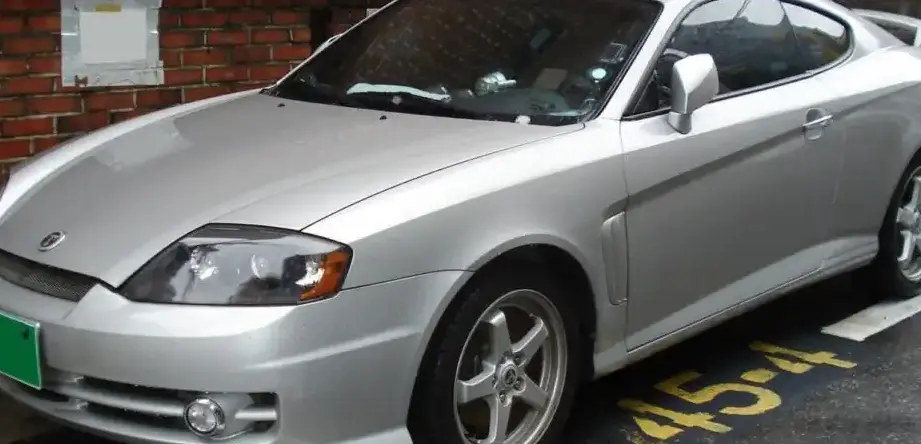
The Hyundai Tuscani II 2.0, produced between 2006 and 2008, represents a mid-cycle refresh of Hyundai’s sporty coupe offering. Positioned as a more accessible performance option within the Tuscani range, the 2.0-liter variant aimed to broaden the car’s appeal beyond the higher-performance, larger-displacement models. The Tuscani II, based on the Hyundai Tiburon platform (though marketed under the Tuscani name primarily in South Korea and some export markets), sought to provide a stylish and relatively affordable coupe experience. This 2.0L engine option served as the entry point to the Tuscani II lineup, offering a balance between performance and fuel economy.
Technical Specifications
| Brand | Hyundai |
| Model | Tuscani |
| Generation | Tuscani II |
| Type (Engine) | 2.0 (138 Hp) |
| Start of production | 2006 |
| End of production | 2008 |
| Powertrain Architecture | Internal Combustion engine |
| Body type | Coupe |
| Fuel Type | Petrol (Gasoline) |
| Power | 138 Hp @ 6000 rpm |
| Power per litre | 69.9 Hp/l |
| Torque | 180 Nm @ 4600 rpm / 132.76 lb.-ft. @ 4600 rpm |
| Engine layout | Front, Transverse |
| Engine displacement | 1975 cm3 / 120.52 cu. in. |
| Number of cylinders | 4 |
| Engine configuration | Inline |
| Cylinder Bore | 82 mm / 3.23 in. |
| Piston Stroke | 93.5 mm / 3.68 in. |
| Compression ratio | 10:1 |
| Number of valves per cylinder | 4 |
| Fuel injection system | Multi-port manifold injection |
| Engine aspiration | Naturally aspirated engine |
| Valvetrain | OHC |
| Engine oil capacity | 4 l / 4.23 US qt | 3.52 UK qt |
| Coolant | 7 l / 7.4 US qt | 6.16 UK qt |
Powertrain & Engine Architecture
The heart of the Tuscani II 2.0 is the Hyundai G4GF engine, a 1.975-liter (120.52 cubic inches) inline-four cylinder powerplant. This engine utilizes a naturally aspirated configuration with multi-port fuel injection, a common setup for the era aiming for a balance of efficiency and performance. The G4GF engine features a single overhead camshaft (OHC) design operating four valves per cylinder. This valvetrain configuration contributes to reasonable airflow and helps the engine achieve its peak output of 138 horsepower at 6000 rpm and 180 Nm (132.76 lb-ft) of torque at 4600 rpm. The engine’s 10:1 compression ratio is typical for a naturally aspirated gasoline engine of this displacement and era. While not a particularly advanced engine design, the G4GF proved to be relatively reliable and straightforward to maintain. The automatic transmission paired with this engine is a four-speed unit, designed for smooth operation and fuel efficiency rather than aggressive shifting. It’s a conventional hydraulic control automatic, lacking the more advanced electronic controls found in some contemporary transmissions.
Driving Characteristics
The Tuscani II 2.0, while offering a respectable 138 horsepower, wasn’t designed to be a track weapon. Its driving characteristics are best described as comfortable and capable for everyday use. Acceleration is adequate, but not particularly brisk, with a 0-60 mph time estimated around 8-9 seconds. The engine delivers its peak torque at 4600 rpm, meaning drivers need to keep the engine revving slightly to access its full potential. Compared to the higher-output 2.7-liter V6 Tuscani II models, the 2.0-liter version feels noticeably less powerful, especially during overtaking maneuvers. However, the 2.0L engine’s lighter weight and more balanced chassis contribute to more nimble handling. The automatic transmission, while convenient, does detract somewhat from the driving experience, with slightly slower shift times compared to the available manual transmission. The gear ratios are tuned for fuel efficiency and comfortable cruising rather than outright performance. The automatic transmission’s shift points are calibrated to prioritize smooth transitions and minimize fuel consumption, resulting in a less engaging experience for drivers seeking a more sporty feel.
Equipment & Trim Levels
The Tuscani II 2.0 typically came equipped with a reasonable level of standard features, positioning it as a mid-range offering. Standard equipment generally included air conditioning, power windows and locks, a basic audio system, and alloy wheels. Interior upholstery was typically cloth, although leather options were available as upgrades. The dashboard layout was functional and straightforward, with a focus on ease of use. Optional extras included a sunroof, upgraded audio system with CD changer, and various cosmetic enhancements. The trim level often dictated the availability of these options, with higher trims offering more standard features and a wider range of customization possibilities. The 2.0L trim often served as a base for buyers who wanted the Tuscani’s styling without the higher price tag of the V6 models. Features like a trip computer and upgraded interior trim were often reserved for higher-spec models.
Chassis & Braking
The Tuscani II utilizes a front-engine, rear-wheel-drive layout, contributing to its sporty handling characteristics. The suspension consists of MacPherson struts in the front and a multi-link setup in the rear. The 2.0-liter models typically featured slightly softer suspension tuning compared to the V6 versions, prioritizing ride comfort over ultimate handling performance. Braking systems varied depending on the specific market and trim level. Many 2.0L models were equipped with front disc brakes and rear drum brakes, a cost-saving measure. Higher trim levels or optional packages could include rear disc brakes for improved stopping power. Stabilizer bars were standard front and rear, helping to reduce body roll during cornering. The chassis itself is relatively lightweight, contributing to the car’s agility. The rear-wheel-drive configuration provides a more balanced feel, although it can require more careful throttle control in slippery conditions.
Market Reception & Comparison
The Tuscani II 2.0 received mixed reviews from automotive critics. While praised for its stylish design and relatively affordable price point, it was often criticized for its lack of outright performance compared to competitors. Fuel economy was generally considered to be average for a coupe of its size and engine displacement. Compared to the Tuscani II 2.7 V6, the 2.0-liter version offered significantly lower running costs and insurance premiums, making it a more practical choice for budget-conscious buyers. Reliability was generally good, with the G4GF engine proving to be a durable and dependable unit. However, some owners reported minor issues with the automatic transmission and electrical components. The car was often seen as a competitor to other affordable coupes like the Mitsubishi Eclipse and Honda Civic Coupe, but lacked the brand recognition of those established models.
Legacy
The Hyundai Tuscani II 2.0, while not a groundbreaking vehicle, holds a place as a stylish and affordable coupe option from the early 2000s. The G4GF engine, while not known for its high performance, has proven to be relatively reliable over the long term. In the used car market today, the Tuscani II 2.0 represents a relatively inexpensive entry point into the world of sporty coupes. Parts availability is generally good, and maintenance costs are reasonable. The car’s enduring appeal lies in its distinctive styling and its ability to provide a fun and engaging driving experience without breaking the bank. It remains a popular choice for enthusiasts looking for a unique and affordable coupe. Its rear-wheel-drive layout and sporty styling have given it a small but dedicated following, and it’s often seen as a potential platform for modification and customization.