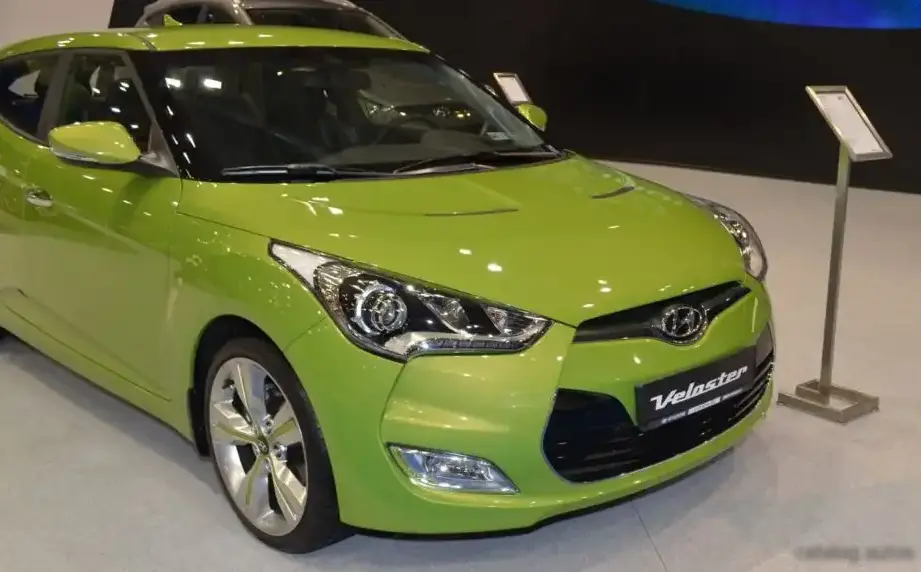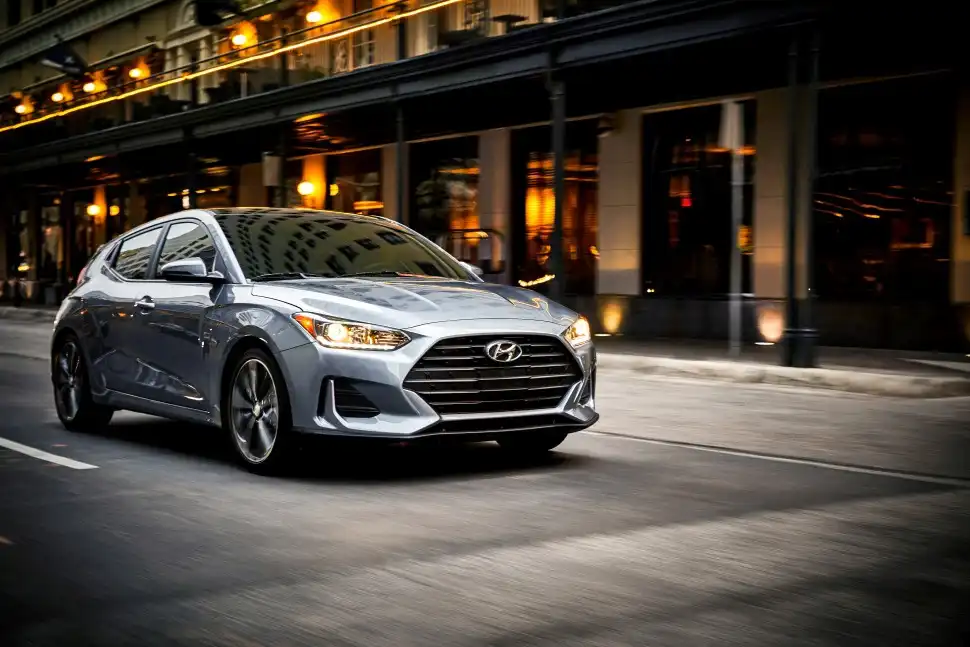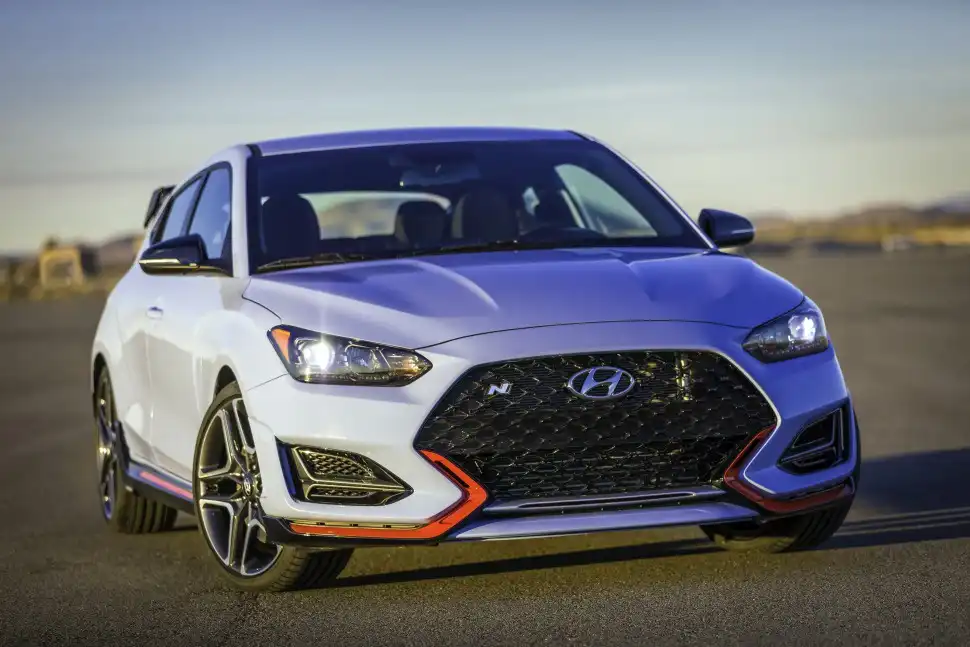
The Hyundai Veloster (facelift, produced from 2015 to 2018) 1.6-liter turbocharged automatic represents a significant iteration of Hyundai’s quirky, three-door hatchback. Introduced as part of a mid-cycle refresh, this variant aimed to broaden the Veloster’s appeal by offering a balance of performance, fuel efficiency, and convenience. Positioned as a mid-range offering within the Veloster lineup, it sat between the base 1.6-liter naturally aspirated model and the more performance-focused Veloster Turbo with a manual transmission. The facelift brought revised styling, improved interior materials, and updated technology, solidifying the Veloster’s position as a unique and youthful offering in the compact car segment.
Technical Specifications
| Brand | Hyundai |
| Model | Veloster |
| Generation | Veloster (facelift 2015) |
| Type (Engine) | 1.6 (186 Hp) Automatic |
| Start of production | 2015 |
| End of production | 2018 |
| Powertrain Architecture | Internal Combustion engine |
| Body type | Hatchback |
| Seats | 4 |
| Doors | 4 |
| Fuel consumption (urban) | 9.4 l/100 km (25 US mpg) |
| Fuel consumption (extra urban) | 5.8 l/100 km (40.6 US mpg) |
| Fuel consumption (combined) | 7.1 l/100 km (33.1 US mpg) |
| CO2 emissions | 165 g/km |
| Fuel Type | Petrol (Gasoline) |
| Acceleration 0 – 100 km/h | 8 sec |
| Acceleration 0 – 62 mph | 8 sec |
| Acceleration 0 – 60 mph | 7.6 sec |
| Maximum speed | 214 km/h (132.97 mph) |
| Emission standard | Euro 6 |
| Weight-to-power ratio | 6.6 kg/Hp |
| Weight-to-torque ratio | 4.6 kg/Nm |
| Power | 186 Hp @ 5500 rpm |
| Torque | 265 Nm @ 1500-4500 rpm (195.45 lb.-ft.) |
| Engine layout | Front, Transverse |
| Engine Model/Code | Gamma II / G4FJ |
| Engine displacement | 1591 cm3 (97.09 cu. in.) |
| Number of cylinders | 4 |
| Engine configuration | Inline |
| Cylinder Bore | 77 mm (3.03 in.) |
| Piston Stroke | 85.4 mm (3.36 in.) |
| Number of valves per cylinder | 4 |
| Engine aspiration | Turbocharger, Intercooler |
| Engine oil capacity | 4.5 l (4.76 US qt) |
| Coolant capacity | 5 l (5.28 US qt) |
| Kerb Weight | 1225-1285 kg (2700.66 – 2832.94 lbs.) |
| Max. weight | 1750 kg (3858.09 lbs.) |
| Max load | 465-525 kg (1025.15 – 1157.43 lbs.) |
| Trunk (boot) space – minimum | 320 l (11.3 cu. ft.) |
| Trunk (boot) space – maximum | 1015 l (35.84 cu. ft.) |
| Fuel tank capacity | 50 l (13.21 US gal) |
| Length | 4250 mm (167.32 in.) |
| Width | 1805 mm (71.06 in.) |
| Height | 1405 mm (55.31 in.) |
| Wheelbase | 2650 mm (104.33 in.) |
| Front track | 1557 mm (61.3 in.) |
| Rear track | 1570 mm (61.81 in.) |
| Front overhang | 850 mm (33.46 in.) |
| Rear overhang | 750 mm (29.53 in.) |
| Ride height (ground clearance) | 149 mm (5.87 in.) |
| Drivetrain Architecture | Front wheel drive |
| Drive wheel | Front wheel drive |
| Number of gears | 7 |
| Gearbox type | Automatic transmission |
| Front brakes | Ventilated discs |
| Rear brakes | Disc |
| Assisting systems | ABS (Anti-lock braking system) |
| Steering type | Steering rack and pinion |
| Power steering | Electric Steering |
| Tires size | 225/40 R18 |
| Wheel rims size | 7.5 J x 18 |
Powertrain & Engine Architecture
The heart of the 2015-2018 Veloster 1.6 Automatic is the Hyundai Gamma II engine, specifically the G4FJ code. This 1.6-liter inline-four cylinder engine utilizes a single-scroll turbocharger with an intercooler to boost power output to 186 horsepower at 5500 rpm and 195 lb-ft of torque between 1500 and 4500 rpm. The engine employs gasoline direct injection (GDI) for improved fuel efficiency and responsiveness. The valvetrain features dual continuously variable valve timing (CVVT) on both intake and exhaust camshafts, optimizing engine performance across the rev range. The engine is transversely mounted, driving the front wheels. Paired with the engine is a seven-speed dual-clutch transmission (DCT), offering quicker shifts and improved efficiency compared to a traditional automatic. This DCT was a key upgrade in the facelift model, replacing the older six-speed automatic found in earlier Velosters.
Driving Characteristics
The 1.6-liter turbocharged engine with the seven-speed DCT provides a noticeable step up in performance compared to the base Veloster. Acceleration from 0-60 mph takes approximately 7.6 seconds, making it a reasonably quick hatchback. The DCT delivers crisp and responsive shifts, particularly in Sport mode. However, some drivers noted a slight hesitation at low speeds or during initial acceleration. The gear ratios are tuned for a balance of acceleration and fuel economy, with taller gearing in higher gears for efficient cruising. Compared to the manual transmission version of the same engine, the automatic sacrifices some driver engagement but offers greater convenience, especially in urban driving conditions. The automatic also feels less energetic than the higher-output 200 hp Veloster Turbo.
Equipment & Trim Levels
The 1.6-liter automatic Veloster typically came equipped with a respectable array of standard features. These included air conditioning, power windows and locks, a touchscreen infotainment system with Bluetooth connectivity, a rearview camera, and alloy wheels. Higher trim levels added features such as a panoramic sunroof, leather upholstery, heated front seats, a premium audio system, and advanced safety technologies like lane departure warning and automatic emergency braking. Interior upholstery was typically cloth on the base models, with leather options available on higher trims. The dashboard layout was revised in the 2015 facelift, featuring a more modern and streamlined design.
Chassis & Braking
The Veloster utilizes a front-wheel-drive platform with a MacPherson strut front suspension and a coupled torsion beam rear suspension. The suspension tuning is geared towards providing a comfortable ride with reasonable handling characteristics. The facelifted model saw minor revisions to the suspension geometry for improved stability. Braking duties are handled by ventilated front discs and solid rear discs. Anti-lock braking system (ABS) is standard, providing enhanced stopping power and control. The steering is electrically assisted, offering light and precise steering feel.
Market Reception & Comparison
The 2015-2018 Veloster 1.6 Automatic was generally well-received by automotive critics. It was praised for its stylish design, comfortable ride, and improved performance compared to the base model. However, some reviewers noted the limited rear passenger space due to the three-door configuration and the slightly hesitant behavior of the DCT at low speeds. Compared to rivals like the Honda Civic, Mazda3, and Volkswagen GTI, the Veloster offered a unique and more affordable alternative. Fuel economy was competitive, averaging around 33 mpg in combined driving. Reliability was generally good, with few major issues reported.
Legacy
The Hyundai Veloster 1.6 Automatic has proven to be a relatively reliable and affordable used car option. The Gamma II engine and DCT transmission have demonstrated good durability with proper maintenance. Common issues are relatively minor, often related to routine wear and tear. The Veloster’s unique styling and engaging driving dynamics continue to appeal to a younger demographic. As a result, well-maintained examples of the 2015-2018 Veloster 1.6 Automatic hold their value reasonably well in the used car market, offering a compelling blend of style, performance, and practicality.