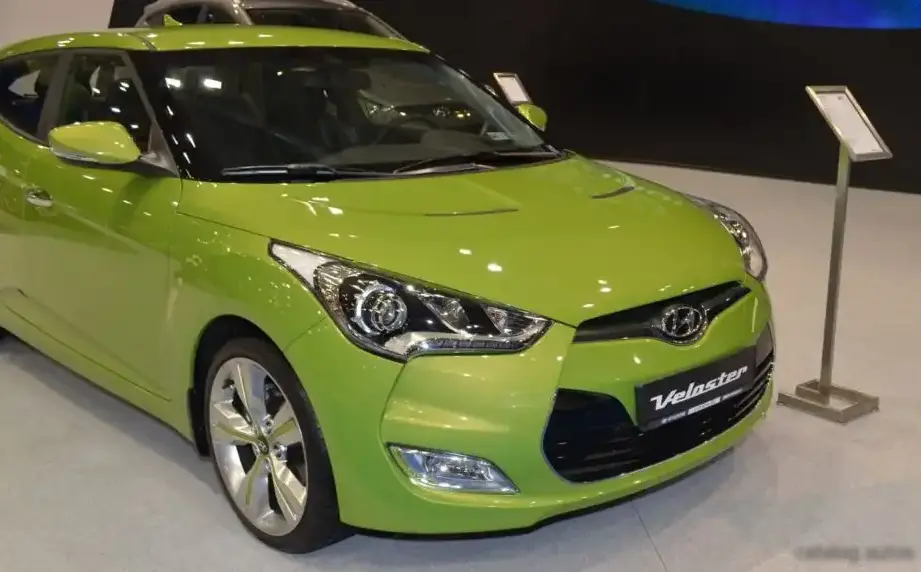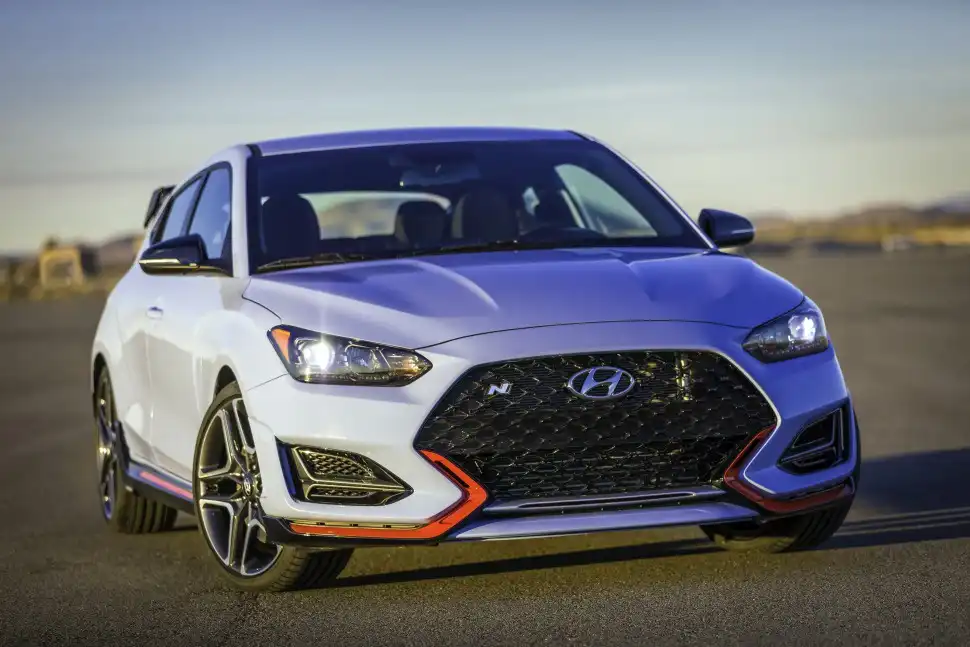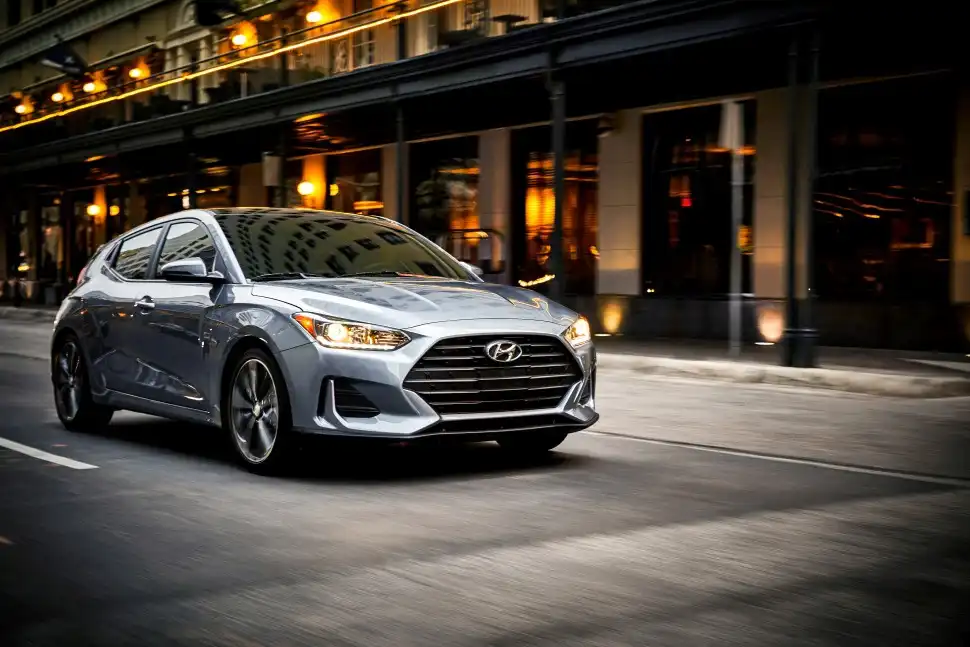
The Hyundai Veloster II 1.6 GDI (201 horsepower) with a Dual Clutch Transmission (DCT) represents a significant iteration of Hyundai’s uniquely styled coupe, launched for the 2018 model year and continuing through subsequent years. Positioned as a mid-range offering within the Veloster II lineup, it aimed to bridge the gap between the base engine’s economy and the higher-performance N model’s track focus. This variant was primarily marketed towards younger buyers seeking a sporty, technologically advanced, and relatively affordable vehicle. The Veloster II, built on the Hyundai-Kia K2 platform, distinguished itself with its asymmetrical door configuration – a single door on the driver’s side and two on the passenger side – and a coupe-like profile that belied its functional hatchback design.
Technical Specifications
| Brand | Hyundai |
| Model | Veloster |
| Generation | Veloster II |
| Type (Engine) | 1.6 GDI (201 Hp) DCT |
| Start of production | 2018 |
| Powertrain Architecture | Internal Combustion engine |
| Body type | Coupe, Hatchback |
| Seats | 4 |
| Doors | 4 |
| Fuel consumption (urban) | 8.4 l/100 km (28 US mpg) |
| Fuel consumption (extra urban) | 6.9 l/100 km (34.1 US mpg) |
| Fuel consumption (combined) | 7.8 l/100 km (30.2 US mpg) |
| Fuel Type | Petrol (Gasoline) |
| Weight-to-power ratio | 6.5 kg/Hp, 152.9 Hp/tonne |
| Weight-to-torque ratio | 5 kg/Nm, 200.8 Nm/tonne |
| Power | 201 Hp @ 6000 rpm |
| Power per litre | 126.3 Hp/l |
| Torque | 264 Nm @ 1500-4500 rpm (194.72 lb.-ft. @ 1500-4500 rpm) |
| Engine layout | Front, Transverse |
| Engine Model/Code | Gamma II / G4FJ |
| Engine displacement | 1591 cm3 (97.09 cu. in.) |
| Number of cylinders | 4 |
| Engine configuration | Inline |
| Cylinder Bore | 77 mm (3.03 in.) |
| Piston Stroke | 85.4 mm (3.36 in.) |
| Compression ratio | 10:1 |
| Number of valves per cylinder | 4 |
| Fuel injection system | Direct injection |
| Engine aspiration | Turbocharger, Intercooler |
| Valvetrain | DOHC |
| Engine oil capacity | 4.5 l (4.76 US qt | 3.96 UK qt) |
| Coolant | 7.1 l (7.5 US qt | 6.25 UK qt) |
| Kerb Weight | 1315-1355 kg (2899.08 – 2987.26 lbs.) |
| Max. weight | 1750 kg (3858.09 lbs.) |
| Max load | 395-435 kg (870.83 – 959.01 lbs.) |
| Trunk (boot) space – minimum | 564 l (19.92 cu. ft.) |
| Trunk (boot) space – maximum | 1260 l (44.5 cu. ft.) |
| Fuel tank capacity | 50 l (13.21 US gal | 11 UK gal) |
| Length | 4239 mm (166.89 in.) |
| Width | 1801 mm (70.91 in.) |
| Height | 1400 mm (55.12 in.) |
| Wheelbase | 2649 mm (104.29 in.) |
| Front track | 1549 mm (60.98 in.) |
| Rear (Back) track | 1562 mm (61.5 in.) |
| Minimum turning circle | 10.6 m (34.78 ft.) |
| Drivetrain Architecture | Front wheel drive |
| Number of gears and type of gearbox | 7 gears, automatic transmission DCT |
| Front suspension | Independent, type McPherson with coil spring and anti-roll bar |
| Rear suspension | Independent multi-link suspension |
| Front brakes | Ventilated discs |
| Rear brakes | Disc |
| Assisting systems | ABS (Anti-lock braking system) |
| Steering type | Steering rack and pinion |
| Power steering | Electric Steering |
| Tires size | 225/40 R18 |
| Wheel rims size | 7.5J x 18 |
INTRODUCTION
The 1.6 GDI DCT Veloster II debuted as a compelling option for buyers seeking a balance between performance and efficiency. It slotted into the lineup above the naturally aspirated 1.6L base model and below the significantly more potent Veloster N. Production spanned from 2018 onwards, forming a core part of the second-generation Veloster’s sales volume in markets like the United States, Canada, and select international regions. The Veloster II, as a whole, represented Hyundai’s continued push towards more expressive styling and a focus on appealing to a younger demographic. The asymmetrical door layout, while unconventional, became a defining characteristic of the model.
Powertrain & Engine Architecture
At the heart of the 1.6 GDI DCT Veloster II lies the Hyundai Gamma II engine, specifically the G4FJ code. This 1.6-liter inline-four cylinder engine utilizes direct fuel injection (GDI) and a single scroll turbocharger with an intercooler to produce 201 horsepower at 6000 rpm and 264 Nm (194.72 lb-ft) of torque between 1500 and 4500 rpm. The direct injection system allows for precise fuel delivery, enhancing both power and fuel efficiency. The engine features a dual continuously variable valve timing (D-CVVT) system, optimizing valve timing for improved performance across the rev range. The engine’s aluminum cylinder head and block contribute to weight reduction. Paired with this engine is Hyundai’s seven-speed dual-clutch transmission (DCT). This DCT offers quicker and smoother shifts compared to a traditional automatic transmission, contributing to a more engaging driving experience. The DCT features paddle shifters, allowing for manual gear selection when desired.
Driving Characteristics
The 1.6 GDI DCT Veloster II delivers a noticeably more spirited driving experience than the base model. The turbocharger provides a readily available boost of power, making for responsive acceleration in everyday driving situations. While not as aggressively tuned as the Veloster N, the 1.6 GDI offers ample power for confident highway merging and passing maneuvers. The DCT transmission contributes to this responsiveness, providing quick and precise gear changes. The gear ratios are tuned for a balance between acceleration and fuel economy. Compared to a manual transmission equipped Veloster, the DCT offers convenience and ease of use, particularly in stop-and-go traffic. However, some drivers may find the DCT’s shift logic slightly less intuitive than a traditional manual gearbox. The suspension is tuned for a comfortable ride, but still provides adequate body control during cornering.
Equipment & Trim Levels
The 1.6 GDI DCT trim typically included a generous array of standard features. These commonly included a 7-inch touchscreen infotainment system with Apple CarPlay and Android Auto compatibility, a rearview camera, automatic climate control, and keyless entry. Interior upholstery was typically cloth, with available upgrades to leather. Optional extras included a premium audio system, a sunroof, and blind-spot monitoring with rear cross-traffic alert. The dashboard layout was driver-focused, with a clear and intuitive design. Exterior styling cues included unique alloy wheel designs and a rear spoiler.
Chassis & Braking
The Veloster II utilizes a McPherson strut front suspension and a multi-link rear suspension. This setup provides a good balance between ride comfort and handling precision. The front suspension incorporates a stabilizer bar to reduce body roll during cornering. Braking duties are handled by ventilated discs at the front and solid discs at the rear. Anti-lock braking system (ABS) is standard, enhancing braking performance and stability. The steering system is an electric power-assisted rack and pinion system, providing precise and responsive steering feel.
Market Reception & Comparison
The 1.6 GDI DCT Veloster II was generally well-received by automotive critics. It was praised for its stylish design, engaging driving dynamics, and generous feature set. Compared to the base model, the 1.6 GDI offered a significant performance upgrade without the higher price tag of the Veloster N. Fuel economy was also a strong point, with the 1.6 GDI achieving around 30 mpg combined. Compared to competitors like the Honda Civic Coupe and Mazda MX-5 Miata, the Veloster II offered a unique combination of practicality, style, and performance. Some critics noted that the interior materials could be improved, and the rear seat space was somewhat limited due to the coupe-like roofline.
Legacy
The Hyundai Veloster II 1.6 GDI DCT has proven to be a relatively reliable powertrain in the used car market. The Gamma II engine is known for its durability, and the DCT transmission, while requiring occasional maintenance, has generally held up well over time. The Veloster II continues to be a popular choice for buyers seeking an affordable and stylish coupe. Its unique design and engaging driving dynamics have cemented its place as a distinctive offering in the compact car segment. As with any used vehicle, regular maintenance and careful inspection are recommended to ensure long-term reliability.