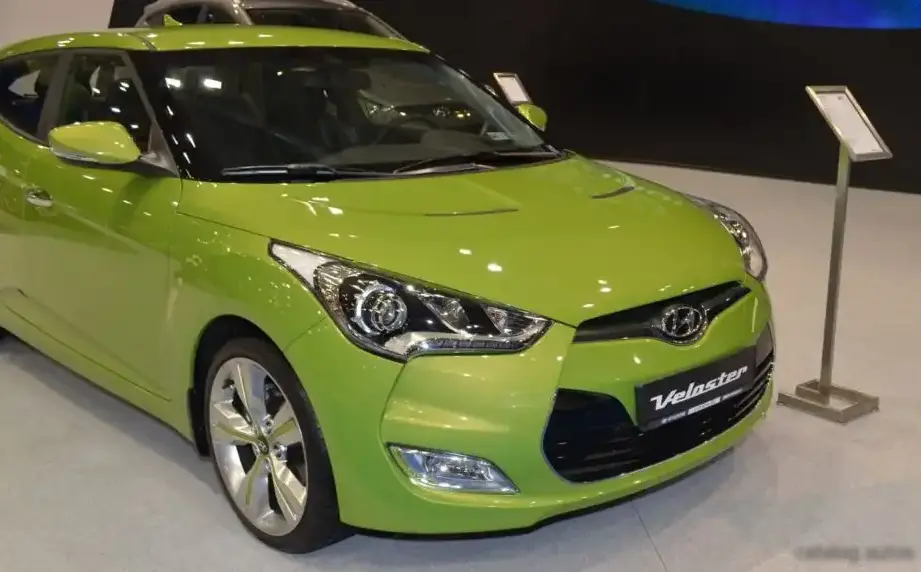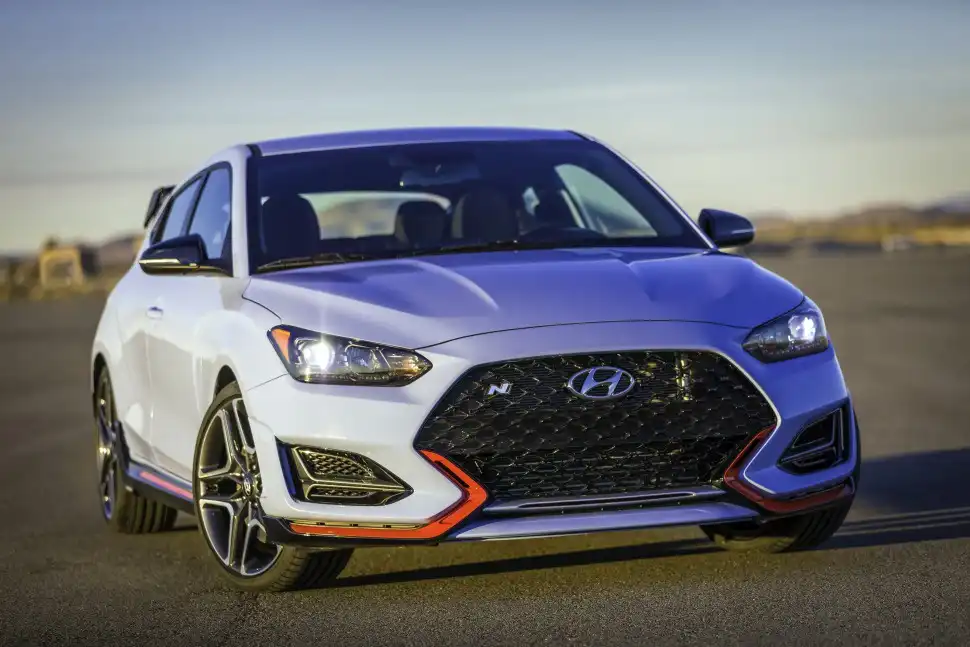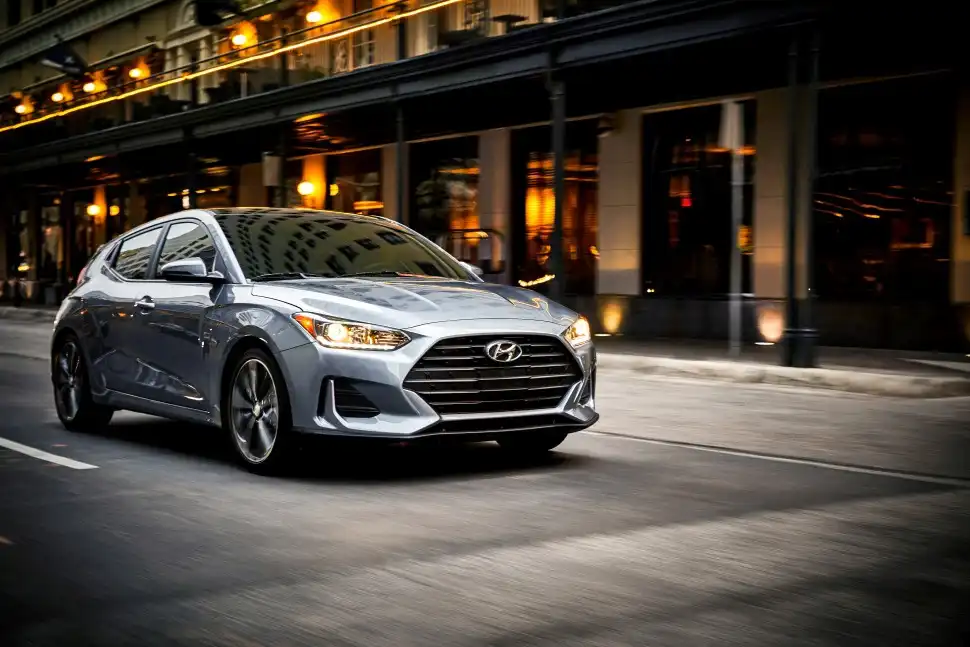
The Hyundai Veloster II 2.0 MPI, producing 147 horsepower, represents a key variant within the second generation of Hyundai’s distinctive coupe-inspired hatchback. Introduced in 2018, this model occupied a mid-range position in the Veloster lineup, offering a balance between performance and affordability. It was designed to appeal to buyers seeking a sporty, yet practical, vehicle with a unique aesthetic. The Veloster II, built on the Hyundai-Kia K2 platform, aimed to broaden the appeal of the original Veloster by addressing criticisms regarding its limited rear passenger space and engine options. This 2.0 MPI version was primarily marketed in North America and select international markets.
Technical Specifications
| Brand | Hyundai |
| Model | Veloster |
| Generation | Veloster II |
| Type (Engine) | 2.0 MPI (147 Hp) |
| Start of production | 2018 |
| Powertrain Architecture | Internal Combustion engine |
| Body type | Coupe, Hatchback |
| Seats | 4 |
| Doors | 4 |
| Fuel consumption (urban) | 9.4 l/100 km (25 US mpg) |
| Fuel consumption (extra urban) | 7.1 l/100 km (33.1 US mpg) |
| Fuel consumption (combined) | 8.4 l/100 km (28 US mpg) |
| Fuel Type | Petrol (Gasoline) |
| Weight-to-power ratio | 8.3 kg/Hp |
| Weight-to-torque ratio | 6.8 kg/Nm |
| Power | 147 Hp @ 6200 rpm |
| Power per litre | 73.5 Hp/l |
| Torque | 179 Nm @ 4500 rpm (132.02 lb.-ft. @ 4500 rpm) |
| Engine layout | Front, Transverse |
| Engine Model/Code | Nu / G4NH |
| Engine displacement | 1999 cm3 (121.99 cu. in.) |
| Number of cylinders | 4 |
| Engine configuration | Inline |
| Cylinder Bore | 81 mm (3.19 in.) |
| Piston Stroke | 97 mm (3.82 in.) |
| Compression ratio | 12.5:1 |
| Number of valves per cylinder | 4 |
| Fuel injection system | Multi-port manifold injection |
| Engine aspiration | Naturally aspirated engine |
| Valvetrain | DOHC, D-CVVT |
| Engine oil capacity | 4 l (4.23 US qt | 3.52 UK qt) |
| Coolant capacity | 6.5 l (6.87 US qt | 5.72 UK qt) |
| Kerb Weight | 1225-1280 kg (2700.66 – 2821.92 lbs.) |
| Max. weight | 1700 kg (3747.86 lbs.) |
| Max load | 420-475 kg (925.94 – 1047.2 lbs.) |
| Trunk (boot) space – minimum | 564 l (19.92 cu. ft.) |
| Trunk (boot) space – maximum | 1260 l (44.5 cu. ft.) |
| Fuel tank capacity | 50 l (13.21 US gal | 11 UK gal) |
| Length | 4239 mm (166.89 in.) |
| Width | 1801 mm (70.91 in.) |
| Height | 1400 mm (55.12 in.) |
| Wheelbase | 2649 mm (104.29 in.) |
| Front track | 1549-1562 mm (60.98 – 61.5 in.) |
| Rear (Back) track | 1562-1575 mm (61.5 – 62.01 in.) |
| Minimum turning circle | 10.6 m (34.78 ft.) |
| Drivetrain Architecture | Front wheel drive |
| Number of gears | 6 gears, manual transmission |
| Front suspension | Independent, McPherson with coil spring and anti-roll bar |
| Rear suspension | Independent multi-link suspension |
| Front brakes | Ventilated discs |
| Rear brakes | Disc |
| Assisting systems | ABS (Anti-lock braking system) |
| Steering type | Steering rack and pinion |
| Power steering | Electric Steering |
| Tires size | 215/45 R17; 225/40 R18 |
| Wheel rims size | 7.0J x 17; 7.5J x 18 |
Powertrain & Engine Architecture
The heart of the Veloster II 2.0 MPI is Hyundai’s Nu engine family, specifically the G4NH code. This 1.999-liter inline-four cylinder engine utilizes multi-point fuel injection and a double overhead camshaft (DOHC) valvetrain with Hyundai’s Dual Continuously Variable Valve Timing (D-CVVT) technology. D-CVVT optimizes valve timing based on engine load and speed, improving both fuel efficiency and performance. The engine produces 147 horsepower at 6,200 rpm and 132 lb-ft of torque at 4,500 rpm. The 6-speed manual transmission was standard, offering a direct and engaging driving experience. The engine’s design prioritizes reliability and ease of maintenance, utilizing a timing chain rather than a belt, reducing the frequency of scheduled replacements.
Driving Characteristics
The 2.0 MPI Veloster offers a reasonably spirited driving experience, particularly when equipped with the 6-speed manual transmission. While not a high-performance machine, the engine provides adequate power for everyday driving and occasional spirited runs. The manual gearbox is well-matched to the engine’s powerband, allowing for precise control. Compared to the more powerful turbocharged variants, the 2.0 MPI feels less urgent off the line, but its linear power delivery makes it predictable and easy to manage. The gear ratios are tuned for a balance between acceleration and fuel economy. The front-wheel-drive configuration provides decent grip in most conditions, although traction control is essential in slippery situations.
Equipment & Trim Levels
The 2.0 MPI Veloster typically came standard with features such as air conditioning, power windows and locks, a touchscreen infotainment system with Bluetooth connectivity, and a rearview camera. Higher trim levels added features like a sunroof, leather upholstery, heated seats, and a premium audio system. Interior materials were generally of good quality for the price point, with a focus on sporty aesthetics. Available exterior colors included a range of vibrant options, reflecting the Veloster’s youthful target demographic. Optional packages often included driver-assistance features like blind-spot monitoring and rear cross-traffic alert.
Chassis & Braking
The Veloster II utilizes a McPherson strut front suspension and a multi-link rear suspension, providing a comfortable ride and competent handling. The suspension is tuned to strike a balance between ride comfort and sporty responsiveness. Front brakes are ventilated discs, while rear brakes are solid discs, providing adequate stopping power for the vehicle’s weight and performance. Anti-lock Braking System (ABS) is standard. The chassis is relatively lightweight, contributing to the car’s agility. Stabilizer bars are fitted to both the front and rear axles to reduce body roll during cornering.
Market Reception & Comparison
The Veloster II 2.0 MPI was generally well-received by automotive critics as an affordable and stylish entry-level coupe. It was praised for its unique design, comfortable interior, and user-friendly technology. However, some reviewers noted that the 2.0-liter engine could feel underpowered compared to the turbocharged options. Fuel economy was considered competitive for its class. Compared to the turbocharged 1.6L Veloster, the 2.0 MPI offered a lower purchase price but sacrificed some performance. Compared to rivals like the Honda Civic Coupe and Mazda MX-5 Miata, the Veloster offered a unique blend of practicality and style, with the added benefit of a hatchback configuration.
Legacy
The Hyundai Veloster II 2.0 MPI has proven to be a reliable and durable vehicle in the used car market. The Nu engine is known for its longevity, and the 6-speed manual transmission is generally trouble-free. Routine maintenance, such as oil changes and timing chain inspection, is crucial for maintaining its long-term reliability. The Veloster II, in general, helped establish Hyundai as a serious contender in the compact car segment, demonstrating the brand’s ability to produce stylish, well-equipped, and reliable vehicles. Today, the 2.0 MPI variant remains a popular choice for buyers seeking an affordable and distinctive coupe with a proven track record.