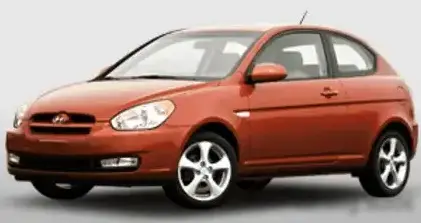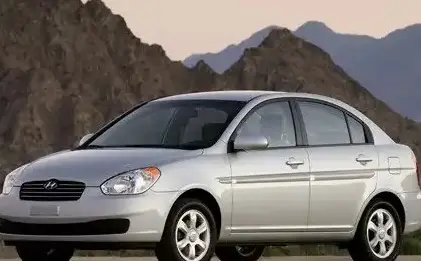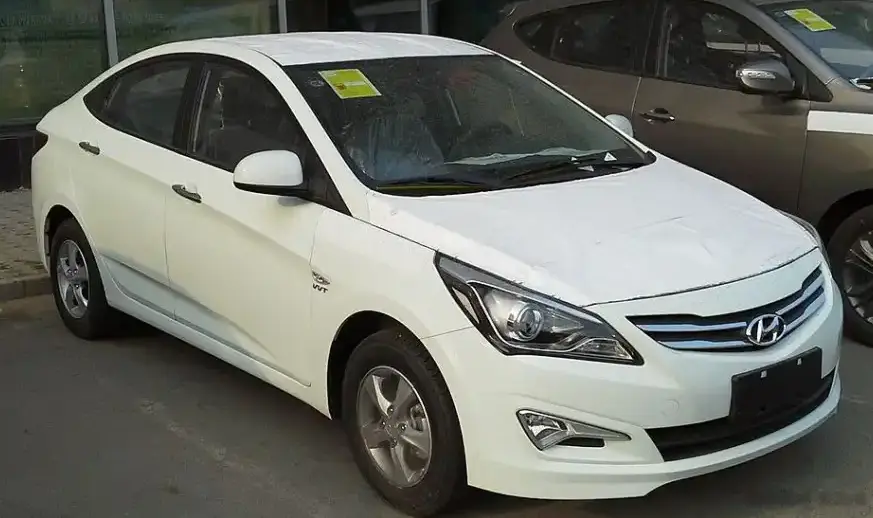
The Hyundai Verna IV facelift, produced from 2015 to 2017, represented a significant update to Hyundai’s compact sedan offering. Within this generation, the 1.6 16V (123 hp) Automatic variant occupied a crucial middle ground, aiming to balance affordability with a degree of convenience and refinement. This model was primarily targeted at buyers seeking a comfortable and practical daily driver, particularly in markets where automatic transmissions were highly preferred. The facelift brought revised styling, improved interior materials, and enhanced features compared to the pre-2015 Verna IV, solidifying its position as a competitive option in the compact sedan segment.
Technical Specifications
| Brand | Hyundai |
| Model | Verna |
| Generation | Verna IV (facelift 2015) |
| Type (Engine) | 1.6 16V (123 Hp) Automatic |
| Start of production | 2015 |
| End of production | 2017 |
| Powertrain Architecture | Internal Combustion engine |
| Body type | Sedan |
| Seats | 5 |
| Doors | 4 |
| Fuel Type | Petrol (Gasoline) |
| Power | 123 Hp @ 6400 rpm |
| Power per litre | 77.3 Hp/l |
| Torque | 151 Nm @ 4850 rpm / 111.37 lb.-ft. @ 4850 rpm |
| Engine layout | Front, Transverse |
| Engine Model/Code | Gamma II / G4FG |
| Engine displacement | 1591 cm3 / 97.09 cu. in. |
| Number of cylinders | 4 |
| Engine configuration | Inline |
| Number of valves per cylinder | 4 |
| Fuel injection system | Multi-port manifold injection |
| Engine aspiration | Naturally aspirated engine |
| Valvetrain | DOHC, Dual VTVT |
| Engine oil capacity | 3.6 l / 3.8 US qt | 3.17 UK qt |
| Coolant | 5.3 l / 5.6 US qt | 4.66 UK qt |
| Fuel tank capacity | 45 l / 11.89 US gal | 9.9 UK gal |
| Length | 4440 mm / 174.8 in. |
| Width | 1729 mm / 68.07 in. |
| Height | 1475 mm / 58.07 in. |
| Wheelbase | 2600 mm / 102.36 in. |
| Drivetrain Architecture | The Internal combustion engine (ICE) drives the front wheels of the vehicle. |
| Drive wheel | Front wheel drive |
| Number of gears and type of gearbox | 6 gears, automatic transmission |
| Front suspension | Independent type McPherson |
| Rear suspension | Torsion |
| Front brakes | Ventilated discs |
| Rear brakes | Drum |
| Assisting systems | ABS (Anti-lock braking system) |
| Steering type | Steering rack and pinion |
| Tires size | 185/65 R15; 195/55 R16 |
| Wheel rims size | 15; 16 |
Powertrain & Engine Architecture
The heart of the Verna IV 1.6 Automatic is the Hyundai Gamma II engine, specifically the G4FG code. This 1.6-liter inline-four engine utilizes a multi-port fuel injection system, delivering fuel directly into the intake manifold. The engine features a double overhead camshaft (DOHC) valvetrain with Hyundai’s Dual Variable Timing (VTVT) technology. Dual VTVT optimizes valve timing on both the intake and exhaust sides, improving engine efficiency and responsiveness across the rev range. This engine is naturally aspirated, meaning it doesn’t rely on turbocharging or supercharging for increased power. The six-speed automatic transmission was a key selling point for this variant, offering smoother gear changes compared to manual transmissions, which were also available. The transmission’s gear ratios were tuned for a balance of fuel economy and acceptable acceleration.
Driving Characteristics
The 123 hp and 151 Nm (111 lb-ft) of torque produced by the 1.6-liter engine, coupled with the six-speed automatic, resulted in a driving experience geared towards comfort and ease of use rather than outright performance. Acceleration was adequate for everyday driving situations, but it wasn’t particularly brisk. The automatic transmission, while smooth, could sometimes feel hesitant during quick overtaking maneuvers. Compared to the more powerful engine options available in the Verna IV range, such as the 1.6 GDI, this variant offered a more relaxed driving experience. The automatic transmission’s shift points were programmed to prioritize fuel efficiency, which meant the engine didn’t always feel like it was in its optimal power band. The steering was light and easy to use, making it well-suited for urban driving.
Equipment & Trim Levels
The 1.6 Automatic trim level of the Verna IV facelift typically included standard features such as air conditioning, power windows, power door locks, and a basic audio system with USB connectivity. Higher trim levels added features like alloy wheels, a touchscreen infotainment system, a rearview camera, and automatic climate control. Interior upholstery was generally cloth, with optional leather seats available on higher-spec models. Safety features included dual airbags and ABS (Anti-lock Braking System). The specific equipment levels varied depending on the regional market and optional packages selected by the buyer.
Chassis & Braking
The Verna IV utilized a front-wheel-drive layout with an independent McPherson strut suspension in the front and a torsion beam suspension in the rear. This suspension setup provided a comfortable ride quality, absorbing bumps and imperfections in the road surface effectively. The front brakes were ventilated discs, offering good stopping power, while the rear brakes were drums, a cost-saving measure common in this class of vehicle. The steering system employed a rack and pinion setup, providing precise and responsive steering feel. Stabilizer bars were included to reduce body roll during cornering.
Market Reception & Comparison
The Hyundai Verna IV 1.6 Automatic was generally well-received by critics as a practical and affordable compact sedan. It was praised for its comfortable ride, spacious interior, and good value for money. However, some reviewers noted that the engine lacked outright power and that the automatic transmission could be slow to respond at times. Compared to other trims in the Verna IV lineup, the 1.6 Automatic offered a more accessible price point, making it attractive to budget-conscious buyers. Fuel economy was a strong point, making it a cost-effective option for daily commuting. Reliability was generally good, with few reported issues with the powertrain.
Legacy
The Hyundai Verna IV 1.6 Automatic has proven to be a relatively reliable vehicle in the used car market. The Gamma II engine is known for its durability, and the six-speed automatic transmission has a good track record. Common maintenance items include regular oil changes, filter replacements, and brake pad replacements. While not a performance-oriented vehicle, the Verna IV 1.6 Automatic remains a popular choice for buyers seeking a dependable and affordable compact sedan. Its blend of practicality, comfort, and fuel efficiency continues to make it a viable option in the used car market today, offering a good value proposition for those seeking a no-frills, reliable mode of transportation.