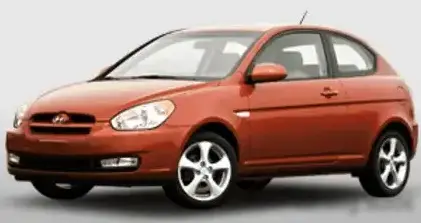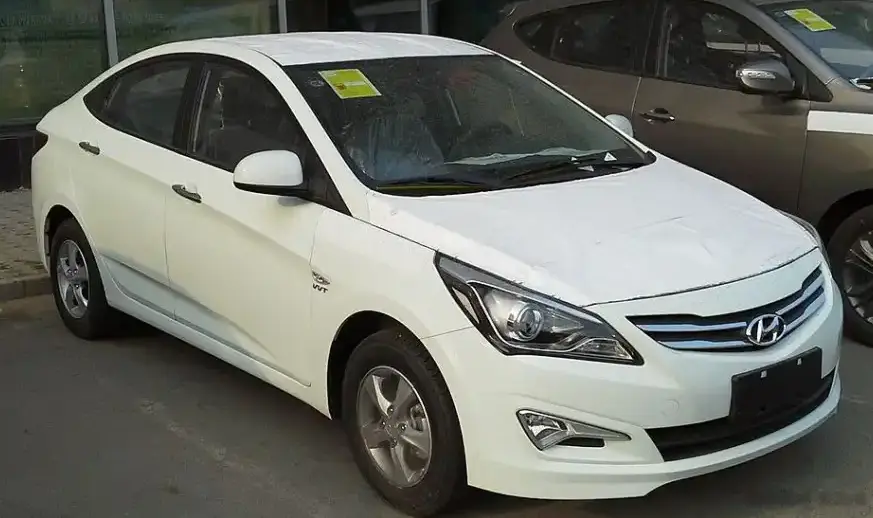
The Hyundai Verna VI 1.5 MPi (115 Hp) represents a key offering in the sixth generation of Hyundai’s globally recognized compact sedan. Introduced in February 2023, this variant is primarily targeted towards markets seeking an economical and practical transportation solution. Positioned as a mainstream trim level within the Verna VI lineup, it serves as an accessible entry point for buyers, offering a balance between fuel efficiency, reasonable performance, and affordability. The Verna VI itself is a significant model for Hyundai, particularly in regions like India and other emerging markets, where compact sedans remain highly popular. This generation builds upon the success of its predecessors, incorporating updated styling, improved technology, and enhanced safety features.
Technical Specifications
| Brand | Hyundai |
| Model | Verna |
| Generation | Verna VI |
| Type (Engine) | 1.5 MPi (115 Hp) |
| Start of production | February, 2023 |
| Powertrain Architecture | Internal Combustion engine |
| Body type | Sedan |
| Seats | 5 |
| Doors | 4 |
| Fuel consumption (combined) | 5.4 l/100 km (43.6 US mpg, 52.3 UK mpg, 18.5 km/l) |
| Fuel Type | Petrol (Gasoline) |
| Power | 115 Hp @ 6300 rpm |
| Power per litre | 76.8 Hp/l |
| Torque | 144 Nm @ 4500 rpm (106.21 lb.-ft. @ 4500 rpm) |
| Engine layout | Front, Transverse |
| Engine Model/Code | Smartstream / G4FL |
| Engine displacement | 1497 cm3 (91.35 cu. in.) |
| Number of cylinders | 4 |
| Engine configuration | Inline |
| Number of valves per cylinder | 4 |
| Fuel injection system | Multi-port manifold injection |
| Engine aspiration | Naturally aspirated engine |
| Engine oil capacity | 3.8 l (4.02 US qt | 3.34 UK qt) |
| Fuel tank capacity | 45 l (11.89 US gal | 9.9 UK gal) |
| Length | 4535 mm (178.54 in.) |
| Width | 1765 mm (69.49 in.) |
| Height | 1475 mm (58.07 in.) |
| Wheelbase | 2670 mm (105.12 in.) |
| Drivetrain Architecture | The Internal combustion engine (ICE) drives the front wheels of the vehicle. |
| Drive wheel | Front wheel drive |
| Number of gears and type of gearbox | 6 gears, manual transmission |
| Front suspension | Coil spring, Independent type McPherson |
| Rear suspension | Torsion |
| Front brakes | Disc |
| Rear brakes | Drum |
| Assisting systems | ABS (Anti-lock braking system) |
| Steering type | Steering rack and pinion |
| Power steering | Electric Steering |
| Tires size | 185/65 R15; 205/55 R16 |
| Wheel rims size | 15; 16 |
Powertrain & Engine Architecture
At the heart of the Verna VI 1.5 MPi is Hyundai’s Smartstream G4FL engine. This 1.5-liter, naturally aspirated inline-four cylinder engine utilizes a multi-port fuel injection (MPI) system. The MPI system, while not as technologically advanced as direct injection, offers a good balance of cost-effectiveness and reliability. The engine produces 115 horsepower at 6,300 rpm and 144 Nm (106.21 lb-ft) of torque at 4,500 rpm. The engine features a dual overhead camshaft (DOHC) valvetrain with four valves per cylinder, contributing to its relatively efficient operation. Paired with this engine is a 6-speed manual transmission, chosen for its simplicity and fuel efficiency. The transmission’s gear ratios are tuned to prioritize fuel economy and smooth everyday driving rather than outright performance.
Driving Characteristics
The driving experience in the Verna VI 1.5 MPi is characterized by its practicality and ease of use. The 115 hp engine provides adequate power for typical commuting and highway driving, although it doesn’t offer particularly brisk acceleration. The 6-speed manual transmission allows for a reasonable degree of driver engagement, but the gear ratios are spaced to emphasize fuel efficiency. Compared to potential turbocharged variants or higher-output engine options, this configuration feels less responsive. However, the lighter engine weight contributes to balanced handling and predictable cornering. The suspension, tuned for comfort, absorbs bumps and imperfections in the road reasonably well, making it a pleasant daily driver.
Equipment & Trim Levels
The 1.5 MPi trim of the Verna VI typically comes standard with essential features such as air conditioning, power windows, power steering, and a basic audio system. Safety features generally include dual airbags, ABS, and rear parking sensors. Higher trim levels build upon this foundation, adding features like alloy wheels, a touchscreen infotainment system with smartphone connectivity (Apple CarPlay and Android Auto), a rearview camera, and automatic climate control. Interior upholstery is typically cloth, with options for upgraded materials in higher trims. The dashboard layout is functional and straightforward, prioritizing ease of use over elaborate design.
Chassis & Braking
The Verna VI utilizes a front-wheel-drive layout. The front suspension employs a McPherson strut design, known for its compact size and relatively good handling characteristics. The rear suspension utilizes a torsion beam setup, which is a cost-effective solution that provides adequate ride comfort. Braking duties are handled by disc brakes at the front and drum brakes at the rear. The inclusion of ABS (Anti-lock Braking System) is standard, enhancing safety during emergency braking situations. Steering is rack and pinion, with electric power assistance for reduced driver effort and improved fuel efficiency.
Market Reception & Comparison
The Verna VI 1.5 MPi has been generally well-received in its target markets as a sensible and affordable compact sedan. Critics have praised its fuel efficiency and comfortable ride quality. However, some have noted that its performance is not particularly exciting compared to competitors offering turbocharged engines. Compared to other trims in the Verna VI lineup, the 1.5 MPi offers the most accessible price point, making it attractive to budget-conscious buyers. Its fuel economy is generally superior to that of higher-output variants, but its acceleration and overall driving experience are less engaging. Competitors in this segment often include the Honda City, Toyota Vios, and Maruti Suzuki Ciaz, each offering a slightly different blend of features, performance, and price.
Legacy
The Hyundai Verna VI 1.5 MPi powertrain is expected to demonstrate good long-term reliability, given Hyundai’s reputation for building durable engines and the relatively simple design of the naturally aspirated engine and manual transmission. The G4FL engine has proven to be a robust unit in other Hyundai and Kia models. In the used car market, this variant is likely to hold its value reasonably well, particularly among buyers seeking a fuel-efficient and reliable daily driver. Its straightforward mechanical design should also translate to lower maintenance costs over the vehicle’s lifespan, making it an attractive option for those prioritizing practicality and affordability.