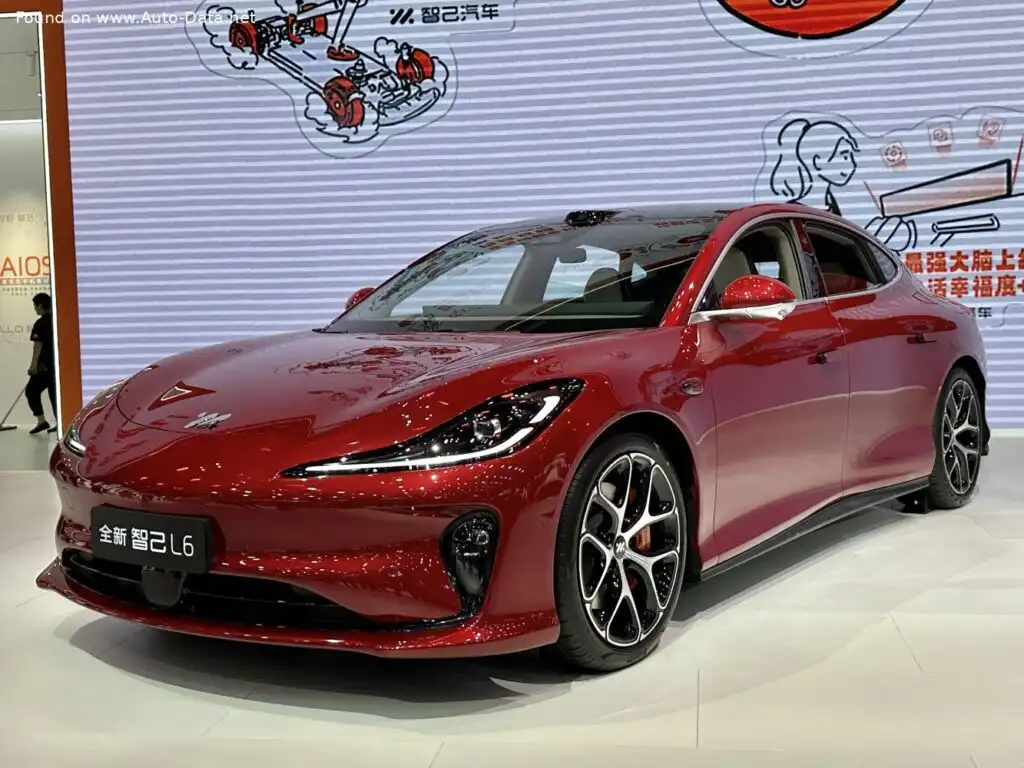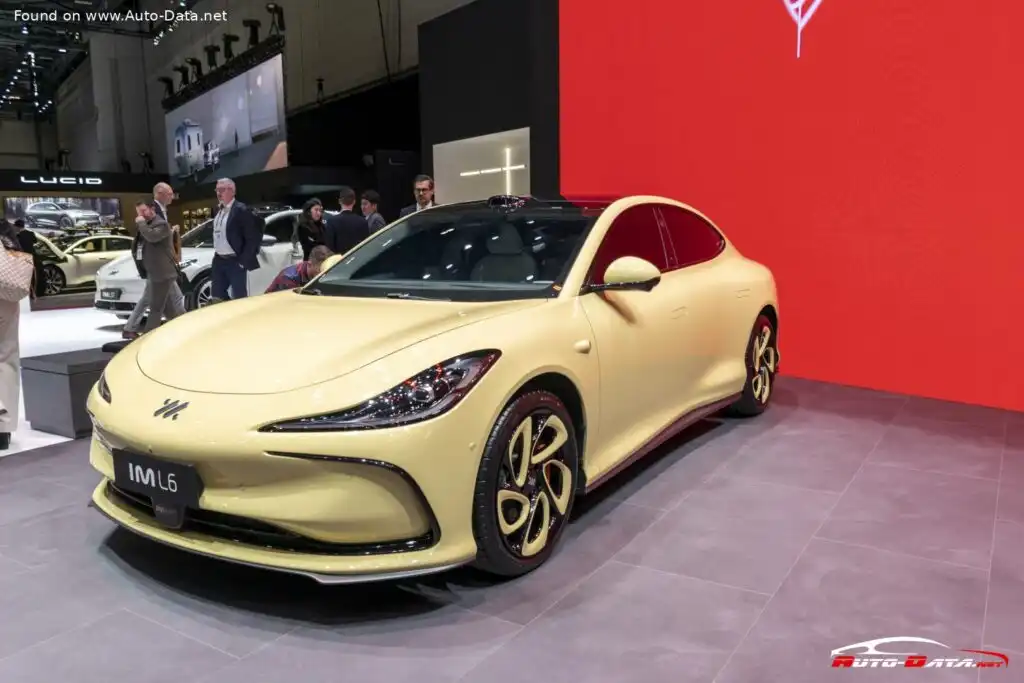
The IM L6 75 kWh (294 Hp) is an all-electric liftback produced by the Chinese automotive manufacturer IM (Intelligent Mobility) from May 2024 to May 2025. Positioned as a technologically advanced and stylish offering in the burgeoning EV market, the L6 represents IM’s commitment to delivering high-performance electric vehicles with a focus on range and efficiency. It’s built upon a dedicated electric vehicle platform and aims to compete with established players in the premium EV segment. The L6 is a five-seater, five-door vehicle designed to appeal to consumers seeking a blend of practicality, performance, and modern design.
Technical Specifications
| Brand | IM |
| Model | L6 |
| Generation | L6 |
| Type (Engine) | 75 kWh (294 Hp) |
| Start of production | May, 2024 |
| End of production | May, 2025 |
| Powertrain Architecture | BEV (Electric Vehicle) |
| Body type | Liftback |
| Seats | 5 |
| Doors | 5 |
| Fuel Type | Electricity |
| Acceleration 0 – 100 km/h | 5.6 sec |
| Acceleration 0 – 62 mph | 5.6 sec |
| Acceleration 0 – 60 mph | 5.3 sec |
| Maximum speed | 200 km/h (124.27 mph) |
| Weight-to-power ratio | 7.2 kg/Hp, 138 Hp/tonne |
| Weight-to-torque ratio | 4.7 kg/Nm, 211.3 Nm/tonne |
| Gross battery capacity | 75 kWh |
| Battery voltage | 400 V |
| Battery technology | Lithium iron phosphate (LiFePO4) |
| Battery location | Below the floor |
| All-electric range | 650 km (403.89 mi) |
| Average Energy consumption | 13.5 kWh/100 km (21.73 kWh/100 mi) |
| MPGe | 155 |
| km/kWh | 7.4 |
| mi/kWh | 4.6 |
| Electric motor power | 294 Hp |
| Electric motor Torque | 450 Nm (331.9 lb.-ft.) |
| Electric motor model/code | TZ230XY1301 |
| Electric motor location | Rear axle, Transverse |
| Electric motor type | Synchronous |
| System power | 294 Hp |
| System torque | 450 Nm (331.9 lb.-ft.) |
| Kerb Weight | 2130 kg (4695.85 lbs.) |
| Max. weight | 2580 kg (5687.93 lbs.) |
| Max load | 450 kg (992.08 lbs.) |
| Trunk (boot) space – minimum | 457 l (16.14 cu. ft.) |
| Trunk (boot) space – maximum | 1290 l (45.56 cu. ft.) |
| Length | 4931 mm (194.13 in.) |
| Width | 1960 mm (77.17 in.) |
| Height | 1474 mm (58.03 in.) |
| Wheelbase | 2950 mm (116.14 in.) |
| Front track | 1665 mm (65.55 in.) |
| Rear (Back) track | 1672 mm (65.83 in.) |
| Minimum turning circle | 9.98 m (32.74 ft.) |
| Front brakes | Ventilated discs |
| Rear brakes | Ventilated discs |
| Drive wheel | Rear wheel drive |
| Number of gears | 1 |
| Gearbox type | automatic transmission |
Powertrain & Engine Architecture
The IM L6 75 kWh is powered by a single rear-mounted synchronous electric motor producing 294 horsepower and 450 Nm (331.9 lb.-ft.) of torque. The motor, designated TZ230XY1301, is fed by a 75 kWh Lithium Iron Phosphate (LiFePO4) battery pack located under the vehicle floor. LiFePO4 chemistry is favored for its improved thermal stability and longer cycle life compared to traditional Nickel Manganese Cobalt (NMC) batteries, though it typically offers slightly lower energy density. The 400V architecture is a common choice for mainstream EVs, balancing cost and performance. The single-speed automatic transmission is inherent to electric vehicle drivetrains, providing seamless acceleration without the need for multiple gears. The powertrain is designed for rear-wheel drive, contributing to a balanced driving experience.
Driving Characteristics
The L6 75 kWh delivers brisk acceleration, achieving 0-60 mph in approximately 5.3 seconds. The rear-wheel-drive configuration provides a responsive feel, and the instant torque characteristic of electric motors offers strong off-the-line performance. While not as aggressively tuned as some performance-focused EVs, the L6 strikes a balance between efficiency and driving enjoyment. The single-speed transmission ensures smooth and linear power delivery. Compared to potential higher-performance variants (if offered), the 75 kWh model prioritizes range and efficiency over outright speed. The weight distribution, influenced by the battery pack’s location, contributes to stable handling.
Equipment & Trim Levels
The IM L6 75 kWh comes standard with a comprehensive suite of technology and comfort features. These typically include a large touchscreen infotainment system, digital instrument cluster, advanced driver-assistance systems (ADAS) such as adaptive cruise control and lane-keeping assist, and premium interior materials. Standard upholstery is likely to be a high-quality synthetic leather, with options for genuine leather upgrades. Available options may include a panoramic sunroof, upgraded sound system, and ventilated/heated seats. The overall interior design emphasizes a minimalist and modern aesthetic.
Chassis & Braking
The L6 utilizes a coil spring, double wishbone suspension setup at the front, paired with an independent multi-link suspension at the rear. Both ends incorporate a transverse stabilizer bar to minimize body roll during cornering. Ventilated disc brakes are employed on all four wheels, providing ample stopping power. The inclusion of ABS (Anti-lock braking system) is standard. The L6 also features 4-wheel steering (4WS), also known as active rear steering, which enhances maneuverability at low speeds and improves stability at higher speeds. The steering system is an electric power steering (EPS) rack and pinion setup.
Market Reception & Comparison
The IM L6 75 kWh entered a competitive EV market in China. Initial reviews have praised its stylish design, spacious interior, and impressive range. The LiFePO4 battery chemistry is seen as a positive attribute for longevity and safety. Compared to other EVs in its class, the L6 offers a compelling value proposition, balancing performance, range, and features. Its energy consumption of 13.5 kWh/100km is competitive, translating to approximately 155 MPGe. The L6’s positioning targets consumers who prioritize practicality and efficiency over extreme performance, differentiating it from some of the more performance-oriented EVs available.
Legacy
As a relatively new model, the long-term reliability of the IM L6 75 kWh remains to be fully established. However, the use of LiFePO4 battery technology suggests a potentially longer lifespan and improved thermal stability compared to some other EV battery chemistries. The vehicle’s advanced technology and focus on efficiency position it as a significant player in the evolving EV landscape. In the used car market, the L6 is expected to hold its value well, particularly as demand for electric vehicles continues to grow. The availability of over-the-air software updates will likely contribute to its longevity and continued relevance.