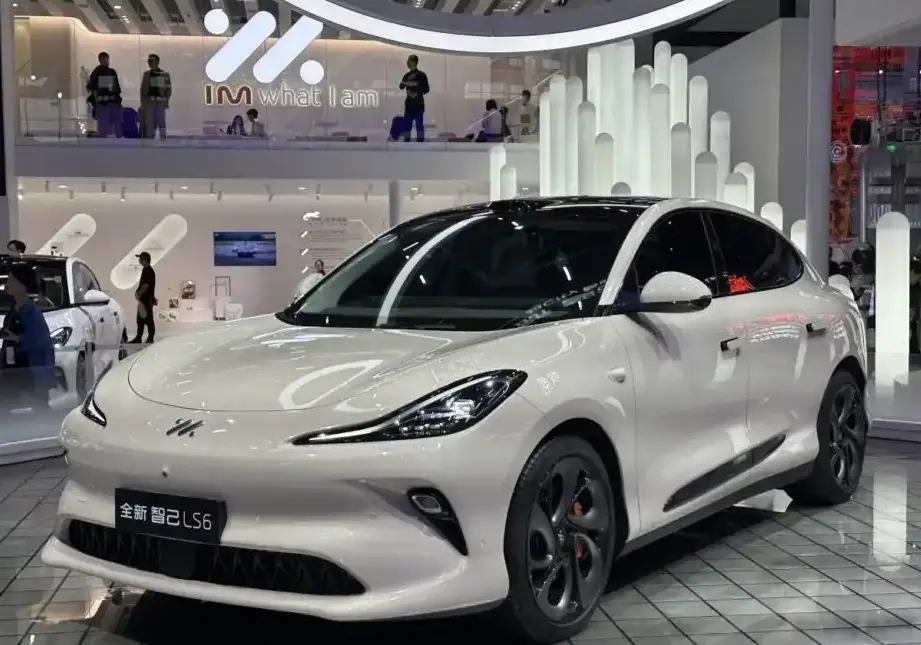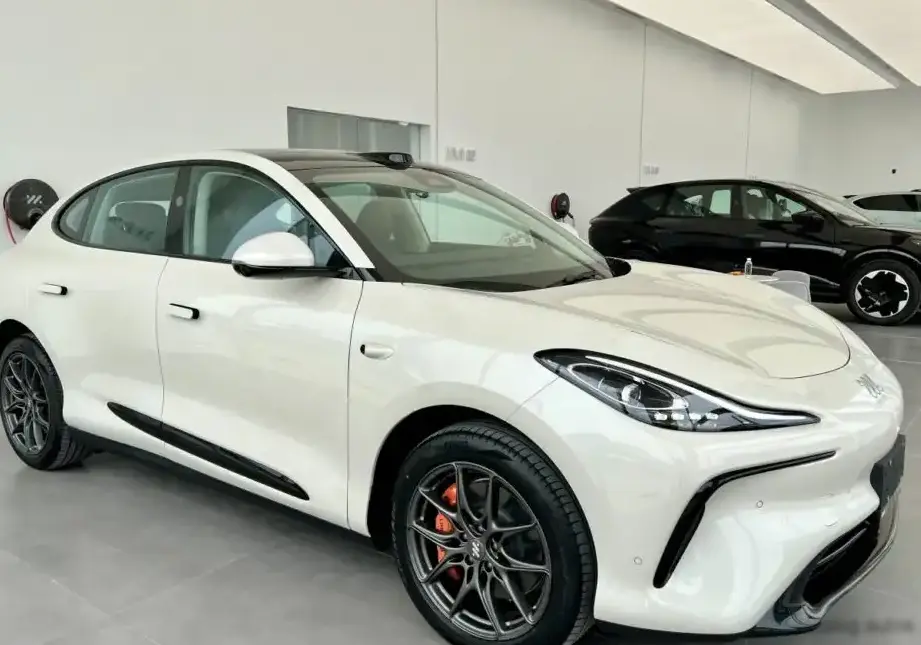
The IM LS6, introduced in October 2023 and produced through September 2024, represents IM’s initial foray into the competitive SUV market. Positioned as a fully electric vehicle (BEV), the LS6 aims to deliver a blend of performance, range, and technology. This specific variant, equipped with a 71 kWh battery pack and a single electric motor producing 314 horsepower, serves as a core offering within the LS6 lineup, balancing affordability with respectable range and acceleration. The LS6 is built upon a dedicated electric vehicle platform, showcasing IM’s commitment to a future focused on sustainable transportation.
Technical Specifications
| Brand | IM |
| Model | LS6 |
| Generation | LS6 I |
| Type (Engine) | 71 kWh (314 Hp) |
| Start of production | October, 2023 |
| End of production | September, 2024 |
| Powertrain Architecture | BEV (Electric Vehicle) |
| Body type | SUV |
| Seats | 5 |
| Doors | 5 |
| Fuel Type | Electricity |
| Acceleration 0 – 100 km/h | 5.9 sec |
| Acceleration 0 – 62 mph | 5.9 sec |
| Acceleration 0 – 60 mph | 5.6 sec |
| Maximum speed | 200 km/h (124.27 mph) |
| Weight-to-power ratio | 6.8 kg/Hp, 146 Hp/tonne |
| Weight-to-torque ratio | 4.8 kg/Nm, 209.3 Nm/tonne |
| Gross battery capacity | 71 kWh |
| Battery technology | Lithium nickel manganese cobalt oxides (Li-NMC) |
| Battery location | Below the floor |
| All-electric range (CLTC) | 560 km (347.97 mi) |
| Electric motor power | 314 Hp |
| Electric motor Torque | 450 Nm (331.9 lb.-ft.) |
| Electric motor model/code | TZ230XY1301 |
| Electric motor location | Rear axle, Transverse |
| Electric motor type | Synchronous |
| System power | 314 Hp |
| System torque | 450 Nm (331.9 lb.-ft.) |
| Kerb Weight | 2150 kg (4739.94 lbs.) |
| Max. weight | 2601 kg (5734.22 lbs.) |
| Max load | 451 kg (994.28 lbs.) |
| Trunk (boot) space – minimum | 665 l (23.48 cu. ft.) |
| Trunk (boot) space – maximum | 1640 l (57.92 cu. ft.) |
| Length | 4904 mm (193.07 in.) |
| Width | 1988 mm (78.27 in.) |
| Height | 1669 mm (65.71 in.) |
| Wheelbase | 2950 mm (116.14 in.) |
| Front track | 1698 mm (66.85 in.) |
| Rear (Back) track | 1707 mm (67.2 in.) |
| Drag coefficient (Cd) | 0.237 |
| Approach angle | 17° |
| Departure angle | 21° |
| Drivetrain Architecture | One electric motor drives the rear wheels. |
| Drive wheel | Rear wheel drive |
| Number of gears and type of gearbox | 1 gears, automatic transmission |
| Front suspension | Coil spring, Double wishbone, Transverse stabilizer |
| Rear suspension | Independent multi-link spring suspension with stabilizer |
| Front brakes | Ventilated discs |
| Rear brakes | Ventilated discs |
| Assisting systems | ABS (Anti-lock braking system) |
| Steering type | Steering rack and pinion |
| Power steering | Electric Steering |
| Tires size | Front wheel tires: 235/50 R20; 235/45 R21Rear wheel tires: 255/45 R20; 265/40 R21 |
| Wheel rims size | 20; 21 |
Powertrain & Engine Architecture
The IM LS6 utilizes a single, rear-mounted synchronous electric motor, delivering 314 horsepower and 450 Nm (331.9 lb.-ft.) of torque. This motor, designated TZ230XY1301, is powered by a 71 kWh lithium-nickel-manganese-cobalt-oxide (Li-NMC) battery pack positioned under the vehicle floor. This placement contributes to a lower center of gravity, enhancing handling stability. The vehicle employs a single-speed automatic transmission, typical for electric vehicles, providing seamless acceleration. The battery supports fast charging capabilities, though specific charging times vary depending on the charging infrastructure used. The powertrain is designed for efficiency, maximizing range while delivering responsive performance.
Driving Characteristics
The rear-wheel-drive configuration of the LS6 71 kWh variant provides a balanced driving experience. Acceleration from 0 to 60 mph is achieved in approximately 5.6 seconds, making it competitive within its segment. The single-speed transmission offers linear power delivery, without the gear changes associated with internal combustion engines. While not as aggressively tuned as potential higher-performance versions, the 314 hp motor provides ample power for everyday driving and highway merging. The relatively low center of gravity, thanks to the underfloor battery pack, contributes to confident cornering. The single gear ratio is optimized for a balance between acceleration and efficiency.
Equipment & Trim Levels
The LS6 71 kWh variant typically includes standard features such as a large touchscreen infotainment system, advanced driver-assistance systems (ADAS) like automatic emergency braking and lane-keeping assist, and a premium audio system. Interior upholstery generally consists of high-quality synthetic leather, with options for upgraded materials. Available options include a panoramic sunroof, ventilated front seats, and a more sophisticated ADAS package. The dashboard layout is modern and minimalist, emphasizing the vehicle’s technological focus. Specific trim levels within the 71 kWh range may offer varying levels of standard equipment.
Chassis & Braking
The LS6 features a coil spring, double wishbone suspension setup at the front, coupled with an independent multi-link spring suspension at the rear. Both ends incorporate a transverse stabilizer bar to minimize body roll during cornering. Ventilated disc brakes are employed on all four wheels, providing ample stopping power. The vehicle is equipped with an anti-lock braking system (ABS) as standard. The suspension tuning is geared towards providing a comfortable ride while maintaining reasonable handling characteristics. Steering is provided by a rack and pinion system with electric power assistance.
Market Reception & Comparison
The IM LS6 has been generally well-received in the Chinese market, where it was initially launched. Critics have praised its spacious interior, advanced technology, and competitive range. Compared to other electric SUVs in its class, the LS6 offers a compelling value proposition, balancing performance, features, and price. Its range of 560 km (CLTC) is competitive, though real-world range may vary depending on driving conditions and usage. Reliability data is still emerging, given the vehicle’s relatively recent introduction. The 71 kWh variant positions itself as a mid-range option, offering a good balance between affordability and performance compared to higher-capacity battery versions.
Legacy
As a relatively new model, the long-term reliability of the IM LS6 powertrain remains to be fully established. However, the use of proven Li-NMC battery technology and a robust electric motor design suggests a reasonable expectation of durability. The LS6 represents a significant step for IM as a brand, demonstrating its ability to compete in the rapidly growing electric vehicle market. Its success will likely influence the development of future IM models and contribute to the broader adoption of electric vehicles. The used car market for the LS6 is still developing, but early indications suggest strong demand for well-maintained examples.