
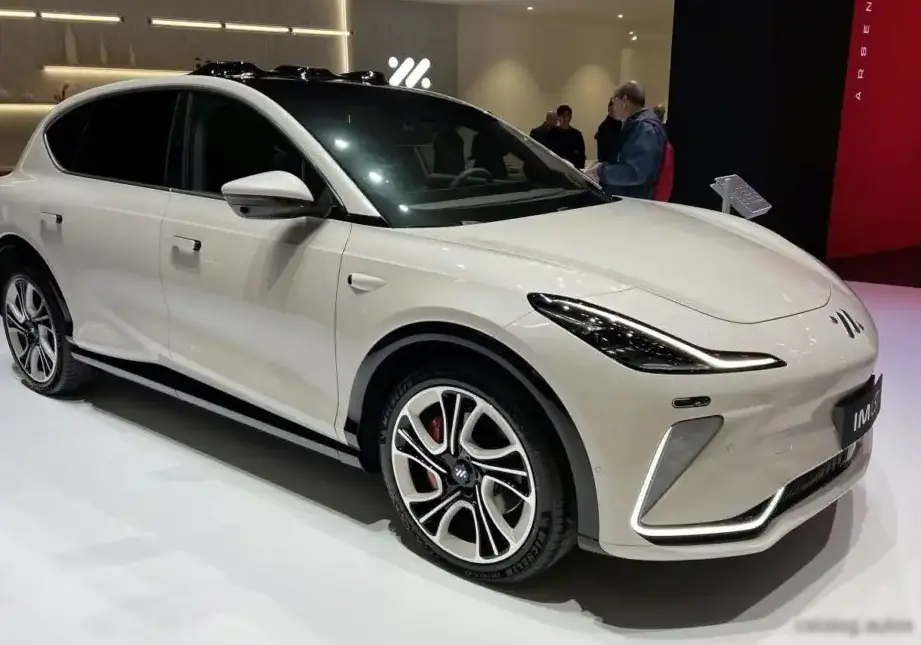
The IM LS7 77 kWh (340 Hp) is a battery electric vehicle (BEV) SUV produced by IM Motors, debuting in February 2023. Positioned as a technologically advanced and spacious SUV, the LS7 represents IM’s entry into the competitive electric vehicle market. It is built upon a dedicated electric vehicle platform and aims to deliver a blend of performance, range, and luxury features. The LS7 is primarily targeted towards the Chinese market, with potential for expansion into other regions. It is a five-seater, five-door SUV designed to appeal to consumers seeking a premium electric driving experience.
Technical Specifications
| Brand | IM |
| Model | LS7 |
| Generation | LS7 |
| Type (Engine) | 77 kWh (340 Hp) |
| Start of production | February, 2023 |
| Powertrain Architecture | BEV (Electric Vehicle) |
| Body type | SUV |
| Seats | 5 |
| Doors | 5 |
| Fuel Type | Electricity |
| Acceleration 0 – 100 km/h | 6.5 sec |
| Acceleration 0 – 62 mph | 6.5 sec |
| Acceleration 0 – 60 mph | 6.2 sec |
| Maximum speed | 200 km/h (124.27 mph) |
| Weight-to-power ratio | 7.1 kg/Hp, 141.7 Hp/tonne |
| Weight-to-torque ratio | 5.1 kg/Nm, 197.9 Nm/tonne |
| Gross battery capacity | 77 kWh |
| Battery technology | Lithium nickel manganese cobalt oxides (Li-NMC) |
| Battery location | Below the floor |
| All-electric range (CLTC) | 510 km (316.9 mi) |
| Electric motor power | 340 Hp |
| Electric motor Torque | 475 Nm (350.34 lb.-ft.) |
| Electric motor model/code | TZ230XY1301 |
| Electric motor location | Rear axle, Transverse |
| Electric motor type | Synchronous |
| System power | 340 Hp |
| System torque | 475 Nm (350.34 lb.-ft.) |
| Kerb Weight | 2400 kg (5291.09 lbs.) |
| Max. weight | 2851 kg (6285.38 lbs.) |
| Max load | 451 kg (994.28 lbs.) |
| Trunk (boot) space – minimum | 733 l (25.89 cu. ft.) |
| Length | 5049 mm (198.78 in.) |
| Width | 2002 mm (78.82 in.) |
| Height | 1731 mm (68.15 in.) |
| Wheelbase | 3060 mm (120.47 in.) |
| Front track | 1700 mm (66.93 in.) |
| Rear (Back) track | 1715 mm (67.52 in.) |
| Drag coefficient (Cd) | 0.268 |
| Approach angle | 18° |
| Departure angle | 24° |
| Drivetrain Architecture | One electric motor drives the rear wheels. |
| Drive wheel | Rear wheel drive |
| Number of gears and type of gearbox | 1 gears, automatic transmission |
Powertrain & Engine Architecture
The IM LS7 is powered by a single rear-mounted synchronous electric motor producing 340 horsepower and 475 Nm (350.34 lb.-ft.) of torque. The motor, designated TZ230XY1301, is fed by a 77 kWh lithium nickel manganese cobalt oxides (Li-NMC) battery pack located under the vehicle floor. This battery configuration contributes to a lower center of gravity, enhancing handling stability. The vehicle utilizes a single-speed automatic transmission, typical for electric vehicles, providing seamless acceleration. The powertrain is designed for efficiency and responsiveness, delivering brisk acceleration figures. The battery supports fast charging capabilities, allowing for a significant range increase with relatively short charging times, though specific charging rates depend on the charging infrastructure used.
Driving Characteristics
The rear-wheel-drive configuration of the LS7 contributes to a balanced driving experience. Acceleration from 0 to 60 mph is achieved in approximately 6.2 seconds, making it competitive within its segment. The single-speed transmission provides linear power delivery, eliminating the need for gear changes. While not as overtly sporty as some performance-focused EVs, the LS7 offers ample power for everyday driving and highway overtaking. The relatively low center of gravity, thanks to the underfloor battery pack, enhances cornering stability. The optional air suspension further improves ride comfort and handling by adapting to road conditions.
Equipment & Trim Levels
The IM LS7 is positioned as a premium SUV, and its standard equipment reflects this. Interior features include a large touchscreen infotainment system, a digital instrument cluster, and premium upholstery. Standard safety features encompass a comprehensive suite of driver-assistance systems, including automatic emergency braking, lane-keeping assist, and adaptive cruise control. Optional extras include the aforementioned air suspension, upgraded audio systems, and a panoramic sunroof. The interior design emphasizes spaciousness and comfort, with a focus on high-quality materials and a minimalist aesthetic.
Chassis & Braking
The LS7 features a coil spring, double wishbone front suspension with a transverse stabilizer. The rear suspension utilizes an independent multi-link spring setup, also with a stabilizer. Optional air suspension is available for both axles, providing adjustable ride height and improved damping characteristics. Braking duties are handled by ventilated discs on all four wheels, coupled with an anti-lock braking system (ABS) for enhanced safety. The vehicle’s weight of 2400 kg (5291.09 lbs) is managed effectively by the suspension and braking systems, providing confident stopping power and stable handling.
Market Reception & Comparison
The IM LS7 has been well-received in the Chinese market, where it competes with established electric SUVs from brands like NIO, Xpeng, and Tesla. Critics have praised its spacious interior, advanced technology, and comfortable ride. Its range of 510 km (316.9 mi) on the CLTC cycle is competitive, though real-world range may vary depending on driving conditions and usage. Compared to other trims within the LS7 lineup (if available), the 77 kWh (340 Hp) variant represents a balance between performance and range, offering a compelling option for buyers seeking a practical and efficient electric SUV.
Legacy
As a relatively new vehicle, the long-term reliability of the IM LS7 powertrain remains to be fully assessed. However, the use of proven Li-NMC battery technology and a robust electric motor design suggests a reasonable expectation of durability. The vehicle’s status in the used car market will depend on factors such as battery degradation and the availability of charging infrastructure. The LS7 represents a significant step forward for IM Motors, establishing the brand as a serious contender in the rapidly evolving electric vehicle landscape. Its success will likely influence the development of future electric vehicles from IM and other Chinese automakers.
