
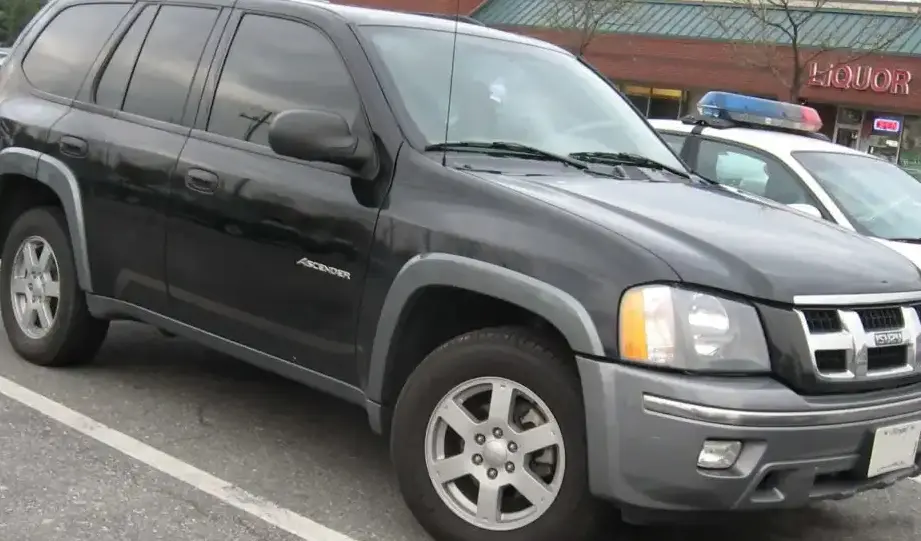
The Isuzu Ascender 5.3i V8 16V 2WD, produced for the 2003 and 2004 model years, represented Isuzu’s entry into the full-size SUV market. Built on the General Motors GMT800 platform – shared with the Chevrolet TrailBlazer, GMC Envoy, and Buick Rainier – the Ascender aimed to provide Isuzu customers with a larger, more capable vehicle than their existing offerings. This particular variant, equipped with the 5.3-liter V8 engine and a four-speed automatic transmission, was positioned as a mid-range offering within the Ascender lineup, balancing power with a relatively accessible price point. The Ascender was Isuzu’s attempt to capitalize on the popularity of the SUV segment in the early 2000s, offering seven-passenger seating and a focus on towing capacity.
Technical Specifications
| Brand | Isuzu |
| Model | Ascender |
| Generation | Ascender |
| Type (Engine) | 5.3 i V8 16V 2WD (294 Hp) |
| Start of production | 2003 |
| End of production | 2004 |
| Powertrain Architecture | Internal Combustion engine |
| Body type | SUV |
| Seats | 7 |
| Doors | 5 |
| Fuel consumption (urban) | 15.7 l/100 km (15 US mpg, 18 UK mpg) |
| Fuel consumption (extra urban) | 12.4 l/100 km (19 US mpg, 22.8 UK mpg) |
| Fuel Type | Petrol (Gasoline) |
| Maximum speed | 175 km/h (108.74 mph) |
| Weight-to-power ratio | 7.7 kg/Hp |
| Weight-to-torque ratio | 5.1 kg/Nm |
| Power | 294 Hp @ 5200 rpm |
| Power per litre | 55.2 Hp/l |
| Torque | 440 Nm @ 4000 rpm (324.53 lb.-ft. @ 4000 rpm) |
| Engine layout | Front, Longitudinal |
| Engine displacement | 5327 cm3 (325.07 cu. in.) |
| Number of cylinders | 8 |
| Engine configuration | V-engine |
| Cylinder Bore | 96 mm (3.78 in.) |
| Piston Stroke | 92 mm (3.62 in.) |
| Compression ratio | 9.5:1 |
| Number of valves per cylinder | 2 |
| Fuel injection system | Multi-port manifold injection |
| Engine aspiration | Naturally aspirated engine |
| Engine oil capacity | 5.7 l (6.02 US qt | 5.02 UK qt) |
| Kerb Weight | 2250 kg (4960.4 lbs.) |
| Max. weight | 2812 kg (6199.4 lbs.) |
| Max load | 562 kg (1239 lbs.) |
| Trunk (boot) space – minimum | 630 l (22.25 cu. ft.) |
| Trunk (boot) space – maximum | 2837 l (100.19 cu. ft.) |
| Fuel tank capacity | 95 l (25.1 US gal | 20.9 UK gal) |
| Length | 5273 mm (207.6 in.) |
| Width | 1933 mm (76.1 in.) |
| Height | 1918 mm (75.51 in.) |
| Wheelbase | 3275 mm (128.94 in.) |
| Front track | 1603 mm (63.11 in.) |
| Rear (Back) track | 1576 mm (62.05 in.) |
| Drivetrain Architecture | Rear wheel drive |
| Number of gears and type of gearbox | 4 gears, automatic transmission |
| Front suspension | Coil spring |
| Rear suspension | Coil spring |
| Front brakes | Ventilated discs |
| Rear brakes | Disc |
| Assisting systems | ABS (Anti-lock braking system) |
| Tires size | 245/65 R17 |
Powertrain & Engine Architecture
The heart of the Ascender 5.3i was the GM Vortec 5300 V8 engine. This engine, designated L82 in GM applications, is a 5.3-liter (325 cubic inch) naturally aspirated V8 featuring a cast iron block and aluminum cylinder heads. It utilized a 9.5:1 compression ratio and a multi-port fuel injection system. The engine produced 294 horsepower at 5200 rpm and 324 lb-ft of torque at 4000 rpm. The four-speed 4L60-E automatic transmission was the sole transmission option for this variant. This transmission was known for its reliability, but its four-speed configuration meant it wasn’t as fuel-efficient as more modern transmissions with additional gears. The engine’s longitudinal front-engine layout contributed to a traditional SUV feel and facilitated a relatively balanced weight distribution.
Driving Characteristics
The 5.3L V8 and four-speed automatic combination provided adequate, though not exceptional, performance. Acceleration was reasonable for its size, but the Ascender wasn’t a particularly quick vehicle. The automatic transmission’s gear ratios were tuned for towing and everyday driving rather than sporty performance. Compared to the available 4.2L inline-six engine, the V8 offered significantly more power and torque, making it a better choice for those who frequently towed trailers or needed extra grunt for off-road driving. However, the V8 came at the cost of increased fuel consumption. The four-speed automatic, while reliable, lacked the refinement and efficiency of newer transmissions.
Equipment & Trim Levels
The Ascender 5.3i typically included standard features such as air conditioning, power windows and locks, a CD player, and cloth upholstery. Higher trim levels, such as the Premier, added features like leather seats, a premium sound system, and heated front seats. Optional extras included a sunroof, a navigation system, and a rear entertainment system. The interior design was generally functional and straightforward, reflecting the Ascender’s focus on practicality. The third-row seating was relatively cramped, making it best suited for children.
Chassis & Braking
The Ascender’s chassis featured a traditional body-on-frame construction, providing a robust and durable platform. The suspension consisted of coil springs at all four corners. The rear-wheel-drive configuration contributed to a more truck-like feel. Braking duties were handled by ventilated discs up front and solid discs in the rear. Anti-lock brakes (ABS) were standard. The Ascender’s relatively heavy weight and high center of gravity meant that handling wasn’t particularly sharp, but the suspension provided a reasonably comfortable ride.
Market Reception & Comparison
The Isuzu Ascender faced stiff competition in the full-size SUV segment. Critics generally praised its spacious interior and towing capacity, but noted its unremarkable fuel economy and somewhat bland styling. Compared to its GM siblings, the Ascender offered a slightly different brand image and often came with a lower price tag. However, the Ascender’s resale value tended to be lower than that of the Chevrolet TrailBlazer or GMC Envoy. Fuel economy was a common complaint, with the 5.3L V8 returning around 15 mpg in the city and 19 mpg on the highway.
Legacy
The Isuzu Ascender was discontinued after the 2004 model year, as Isuzu gradually withdrew from the US market. While not a runaway success, the Ascender provided Isuzu with a competitive offering in the popular SUV segment for a brief period. The 5.3L Vortec V8 engine, in particular, proved to be a reliable and durable powerplant. Today, used Ascenders are relatively affordable, but finding parts can be challenging due to Isuzu’s limited presence in the US. The 4L60-E transmission is generally considered reliable, but may require maintenance or rebuilding after high mileage. The Ascender remains a viable option for those seeking a large, capable SUV at a budget price, but potential buyers should be prepared for potentially higher maintenance costs and limited parts availability.
