
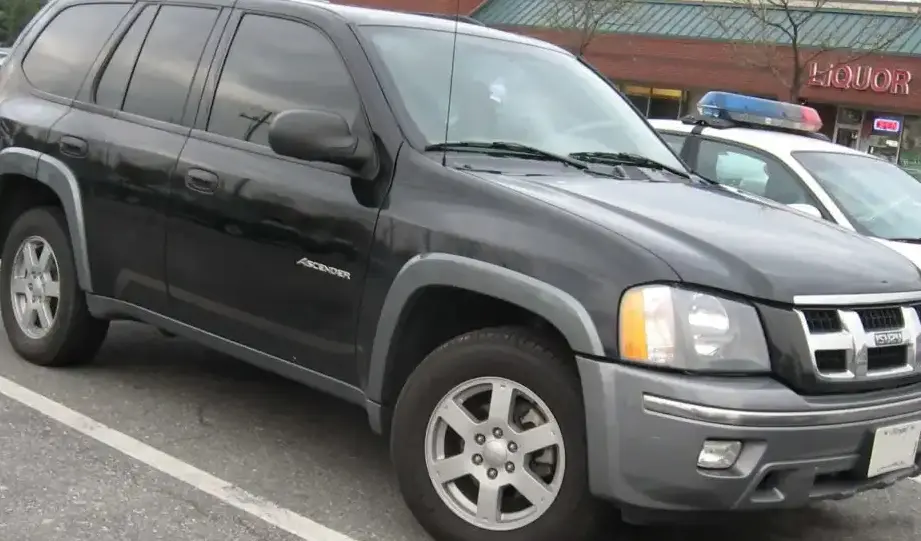
The Isuzu Ascender 5.3i V8 4WD (304 Hp) represents a relatively short-lived but significant entry by Isuzu into the burgeoning mid-size SUV market in North America. Produced from 2005 to 2007, this variant occupied the top performance tier of the first-generation Ascender (2003-2008), which was based on the GM GMT360 platform shared with the Chevrolet TrailBlazer, GMC Envoy, and Buick Rainier. The Ascender aimed to provide Isuzu customers with a larger, more capable SUV than their previously offered Rodeo and Trooper models, leveraging GM’s engineering and manufacturing resources. This particular 5.3L V8 configuration was positioned as the premium offering, emphasizing power and towing capacity within the Ascender lineup.
Technical Specifications
| Brand | Isuzu |
| Model | Ascender |
| Generation | Ascender |
| Type (Engine) | 5.3 i V8 4WD (304 Hp) |
| Start of production | 2005 |
| End of production | 2007 |
| Powertrain Architecture | Internal Combustion engine |
| Body type | SUV |
| Seats | 7 |
| Doors | 5 |
| Fuel consumption (urban) | 16.8 l/100 km (14 US mpg, 16.8 UK mpg) |
| Fuel consumption (extra urban) | 12.4 l/100 km (19 US mpg, 22.8 UK mpg) |
| Fuel Type | Petrol (Gasoline) |
| Weight-to-power ratio | 7.6 kg/Hp, 130.8 Hp/tonne |
| Weight-to-torque ratio | 5.2 kg/Nm, 192.3 Nm/tonne |
| Power | 304 Hp @ 5200 rpm |
| Power per litre | 57.1 Hp/l |
| Torque | 447 Nm @ 4000 rpm (329.69 lb.-ft. @ 4000 rpm) |
| Engine layout | Front, Longitudinal |
| Engine displacement | 5327 cm3 (325.07 cu. in.) |
| Number of cylinders | 8 |
| Engine configuration | V-engine |
| Cylinder Bore | 96 mm (3.78 in.) |
| Piston Stroke | 92 mm (3.62 in.) |
| Compression ratio | 9.9:1 |
| Number of valves per cylinder | 2 |
| Fuel injection system | Multi-port manifold injection |
| Engine aspiration | Naturally aspirated engine |
| Engine oil capacity | 5.7 l (6.02 US qt | 5.02 UK qt) |
| Kerb Weight | 2325 kg (5125.75 lbs.) |
| Max. weight | 2903 kg (6400.02 lbs.) |
| Max load | 578 kg (1274.27 lbs.) |
| Trunk (boot) space – minimum | 630 l (22.25 cu. ft.) |
| Trunk (boot) space – maximum | 2837 l (100.19 cu. ft.) |
| Fuel tank capacity | 95 l (25.1 US gal | 20.9 UK gal) |
| Length | 5273 mm (207.6 in.) |
| Width | 1933 mm (76.1 in.) |
| Height | 1918 mm (75.51 in.) |
| Wheelbase | 3275 mm (128.94 in.) |
| Front track | 1603 mm (63.11 in.) |
| Rear (Back) track | 1576 mm (62.05 in.) |
| Drive wheel | All wheel drive (4×4) |
| Number of gears and type of gearbox | 4 gears, automatic transmission |
| Front suspension | Coil spring |
| Rear suspension | Coil spring |
| Front brakes | Ventilated discs |
| Rear brakes | Disc |
| Assisting systems | ABS (Anti-lock braking system) |
| Tires size | 245/65 R17 |
Powertrain & Engine Architecture
The heart of the Ascender 5.3i V8 4WD is the GM Vortec 5300 engine, a 5.3-liter (325 cubic inch) naturally aspirated V8. This engine, designated as the LM7, is a member of GM’s widely used small-block V8 family. It features a cast iron block with aluminum cylinder heads, a 9.9:1 compression ratio, and a two-valve-per-cylinder configuration. Fuel delivery is managed by a multi-port fuel injection system. The engine’s robust design and relatively simple architecture contributed to its reputation for reliability. The 4L60-E four-speed automatic transmission was the sole transmission option for this variant. This transmission is known for its durability, but also for its relatively conservative gear ratios, prioritizing smooth operation and fuel economy over outright performance.
Driving Characteristics
The 304 horsepower and 329 lb-ft of torque provided by the 5.3L V8 delivered adequate, though not exceptional, performance for the Ascender. Acceleration from 0 to 60 mph was typically in the 7.5 to 8.5 second range, making it competitive with other mid-size SUVs of the era. The automatic transmission, while smooth, could feel somewhat sluggish during quick acceleration or when attempting to pass on the highway. The 4WD system provided enhanced traction in inclement weather and on unpaved surfaces, but the Ascender was not designed for serious off-road use. Compared to the lower-powered 4.2L inline-six engine option, the V8 offered a significantly more refined and capable driving experience. However, it lacked the responsiveness and fuel efficiency of some of its competitors equipped with more modern transmissions or smaller displacement engines.
Equipment & Trim Levels
The Ascender 5.3i V8 4WD typically came standard with features such as air conditioning, power windows and locks, cruise control, and an AM/FM stereo with a CD player. Higher trim levels added features like leather upholstery, heated front seats, a premium sound system, and a sunroof. Optional extras included a navigation system, rear-seat entertainment system, and upgraded alloy wheels. The interior design was generally functional and comfortable, though it lacked the sophistication of some European or Japanese SUVs. The third-row seating was relatively cramped, making it best suited for children.
Chassis & Braking
The Ascender utilized a body-on-frame construction, which provided a robust and durable platform. The suspension consisted of coil springs at all four corners, with a stabilizer bar at the front to reduce body roll. The braking system featured ventilated discs at the front and solid discs at the rear. Anti-lock brakes (ABS) were standard. While the braking performance was adequate for everyday driving, it wasn’t particularly sporty or confidence-inspiring under hard braking. The relatively heavy weight of the vehicle contributed to a noticeable amount of body roll during cornering.
Market Reception & Comparison
The Isuzu Ascender faced stiff competition in the mid-size SUV segment from established players like the Ford Explorer, Chevrolet TrailBlazer, and Honda Pilot. Critics generally praised the Ascender’s spacious interior and powerful V8 engine, but noted its somewhat dated styling and less refined driving experience compared to some of its rivals. Fuel economy was also a concern, with the 5.3L V8 consuming a significant amount of gasoline. The Ascender’s reliability was generally considered to be average, with some owners reporting issues with the transmission and electrical systems. Compared to the 4.2L inline-six version, the V8 offered a substantial performance upgrade, but at the cost of increased fuel consumption and a higher purchase price.
Legacy
The Isuzu Ascender, and particularly the 5.3i V8 4WD variant, represents a unique chapter in Isuzu’s North American history. While it didn’t achieve widespread popularity, it provided a compelling option for buyers seeking a powerful and spacious SUV. The GM Vortec 5300 engine has proven to be remarkably durable and is still found in many vehicles on the road today. On the used car market, Ascenders with the V8 engine tend to command a slightly higher price than those with the inline-six, reflecting the engine’s desirability. However, potential buyers should be aware of the potential for age-related maintenance issues, such as transmission problems and corrosion. The Ascender ultimately faded from the market as Isuzu scaled back its operations in North America, but it remains a recognizable and occasionally sought-after SUV for those looking for a capable and affordable vehicle.
