
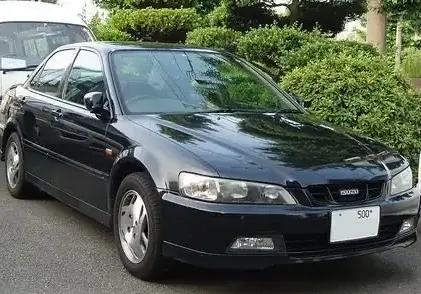
The Isuzu Aska IV (GS-5) 1.8 i 16V, produced between 1998 and 2002, represented a significant iteration of Isuzu’s mid-size sedan. Positioned within the fourth generation of the Aska, known internally as the GS-5, this variant offered a balance between performance and economy, aimed at buyers seeking a comfortable and reliable family vehicle. The Aska, while not widely known in the North American market, was a popular choice in Asia and parts of Europe, competing with models like the Toyota Corolla, Nissan Sentra, and Ford Focus. This 1.8L 16-valve engine paired with a four-speed automatic transmission was a common configuration, offering a more accessible entry point into the Aska range compared to higher-performance or diesel-powered options.
Technical Specifications
| Brand | Isuzu |
| Model | Aska |
| Generation | Aska IV (GS-5) |
| Type (Engine) | 1.8 i 16V (140 Hp) |
| Start of production | 1998 |
| End of production | 2002 |
| Powertrain Architecture | Internal Combustion engine |
| Body type | Sedan |
| Seats | 5 |
| Doors | 4 |
| Fuel consumption (urban) | 6.41 l/100 km (36.7 US mpg, 44.1 UK mpg, 15.6 km/l) |
| Fuel consumption (extra urban) | 3.8 l/100 km (61.9 US mpg, 74.3 UK mpg, 26.3 km/l) |
| Fuel Type | Petrol (Gasoline) |
| Power | 140 Hp @ 6100 rpm |
| Power per litre | 75.7 Hp/l |
| Torque | 172 Nm @ 5000 rpm (126.86 lb.-ft. @ 5000 rpm) |
| Engine layout | Front, Transverse |
| Engine displacement | 1849 cm3 (112.83 cu. in.) |
| Number of cylinders | 4 |
| Engine configuration | Inline |
| Cylinder Bore | 85 mm (3.35 in.) |
| Piston Stroke | 81.5 mm (3.21 in.) |
| Compression ratio | 9.3:1 |
| Number of valves per cylinder | 4 |
| Fuel injection system | Multi-port manifold injection |
| Engine aspiration | Naturally aspirated engine |
| Valvetrain | OHC |
| Max. weight | 1535 kg (3384.1 lbs.) |
| Trunk (boot) space – minimum | 446 l (15.75 cu. ft.) |
| Fuel tank capacity | 60 l (15.85 US gal | 13.2 UK gal) |
| Length | 4635 mm (182.48 in.) |
| Width | 1695 mm (66.73 in.) |
| Height | 1420 mm (55.91 in.) |
| Wheelbase | 2665 mm (104.92 in.) |
| Front track | 1480 mm (58.27 in.) |
| Rear (Back) track | 1480 mm (58.27 in.) |
| Drivetrain Architecture | The Internal combustion engine (ICE) drives the front wheels of the vehicle. |
| Drive wheel | Front wheel drive |
| Number of gears and type of gearbox | 4 gears, automatic transmission |
| Front suspension | Coil spring |
| Rear suspension | Coil spring |
| Front brakes | Ventilated discs |
| Rear brakes | Disc |
| Assisting systems | ABS (Anti-lock braking system) |
| Steering type | Steering rack and pinion |
| Power steering | Hydraulic Steering |
| Tires size | 185/70 R14 |
Powertrain & Engine Architecture
The heart of the Aska 1.8 i 16V is the 1849cc inline-four cylinder engine. This engine, often identified by internal codes depending on the specific market, utilized a single overhead camshaft (OHC) design operating 16 valves – four per cylinder. The multi-port fuel injection system delivered fuel directly to each intake port, optimizing combustion efficiency. The 9.3:1 compression ratio was a compromise between performance and the ability to run on readily available fuel grades. The engine’s 140 horsepower peak at 6100 rpm and 172 Nm (126.86 lb-ft) of torque at 5000 rpm provided adequate power for everyday driving. Paired with this engine was a four-speed automatic transmission, designed for smooth and convenient operation. This transmission, while not offering the sportiness of a manual, prioritized comfort and ease of use, aligning with the target demographic for this trim level.
Driving Characteristics
The Aska 1.8 i 16V with the automatic transmission delivered a comfortable, if not particularly exhilarating, driving experience. Acceleration was adequate for merging onto highways and navigating city streets, but it wasn’t designed for rapid acceleration. The four-speed automatic transmission, while smooth, lacked the close gear ratios found in more modern transmissions or manual counterparts. This resulted in a noticeable difference in responsiveness compared to the manual versions of the Aska or models equipped with more powerful engines. The automatic transmission’s shift points were calibrated for fuel efficiency, sometimes resulting in the engine feeling slightly strained during uphill climbs or when carrying a full load. However, for typical commuting and family transportation, the 1.8L automatic offered a balanced and predictable driving experience.
Equipment & Trim Levels
The 1.8 i 16V automatic trim typically included a reasonable level of standard equipment. Interior features generally included cloth upholstery, power windows and door locks, and a basic audio system. Air conditioning was almost always standard. Higher trim levels, often denoted by additional badging or option packages, could add features like alloy wheels, a sunroof, upgraded audio systems, and even leather upholstery. The dashboard layout was functional and straightforward, prioritizing ease of use over stylistic flair. Safety features were relatively basic for the late 1990s/early 2000s, typically including ABS brakes and driver and passenger airbags.
Chassis & Braking
The Aska IV utilized a conventional front-engine, front-wheel-drive layout. Suspension consisted of coil springs at all four corners, providing a comfortable ride quality. The front suspension incorporated a MacPherson strut design, while the rear utilized a multi-link setup. Braking duties were handled by ventilated discs at the front and solid discs at the rear, providing adequate stopping power for the vehicle’s weight and performance. The steering system employed a rack-and-pinion setup with hydraulic power assistance, offering reasonably precise steering feel. Tires were typically 185/70 R14, balancing ride comfort with handling characteristics.
Market Reception & Comparison
The Isuzu Aska 1.8 i 16V automatic was generally well-received as a practical and reliable family sedan. Critics praised its comfortable ride, fuel efficiency, and reasonable price point. However, it was often criticized for its somewhat bland styling and lack of sporty driving dynamics compared to some of its competitors. Compared to the higher-output versions of the Aska, such as those equipped with larger engines or manual transmissions, the 1.8L automatic offered less performance but significantly better fuel economy. It also tended to be more affordable to purchase and maintain. Compared to diesel variants, the 1.8L offered a smoother and quieter driving experience, but lacked the diesel’s superior fuel economy and low-end torque.
Legacy
The Isuzu Aska, and specifically the 1.8 i 16V automatic variant, has developed a reputation for long-term reliability, particularly when properly maintained. The engine is known to be durable, and the automatic transmission, while not cutting-edge, is generally dependable. In the used car market, these Askas represent a relatively affordable and practical option for buyers seeking a dependable transportation. Parts availability can be a concern in some regions, as Isuzu withdrew from many markets in the early 2000s. However, many components are shared with other vehicles, making sourcing parts feasible. The Aska 1.8 i 16V automatic remains a testament to Isuzu’s commitment to building reliable and practical vehicles, even if it didn’t achieve widespread recognition in all markets.
