
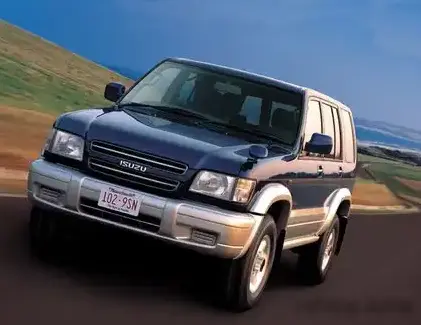
The Isuzu Bighorn, known as the Isuzu MU in some markets, was a mid-size SUV produced by Isuzu between 1991 and 2006. The second generation, introduced in 1998 and running through 2002 in many markets, represented a significant step up in refinement and capability. This article focuses specifically on the 3.0 DT variant, equipped with the 3.0-liter turbocharged diesel engine producing 160 horsepower, and paired with a five-speed manual transmission. This configuration was a popular choice for those seeking a capable and relatively fuel-efficient SUV for both on and off-road use.
Technical Specifications
| Brand | Isuzu |
| Model | Bighorn |
| Generation | Bighorn (SUV) |
| Type (Engine) | 3.0 DT (160 Hp) |
| Start of production | 1998 year |
| End of production | 2002 year |
| Powertrain Architecture | Internal Combustion engine |
| Body type | SUV |
| Seats | 5 |
| Doors | 5 |
| Fuel Type | Diesel |
| Weight-to-power ratio | 13 kg/Hp, 76.9 Hp/tonne |
| Weight-to-torque ratio | 6.2 kg/Nm, 160.1 Nm/tonne |
| Power | 160 Hp @ 3600 rpm |
| Power per litre | 53.4 Hp/l |
| Torque | 333 Nm @ 2000 rpm, 245.61 lb.-ft. @ 2000 rpm |
| Engine layout | Front, Longitudinal |
| Engine displacement | 2999 cm3, 183.01 cu. in. |
| Number of cylinders | 4 |
| Engine configuration | Inline |
| Cylinder Bore | 95.4 mm, 3.76 in. |
| Piston Stroke | 104.9 mm, 4.13 in. |
| Compression ratio | 19:1 |
| Number of valves per cylinder | 4 |
| Fuel injection system | Diesel Commonrail |
| Engine aspiration | Turbocharger |
| Kerb Weight | 2080 kg, 4585.62 lbs |
| Fuel tank capacity | 85 l, 22.45 US gal | 18.7 UK gal |
| Length | 4750 mm, 187.01 in. |
| Width | 1745 mm, 68.7 in. |
| Height | 1840 mm, 72.44 in. |
| Wheelbase | 2760 mm, 108.66 in. |
| Front track | 1455 mm, 57.28 in. |
| Rear (Back) track | 1460 mm, 57.48 in. |
| Minimum turning circle (turning diameter) | 11.6 m, 38.06 ft. |
| Drive wheel | All wheel drive (4×4) |
| Number of gears and type of gearbox | 5 gears, manual transmission |
| Front brakes | Ventilated discs |
| Rear brakes | Drum |
| Tires size | 245/70 R16 |
Introduction
The second-generation Isuzu Bighorn, launched in 1998, represented a significant departure from its predecessor. Built on a robust body-on-frame chassis, it aimed to provide a blend of off-road capability, on-road comfort, and practicality. The 3.0 DT variant, with its 3.0-liter turbocharged diesel engine, was positioned as a mid-range offering, appealing to buyers who needed the extra power and torque for towing or tackling challenging terrain. It sat above the naturally aspirated petrol engines in the lineup, but below the more expensive and luxurious trims.
Powertrain & Engine Architecture
The heart of the 3.0 DT Bighorn is the 4JB1-TC 3.0-liter inline-four diesel engine. This engine utilizes a direct injection system with a turbocharger and intercooler to boost power and efficiency. The 4JB1 engine family is known for its durability and relatively simple design. The common rail direct injection system, a relatively new technology at the time, allowed for precise fuel delivery, resulting in improved combustion and reduced emissions. The engine produces 160 horsepower at 3600 rpm and a substantial 333 Nm (245.61 lb-ft) of torque at 2000 rpm. This torque output is particularly useful for off-road driving and towing. The engine is longitudinally mounted in the chassis, and power is delivered to all four wheels through a robust five-speed manual transmission. This transmission was chosen for its durability and ability to handle the engine’s torque output.
Driving Characteristics
The 3.0 DT Bighorn offers a driving experience that prioritizes capability and robustness over outright speed. The 160 horsepower engine, while not particularly powerful by modern standards, provides adequate acceleration for everyday driving. However, it’s the engine’s torque that truly shines. The 333 Nm of torque available from 2000 rpm allows for effortless cruising and confident overtaking. The five-speed manual transmission provides good control over the engine’s power band, and the gear ratios are well-suited for both on and off-road driving. Compared to the lower-powered petrol versions, the 3.0 DT offers significantly more pulling power and a more relaxed driving experience, especially when fully loaded or towing. While not as refined as some of its monocoque-bodied competitors, the Bighorn’s body-on-frame construction provides a solid and stable feel on the road.
Equipment & Trim Levels
The 3.0 DT Bighorn typically came equipped with a reasonable level of standard features. These included power windows, power steering, air conditioning, and a basic audio system. Interior upholstery was typically cloth, although leather options were available as an upgrade. The dashboard layout was functional and straightforward, with clearly labeled controls. Optional extras included a sunroof, upgraded audio system, and alloy wheels. The trim level often dictated the availability of these options, with higher trims offering more standard features and a more luxurious interior.
Chassis & Braking
The Bighorn’s chassis is a traditional body-on-frame design, providing excellent strength and durability. The suspension consists of double wishbones at the front and a multi-link setup at the rear. This suspension configuration provides a comfortable ride, even on rough terrain. The 3.0 DT variant typically featured ventilated disc brakes at the front and drum brakes at the rear. While the drum brakes at the rear were adequate for most driving conditions, they were a point of criticism compared to the all-disc brake setups found on some competitors. The vehicle’s all-wheel-drive system provides excellent traction in a variety of conditions, and a low-range gearbox is available for serious off-road use.
Market Reception & Comparison
The Isuzu Bighorn 3.0 DT was generally well-received by critics and buyers alike. It was praised for its robust construction, capable engine, and comfortable ride. However, it was also criticized for its somewhat dated interior and less refined driving experience compared to some of its monocoque-bodied competitors. In terms of fuel economy, the 3.0 DT offered a reasonable compromise between power and efficiency, typically achieving around 25-30 mpg in mixed driving conditions. Compared to the petrol versions, the diesel offered significantly better fuel economy, making it a popular choice for those who covered long distances. Compared to the higher-output diesel variants, the 160 hp version offered a more affordable entry point into the Bighorn range.
Legacy
The Isuzu Bighorn 3.0 DT has proven to be a reliable and durable SUV, with many examples still on the road today. The 4JB1-TC engine is known for its longevity, and with proper maintenance, it can easily exceed 200,000 miles. The Bighorn’s body-on-frame construction also contributes to its durability, making it a good choice for those who need a rugged and dependable vehicle. In the used car market, the 3.0 DT variant is often sought after by enthusiasts and those looking for a capable and affordable SUV. While it may not offer the latest technology or features, its simplicity, reliability, and off-road capability continue to make it a popular choice.

