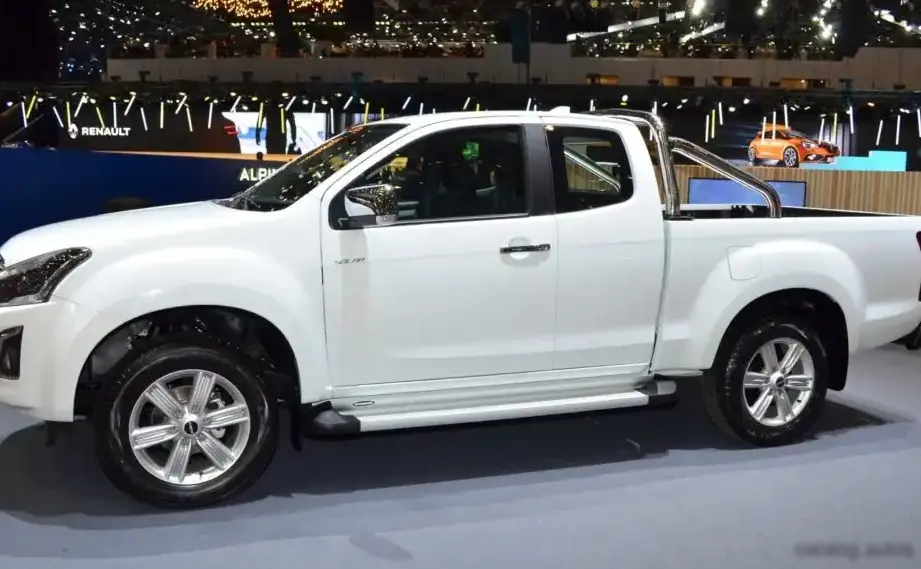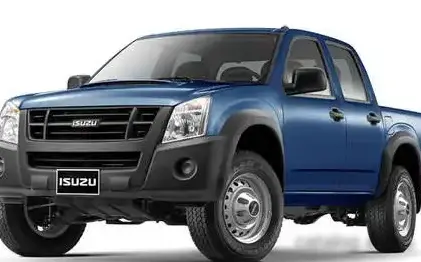
The Isuzu D-Max, first introduced in 2005, represented Isuzu’s significant entry into the increasingly competitive mid-size pickup truck market. The first generation, known internally as the TFR series and sold from 2008 to 2012 in many markets, aimed to blend rugged capability with a degree of on-road refinement. Within this generation, the 3.0 TD Double Cab (163 hp) variant occupied a key position, offering a balance between workhorse practicality and family-oriented space. This model was particularly important in markets outside of North America, where mid-size trucks remained a popular choice for both commercial and personal use. It was designed to compete with vehicles like the Toyota Hilux, Mitsubishi L200, and Nissan Navara.
Technical Specifications
| Brand | Isuzu |
| Model | D-Max |
| Generation | D-Max I |
| Type (Engine) | 3.0 TD Double Cab (163 Hp) |
| Start of production | 2008 |
| End of production | 2012 |
| Powertrain Architecture | Internal Combustion engine |
| Body type | Pick-up |
| Seats | 5 |
| Doors | 4 |
| Fuel consumption (urban) | 10.5 l/100 km (22.4 US mpg) |
| Fuel consumption (extra urban) | 7.2 l/100 km (32.7 US mpg) |
| Fuel consumption (combined) | 8.4 l/100 km (28 US mpg) |
| Fuel Type | Diesel |
| Emission standard | Euro 4 |
| Power | 163 Hp @ 3600 rpm |
| Torque | 280 Nm @ 1800 rpm (206.52 lb.-ft. @ 1800 rpm) |
| Engine layout | Front, Longitudinal |
| Engine Model/Code | 4JJ1 |
| Engine displacement | 2999 cm3 (183.01 cu. in.) |
| Number of cylinders | 4 |
| Engine configuration | Inline |
| Cylinder Bore | 95.4 mm (3.76 in.) |
| Piston Stroke | 104.9 mm (4.13 in.) |
| Compression ratio | 8.3:1 |
| Number of valves per cylinder | 2 |
| Fuel injection system | Precombustion chamber injection |
| Engine aspiration | Turbocharger, Intercooler |
| Engine oil capacity | 7 l (7.4 US qt | 6.16 UK qt) |
| Coolant capacity | 10 l (10.57 US qt | 8.8 UK qt) |
| Fuel tank capacity | 76 l (20.08 US gal | 16.72 UK gal) |
| Length | 5035 mm (198.23 in.) |
| Width | 1800 mm (70.87 in.) |
| Height | 1735 mm (68.31 in.) |
| Wheelbase | 3050 mm (120.08 in.) |
| Front track | 1520 mm (59.84 in.) |
| Rear track | 1520 mm (59.84 in.) |
| Drive wheel | All wheel drive (4×4) |
| Number of gears | 5 |
| Gearbox type | Manual transmission |
| Front suspension | Independent torsion bar, double wishbone |
| Rear suspension | Spring Strut |
| Front brakes | Ventilated discs |
| Rear brakes | Drum |
| Tires size | 225/75 R15 |
Powertrain & Engine Architecture
The heart of the D-Max 3.0 TD Double Cab is the 4JJ1-TC 3.0-liter inline-four diesel engine. This engine utilizes a precombustion chamber injection system, a design choice common in diesel engines of the era to improve combustion efficiency and reduce noise. A turbocharger with an intercooler is employed to boost power output, delivering 163 horsepower at 3600 rpm and 280 Nm (206.52 lb-ft) of torque at a relatively low 1800 rpm. This torque curve was a key selling point, providing ample pulling power for towing and hauling. The engine features a cast iron block and aluminum cylinder head, contributing to its durability. The five-speed manual transmission was the standard offering for this variant, chosen for its robustness and suitability for demanding applications. While an automatic transmission was available on some D-Max models, it wasn’t typically paired with the 3.0-liter engine in most markets.
Driving Characteristics
The 3.0-liter engine, coupled with the five-speed manual transmission, provided a practical and capable driving experience. While not a performance-oriented setup, the engine’s strong low-end torque made it well-suited for off-road driving and hauling loads. The gear ratios were optimized for utility rather than outright speed. Compared to the available 2.5-liter engine, the 3.0-liter offered a noticeable increase in power and refinement. It wasn’t as nimble as some of the lighter, smaller pickups, but it provided a stable and confident feel, especially when carrying a load. The manual transmission allowed for greater driver control, particularly in challenging terrain.
Equipment & Trim Levels
The D-Max 3.0 TD Double Cab typically came with a fairly basic level of standard equipment, reflecting its work-oriented nature. Standard features generally included air conditioning, power steering, and a basic audio system. The Double Cab configuration offered seating for five passengers, making it a more practical option for families or crews. Interior upholstery was typically vinyl or a durable cloth material. Optional extras could include alloy wheels, upgraded audio systems, and a limited-slip differential. Trim levels varied by market, but generally, the 3.0-liter Double Cab sat in the mid-range of the D-Max lineup, offering a step up in performance and features compared to the base models.
Chassis & Braking
The D-Max chassis was built around a robust ladder frame construction, providing a solid foundation for both on-road and off-road driving. Front suspension utilized an independent torsion bar and double wishbone setup, while the rear employed a spring strut arrangement. This configuration aimed to balance ride comfort with load-carrying capacity. Braking duties were handled by ventilated discs at the front and drum brakes at the rear. The 4×4 system offered selectable four-wheel drive, allowing drivers to switch between two-wheel drive for fuel efficiency and four-wheel drive for increased traction. Tire size was typically 225/75 R15, chosen for its balance of durability and on-road comfort.
Market Reception & Comparison
The Isuzu D-Max 3.0 TD Double Cab was generally well-received by critics and buyers alike. It was praised for its robust build quality, strong diesel engine, and practical Double Cab configuration. Fuel economy was competitive for its class, averaging around 28 US mpg in combined driving. Compared to the 2.5-liter D-Max, the 3.0-liter offered a significant performance advantage, making it a more appealing option for those who frequently towed or hauled heavy loads. However, some critics noted that the interior was somewhat basic compared to some of its competitors. Reliability was generally considered to be good, with the 4JJ1 engine proving to be a durable and long-lasting unit.
Legacy
The Isuzu D-Max I 3.0 TD Double Cab has proven to be a reliable and durable workhorse in the used car market. The 4JJ1 engine is known for its longevity, and with proper maintenance, these trucks can continue to provide years of service. While not as popular as some of its competitors, the D-Max has earned a loyal following among those who appreciate its ruggedness and practicality. Today, these trucks represent a good value for buyers looking for a capable and affordable pickup truck. Parts availability remains generally good, and the relatively simple mechanical design makes them relatively easy to maintain and repair.