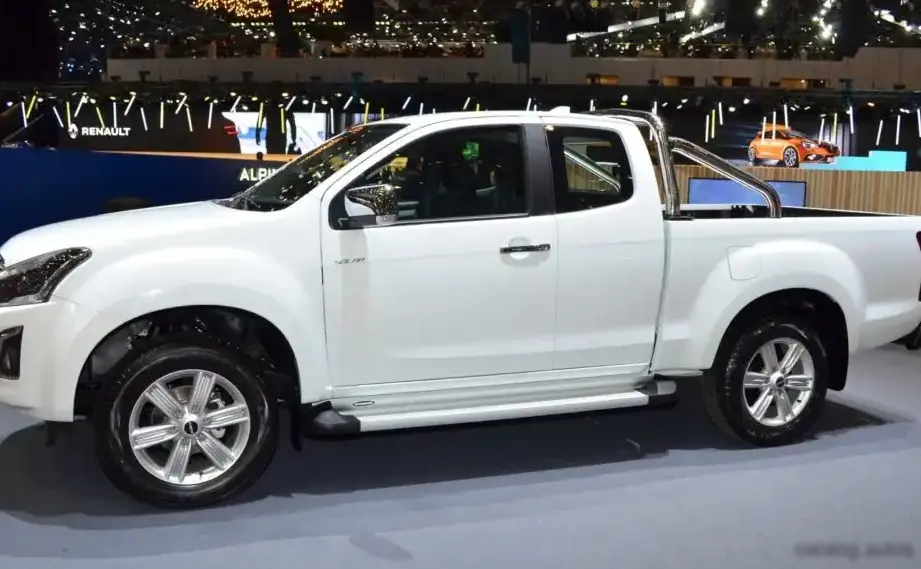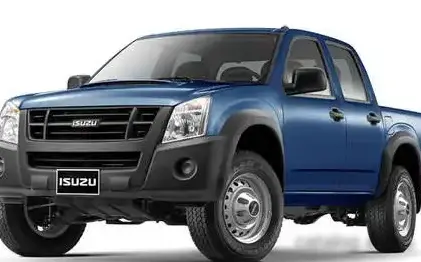
The Isuzu D-Max I 3.0 TD Double Cab (163 Hp) Automatic, produced between 2008 and 2012, represents a significant offering in the mid-size pickup truck segment. Part of the first generation D-Max (introduced globally in 2002, but arriving later in some markets), this variant aimed to provide a balance of capability, comfort, and efficiency for both commercial and personal use. It was primarily marketed towards buyers needing a versatile vehicle capable of hauling and towing, while also offering passenger space and a degree of refinement. This particular configuration – the 3.0-liter turbocharged diesel engine paired with a four-speed automatic transmission – positioned itself as a mid-range option within the D-Max lineup, offering a more convenient driving experience than the manual transmission alternatives, but without the higher price tag of potential future, more powerful trims.
Technical Specifications
| Brand | Isuzu |
| Model | D-Max |
| Generation | D-Max I |
| Type | 3.0 TD Double Cab (163 Hp) Automatic |
| Start of production | 2008 |
| End of production | 2012 |
| Powertrain Architecture | Internal Combustion engine |
| Body type | Pick-up |
| Seats | 5 |
| Doors | 4 |
| Fuel consumption (urban) | 10.5 l/100 km (22.4 US mpg, 26.9 UK mpg, 9.5 km/l) |
| Fuel consumption (extra urban) | 7.9 l/100 km (29.8 US mpg, 35.8 UK mpg, 12.7 km/l) |
| Fuel consumption (combined) | 9 l/100 km (26.1 US mpg, 31.4 UK mpg, 11.1 km/l) |
| Fuel Type | Diesel |
| Emission standard | Euro 4 |
| Power | 163 Hp @ 3600 rpm |
| Power per litre | 54.4 Hp/l |
| Torque | 280 Nm @ 1800 rpm (206.52 lb.-ft. @ 1800 rpm) |
| Engine layout | Front, Longitudinal |
| Engine Model/Code | 4JJ1 |
| Engine displacement | 2999 cm3 (183.01 cu. in.) |
| Number of cylinders | 4 |
| Engine configuration | Inline |
| Cylinder Bore | 95.4 mm (3.76 in.) |
| Piston Stroke | 104.9 mm (4.13 in.) |
| Compression ratio | 18:1 |
| Number of valves per cylinder | 4 |
| Fuel injection system | Diesel Commonrail |
| Engine aspiration | Turbocharger, Intercooler |
| Engine oil capacity | 7 l (7.4 US qt, 6.16 UK qt) |
| Coolant capacity | 10 l (10.57 US qt, 8.8 UK qt) |
| Fuel tank capacity | 76 l (20.08 US gal, 16.72 UK gal) |
| Length | 5035 mm (198.23 in.) |
| Width | 1800 mm (70.87 in.) |
| Height | 1735 mm (68.31 in.) |
| Wheelbase | 3050 mm (120.08 in.) |
| Front track | 1520 mm (59.84 in.) |
| Rear track | 1520 mm (59.84 in.) |
| Drive wheel | All wheel drive (4×4) |
| Number of gears | 4 |
| Gearbox type | Automatic transmission |
| Front suspension | Independent torsion bar, double wishbone |
| Rear suspension | Spring Strut |
| Front brakes | Ventilated discs |
| Rear brakes | Disc |
| Assisting systems | ABS (Anti-lock braking system) |
| Tires size | 225/75 R15 |
Powertrain & Engine Architecture
The heart of the D-Max I 3.0 TD Automatic is the 4JJ1-TC 3.0-liter inline-four cylinder diesel engine. This engine, a staple of Isuzu’s commercial vehicle lineup, is known for its durability and relatively straightforward design. The 4JJ1 utilizes a common rail direct injection system, delivering fuel at extremely high pressures for improved combustion efficiency and reduced emissions. A turbocharger with an intercooler further enhances performance by forcing more air into the cylinders. The engine produces 163 horsepower at 3600 rpm and 280 Nm (206.52 lb-ft) of torque at 1800 rpm. The four-speed automatic transmission, while not as sophisticated as more modern gearboxes, provides smooth shifts and ease of use, particularly appealing to drivers not accustomed to manual transmissions. It’s a conventional torque converter automatic, prioritizing reliability over outright performance.
Driving Characteristics
The 3.0-liter diesel and four-speed automatic combination delivers adequate, but not exhilarating, performance. Acceleration is reasonable for a pickup truck, but the automatic transmission’s limited number of gears means the engine can feel strained when climbing hills or carrying heavy loads. The torque output, however, is readily available from low engine speeds, making it suitable for towing and off-road driving. Compared to the five-speed manual version of the same engine, the automatic sacrifices some responsiveness and fuel economy. The gear ratios are tuned for practicality rather than sportiness, prioritizing fuel efficiency and ease of driving over quick acceleration. The automatic transmission does offer a manual shift mode, but it’s a relatively basic implementation.
Equipment & Trim Levels
The D-Max I 3.0 TD Double Cab Automatic typically came equipped with a reasonable level of standard features. These included air conditioning, power windows, central locking, and an AM/FM radio with CD player. Higher trim levels added features such as alloy wheels, a more comprehensive audio system, and upgraded interior upholstery. The Double Cab configuration offered seating for five passengers, with a spacious rear cabin for a mid-size pickup. Optional extras included a limited-slip differential, a tow bar, and various accessories for the cargo bed.
Chassis & Braking
The D-Max I features a robust chassis designed for both on-road comfort and off-road capability. The front suspension utilizes independent torsion bars and double wishbones, providing a comfortable ride and good handling. The rear suspension employs a spring strut setup, which is simpler but effective for load-carrying. Braking duties are handled by ventilated discs at the front and solid discs at the rear. Anti-lock Braking System (ABS) is standard, enhancing safety during emergency braking situations. The 4×4 system allows the driver to switch between two-wheel drive and four-wheel drive modes, providing increased traction in challenging conditions.
Market Reception & Comparison
The Isuzu D-Max I 3.0 TD Double Cab Automatic was generally well-received by critics as a practical and reliable pickup truck. It was praised for its durable engine, comfortable ride, and spacious cabin. However, the four-speed automatic transmission was often criticized for being somewhat dated and lacking the refinement of newer transmissions. Compared to competitors like the Toyota Hilux and Mitsubishi L200, the D-Max offered a competitive price point and a strong reputation for reliability. Fuel economy was respectable for a vehicle of its size and type, but the manual transmission versions consistently achieved better figures.
Legacy
The Isuzu D-Max I 3.0 TD Automatic has proven to be a durable and reliable vehicle, with many examples still on the road today. The 4JJ1 engine is particularly well-regarded for its longevity, provided it has been properly maintained. While the four-speed automatic transmission may not be the most advanced, it has also proven to be relatively trouble-free. In the used car market, these D-Max models represent a good value for buyers seeking a capable and dependable pickup truck. Common issues include wear and tear on suspension components and potential for rust in areas prone to corrosion. Overall, the D-Max I 3.0 TD Automatic remains a solid choice for those needing a workhorse vehicle that can handle a variety of tasks.