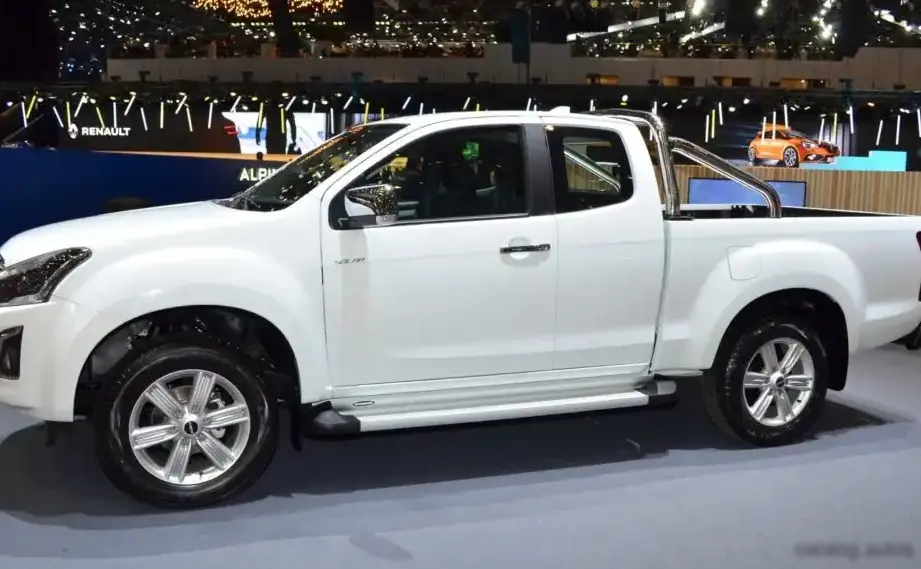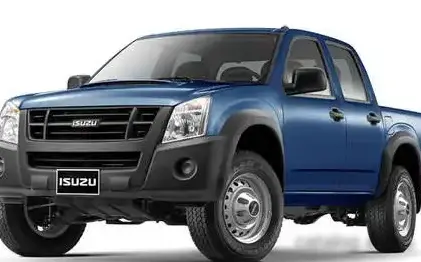
The Isuzu D-Max I 3.0 TD Space Cab 4WD Automatic, produced between 2008 and 2012, represents a significant offering in the mid-size pickup truck segment. Part of the first generation D-Max (introduced globally in 2002, but arriving later in some markets), this variant was aimed at buyers needing a versatile vehicle capable of both work and recreational use. The “Space Cab” configuration, featuring extended cab space, offered a compromise between the practicality of a standard cab and the passenger capacity of a double cab. This particular model, equipped with the 3.0-liter turbodiesel engine and a four-speed automatic transmission, was positioned as a mid-range option, balancing performance with ease of use and fuel efficiency.
Technical Specifications
| Brand | Isuzu |
| Model | D-Max |
| Generation | D-Max I |
| Type | 3.0 TD Space Cab (163 Hp) 4WD Automatic |
| Start of production | 2008 |
| End of production | 2012 |
| Powertrain Architecture | Internal Combustion engine |
| Body type | Pick-up |
| Seats | 4 |
| Doors | 2 |
| Fuel consumption (urban) | 10.9 l/100 km (21.6 US mpg) |
| Fuel consumption (extra urban) | 7.9 l/100 km (29.8 US mpg) |
| Fuel consumption (combined) | 9 l/100 km (26.1 US mpg) |
| Fuel Type | Diesel |
| Acceleration 0 – 100 km/h | 20 sec |
| Acceleration 0 – 62 mph | 20 sec |
| Acceleration 0 – 60 mph | 19 sec |
| Maximum speed | 155 km/h (96.31 mph) |
| Emission standard | Euro 4 |
| Power | 163 Hp @ 3600 rpm |
| Torque | 333 Nm @ 2000 rpm (245.61 lb.-ft. @ 2000 rpm) |
| Engine layout | Front, Longitudinal |
| Engine Model/Code | 4JJ1 |
| Engine displacement | 2999 cm3 (183.01 cu. in.) |
| Number of cylinders | 4 |
| Engine configuration | Inline |
| Cylinder Bore | 95.4 mm (3.76 in.) |
| Piston Stroke | 104.9 mm (4.13 in.) |
| Compression ratio | 19:1 |
| Number of valves per cylinder | 4 |
| Fuel injection system | Diesel Commonrail |
| Engine aspiration | Turbocharger, Intercooler |
| Engine oil capacity | 7 l (7.4 US qt | 6.16 UK qt) |
| Coolant capacity | 10 l (10.57 US qt | 8.8 UK qt) |
| Fuel tank capacity | 76 l (20.08 US gal | 16.72 UK gal) |
| Length | 5155 mm (202.95 in.) |
| Width | 1800 mm (70.87 in.) |
| Height | 1730 mm (68.11 in.) |
| Wheelbase | 3050 mm (120.08 in.) |
| Front track | 1460 mm (57.48 in.) |
| Rear track | 1460 mm (57.48 in.) |
| Drive wheel | All wheel drive (4×4) |
| Number of gears | 4 |
| Gearbox type | Automatic transmission |
| Front suspension | Independent torsion bar, double wishbone |
| Rear suspension | Spring Strut |
| Front brakes | Ventilated discs |
| Rear brakes | Drum |
| Tires size | 225/75 R15 |
Powertrain & Engine Architecture
The heart of the D-Max I 3.0 TD Space Cab is the Isuzu 4JJ1-TC 3.0-liter inline-four cylinder diesel engine. This engine, a staple of Isuzu’s commercial vehicle lineup, is known for its durability and relatively simple design. The 4JJ1 utilizes a common rail direct injection system, delivering fuel at extremely high pressures for improved combustion efficiency and reduced emissions. A turbocharger with an intercooler further enhances performance by forcing more air into the cylinders. The engine produces 163 horsepower at 3600 rpm and 333 Nm (245.61 lb-ft) of torque at 2000 rpm. This torque output is particularly important for a pickup truck, providing strong pulling power and load-carrying capability. The four-speed automatic transmission, while not as sophisticated as modern transmissions with more gears, was chosen for its robustness and ease of use, appealing to a broader range of drivers.
Driving Characteristics
The combination of the 3.0-liter diesel and the four-speed automatic transmission results in a driving experience focused on practicality rather than outright speed. Acceleration is adequate, with a 0-60 mph time of around 19 seconds, but the engine’s strength lies in its mid-range torque. This makes it well-suited for towing, hauling, and navigating challenging terrain. The automatic transmission provides smooth shifts, but the limited number of gears can sometimes result in the engine feeling strained at higher speeds. Compared to the manual transmission versions of the D-Max, the automatic offers less driver engagement but greater convenience, particularly in urban environments. The 4WD system provides enhanced traction in off-road conditions, making it a capable workhorse.
Equipment & Trim Levels
The Space Cab configuration offered a useful compromise between cab space and bed length. Standard equipment on the 3.0 TD Automatic typically included air conditioning, power windows, central locking, and an AM/FM radio. Higher trim levels, often denoted by specific packages, could add features like alloy wheels, upgraded audio systems, and more comfortable upholstery. The interior, while functional, was generally basic in its design, prioritizing durability over luxury. The Space Cab featured rear seats that were suitable for occasional use, providing additional passenger capacity when needed.
Chassis & Braking
The D-Max I utilized a body-on-frame construction, providing a robust and durable platform. The front suspension consisted of independent torsion bars and double wishbone setup, offering a reasonable level of ride comfort. The rear suspension employed a spring strut design. Braking duties were handled by ventilated discs at the front and drum brakes at the rear. While adequate for most applications, the drum brakes on the rear were a cost-saving measure and didn’t offer the same stopping power as disc brakes. The 4WD system typically featured a shift-on-the-fly mechanism, allowing the driver to easily switch between two-wheel drive and four-wheel drive modes.
Market Reception & Comparison
The Isuzu D-Max I 3.0 TD Space Cab 4WD Automatic was generally well-received as a practical and reliable workhorse. Critics praised its durability, fuel efficiency (around 26.1 US mpg combined), and off-road capability. However, the four-speed automatic transmission was sometimes criticized for being outdated compared to the more modern transmissions offered by competitors like the Toyota Hilux and Mitsubishi Triton. Compared to the lower-powered 2.5-liter D-Max variants, the 3.0-liter offered significantly more performance, making it a better choice for those who frequently tow or haul heavy loads. The 3.0 TD was also more refined than the 2.5, offering a quieter and smoother driving experience.
Legacy
The Isuzu D-Max I 3.0 TD Space Cab 4WD Automatic has proven to be a relatively reliable vehicle, with many examples still on the road today. The 4JJ1 engine is known for its longevity, provided it is properly maintained. Common issues include wear and tear on suspension components and potential problems with the turbocharger. In the used car market, these D-Max models represent a good value for buyers seeking a capable and durable pickup truck. While not as technologically advanced as newer pickups, the D-Max I offers a simple, robust, and dependable platform that continues to appeal to those who prioritize practicality and reliability.