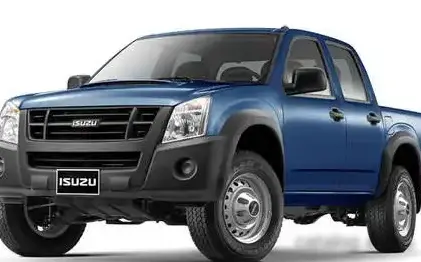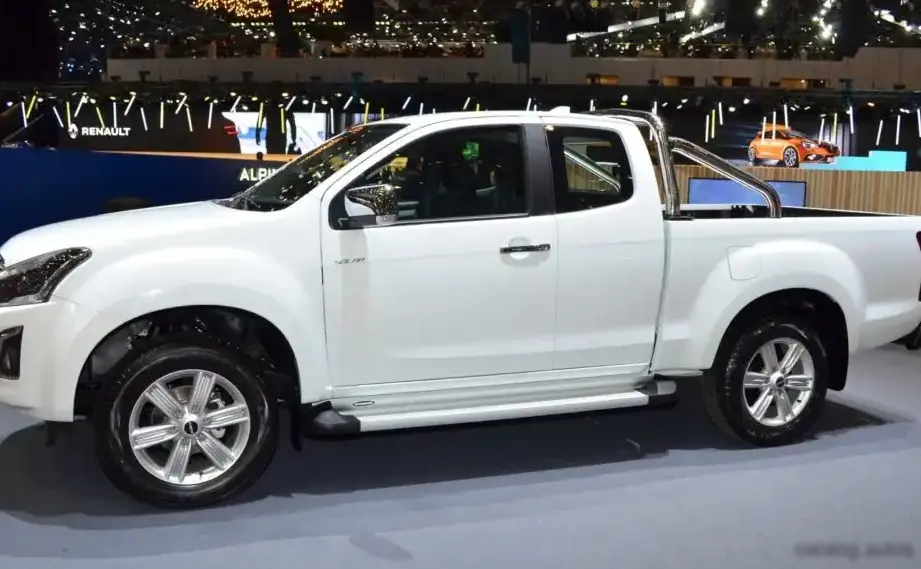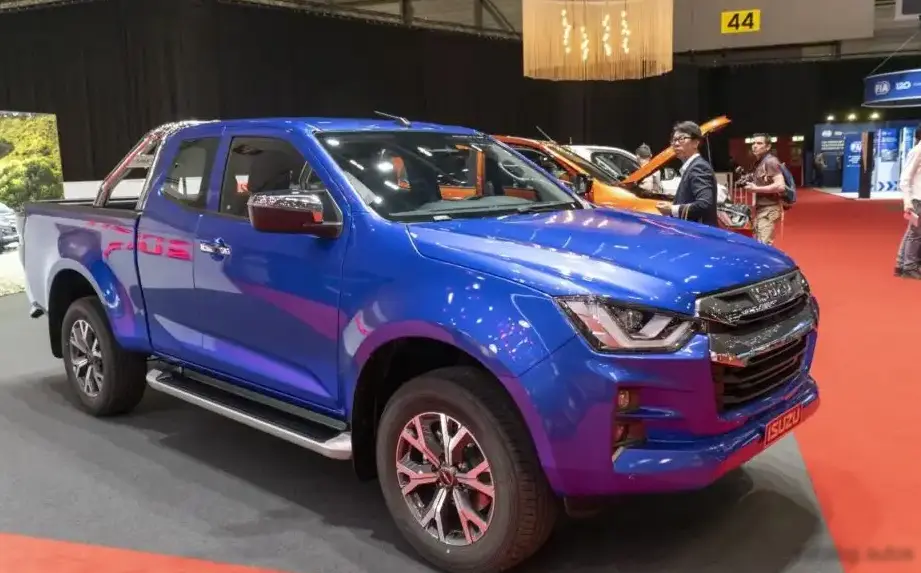
The Isuzu D-Max III Space Cab 1.9d (163 Hp) 4WD is a mid-size pickup truck produced by Isuzu from 2020 to 2023. It represents the third generation of the D-Max, specifically the extended cab (Space Cab) configuration powered by the 1.9-liter turbocharged diesel engine producing 163 horsepower. This variant was primarily sold in international markets, including Australia, Europe, and parts of Asia, offering a balance between capability, fuel efficiency, and affordability within the D-Max lineup. It falls into the work truck/utility vehicle segment, appealing to buyers needing a robust vehicle for both commercial and personal use.
Technical Specifications
| Brand | Isuzu |
| Model | D-Max |
| Generation | D-Max III Space Cab |
| Type (Engine) | 1.9d (163 Hp) 4WD |
| Start of production | 2020 |
| End of production | 2023 |
| Powertrain Architecture | Internal Combustion engine |
| Body type | Pick-up |
| Seats | 4 |
| Doors | 2 |
| Combined fuel consumption (WLTP) | 8.09-8.41 l/100 km (29.1 – 28 US mpg, 34.9 – 33.6 UK mpg, 12.4 – 11.9 km/l) |
| CO2 emissions (WLTP) | 212-220 g/km |
| Fuel consumption (urban) | 8.23-8.79 l/100 km (28.6 – 26.8 US mpg, 34.3 – 32.1 UK mpg, 12.2 – 11.4 km/l) |
| Fuel consumption (extra urban) | 6.02-6.36 l/100 km (39.1 – 37 US mpg, 46.9 – 44.4 UK mpg, 16.6 – 15.7 km/l) |
| Fuel consumption (combined) | 6.84-7.26 l/100 km (34.4 – 32.4 US mpg, 41.3 – 38.9 UK mpg, 14.6 – 13.8 km/l) |
| CO2 emissions (NEDC) | 180-191 g/km |
| Fuel Type | Diesel |
| Maximum speed | 180 km/h (111.85 mph) |
| Emission standard | Euro 6d-ISC-AO |
| Weight-to-power ratio | 12.4 kg/Hp, 80.7 Hp/tonne |
| Weight-to-torque ratio | 5.6 kg/Nm, 178.2 Nm/tonne |
| Power | 163 Hp @ 3600 rpm |
| Power per litre | 85.9 Hp/l |
| Torque | 360 Nm @ 2000-2500 rpm (265.52 lb.-ft. @ 2000-2500 rpm) |
| Engine layout | Front, Longitudinal |
| Engine Model/Code | RZ4E-TC |
| Engine displacement | 1898 cm3 (115.82 cu. in.) |
| Number of cylinders | 4 |
| Engine configuration | Inline |
| Cylinder Bore | 80 mm (3.15 in.) |
| Piston Stroke | 94.4 mm (3.72 in.) |
| Compression ratio | 15.9:1 |
| Number of valves per cylinder | 2 |
| Fuel injection system | Diesel Commonrail |
| Engine aspiration | Turbocharger, Intercooler |
| Engine oil capacity | 6.6 l (6.97 US qt, 5.81 UK qt) |
| Coolant capacity | 10.7 l (11.31 US qt, 9.41 UK qt) |
| Kerb Weight | 2020-2038 kg (4453.34 – 4493.02 lbs.) |
| Max. weight | 3100 kg (6834.33 lbs.) |
| Max load | 1062-1080 kg (2341.31 – 2380.99 lbs.) |
| Fuel tank capacity | 76 l (20.08 US gal, 16.72 UK gal) |
| Max. roof load | 100 kg (220.46 lbs.) |
| Permitted trailer load (braked) | 3500 kg (7716.18 lbs.) |
| Permitted trailer load (unbraked) | 750 kg (1653.47 lbs.) |
| Permitted towbar download | 245 kg (540.13 lbs.) |
| Length | 5265 mm (207.28 in.) |
| Width | 1870 mm (73.62 in.) |
| Height | 1790 mm (70.47 in.) |
| Wheelbase | 3125 mm (123.03 in.) |
| Front track | 1570 mm (61.81 in.) |
| Rear track | 1570 mm (61.81 in.) |
| Front overhang | 890 mm (35.04 in.) |
| Rear overhang | 1250 mm (49.21 in.) |
| Turning circle | 13 m (42.65 ft.) |
| Drivetrain | All wheel drive (4×4) |
| Number of gears | 6 |
| Gearbox type | Manual transmission |
| Front suspension | Double wishbone |
| Rear suspension | Leaf spring |
| Front brakes | Ventilated discs |
| Rear brakes | Drum |
| Steering type | Steering rack and pinion |
| Power steering | Electric |
| Tires size | 265/60 R18 |
| Wheel rims size | 7.5J x 18 |
INTRODUCTION
The Isuzu D-Max III Space Cab 1.9d (163 Hp) 4WD, launched in 2020, is a significant iteration of Isuzu’s popular pickup truck. Built on the updated D-Max platform, it offered a compelling package for buyers seeking a practical and reliable workhorse. The “Space Cab” configuration provides an extended cabin with limited rear seating, prioritizing cargo space over passenger comfort. This variant was positioned as a mid-range offering, bridging the gap between the base model and the higher-specification trims with more powerful engines. The 1.9-liter engine was a key component of Isuzu’s strategy to meet increasingly stringent emissions regulations while maintaining acceptable performance levels.
Powertrain & Engine Architecture
At the heart of the D-Max III Space Cab 1.9d 4WD lies the RZ4E-TC, a 1.9-liter inline-four cylinder diesel engine. This engine is a departure from the previous 2.5-liter units, representing a downsized and more efficient design. It utilizes a high-pressure common rail direct injection system, delivering fuel directly into the combustion chamber for improved atomization and combustion efficiency. The engine is turbocharged with an intercooler to increase power output and reduce turbo lag. The valvetrain features two valves per cylinder (SOHC). The 4WD system is a part-time system, allowing the driver to switch between 2WD and 4WD modes as needed. The 6-speed manual transmission provides a balance between fuel economy and drivability. The transmission’s gear ratios are tuned for both on-road cruising and off-road traction, with a relatively low first gear for tackling challenging terrain.
Driving Characteristics
The 163 horsepower and 360 Nm (265 lb-ft) of torque offered by the 1.9-liter engine provide adequate performance for everyday driving and moderate hauling tasks. However, it’s noticeably less powerful than the higher-output 3.0-liter engine options available in the D-Max range. Acceleration is respectable but not brisk, and overtaking maneuvers require planning. The manual transmission allows for greater driver control, but the gear ratios are spaced to prioritize fuel efficiency over outright performance. The 4WD system provides enhanced traction on slippery surfaces, making it suitable for off-road use, although it’s not designed for extreme rock crawling. Compared to the automatic transmission variants, the manual offers a more engaging driving experience and potentially better fuel economy.
Equipment & Trim Levels
The Space Cab 1.9d 4WD typically came equipped with a range of standard features, including air conditioning, power windows, central locking, and a basic audio system. Safety features such as ABS brakes, electronic stability control, and multiple airbags were also standard. Interior upholstery was typically cloth, with durable plastic trim. Optional extras included alloy wheels, a touchscreen infotainment system with navigation, a reversing camera, and upgraded audio systems. The Space Cab configuration offered a small rear seat area, suitable for occasional passengers or storage. The dashboard layout was functional and straightforward, prioritizing practicality over luxury.
Chassis & Braking
The D-Max III Space Cab utilizes a robust ladder-frame chassis, providing a solid foundation for both on-road and off-road driving. The front suspension consists of double wishbones, while the rear suspension employs leaf springs, a traditional setup for pickup trucks. This configuration provides a good balance between ride comfort and load-carrying capacity. The braking system features ventilated discs on the front wheels and drum brakes on the rear wheels. The drum brakes on the rear were a cost-saving measure, and some critics noted that they offered less stopping power than disc brakes. Electric power steering provides a light and responsive steering feel.
Market Reception & Comparison
The Isuzu D-Max III Space Cab 1.9d 4WD was generally well-received by critics for its fuel efficiency, reliability, and practicality. However, some reviewers found the 1.9-liter engine to be underpowered, particularly when compared to the larger-displacement engines offered in competing pickup trucks. Compared to the 3.0-liter D-Max variants, the 1.9d offered better fuel economy but less towing capacity and overall performance. The manual transmission was praised for its responsiveness, but some drivers preferred the convenience of an automatic transmission. In terms of reliability, the D-Max has a strong reputation, and the 1.9-liter engine has proven to be relatively trouble-free.
Legacy
The Isuzu D-Max III Space Cab 1.9d (163 Hp) 4WD has established itself as a dependable and affordable workhorse in the used car market. Its relatively simple engine design and robust construction contribute to its long-term reliability. While it may not offer the same level of performance or refinement as some of its competitors, it provides a practical and economical solution for buyers needing a capable pickup truck. The 1.9-liter engine, while not as powerful as larger alternatives, has proven to be fuel-efficient and relatively easy to maintain, making it a popular choice for those seeking a reliable and cost-effective vehicle.