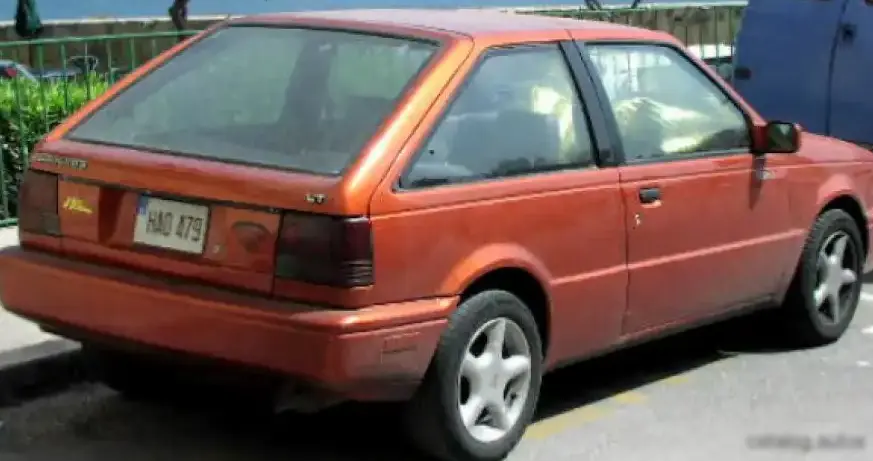
The Isuzu Gemini, known as the Holden Gemini in Australia and New Zealand, was a compact car produced by Isuzu between 1974 and 1990. The hatchback variant, introduced in 1985, represented a modernization of the Gemini line, aiming to appeal to a broader, more contemporary market. The 1.5 TD model, produced between 1988 and 1990, was a relatively late addition to the range, offering a diesel-powered option focused on fuel economy. This variant occupied the lower end of the Gemini hatchback lineup, positioned as an economical and practical choice for buyers prioritizing efficiency over outright performance. It was primarily sold in Europe and select Asian markets.
Technical Specifications
| Brand | Isuzu |
| Model | Gemini |
| Generation | Gemini Hatchback |
| Type (Engine) | 1.5 TD (67 Hp) |
| Start of production | 1988 |
| End of production | 1990 |
| Powertrain Architecture | Internal Combustion engine |
| Body type | Hatchback |
| Seats | 4 |
| Doors | 3 |
| Fuel Type | Diesel |
| Power | 67 Hp |
| Number of valves per cylinder | 2 |
| Engine aspiration | Turbocharger |
| Drivetrain | Front wheel drive |
| Number of gears | 5 |
| Type of gearbox | Manual transmission |
Powertrain & Engine Architecture
The 1.5 TD Gemini hatchback was powered by Isuzu’s 1.5-liter diesel engine, designated as the 4EE1. This engine was a naturally aspirated inline-four cylinder unit, utilizing indirect injection. While the 67 horsepower output might seem modest by modern standards, it was a reasonable figure for a diesel engine of this displacement in the late 1980s. The engine featured two valves per cylinder and a turbocharger to improve torque and responsiveness. The turbocharger, though relatively small, helped to mitigate the inherent torque deficit of smaller diesel engines. The fuel injection system was a mechanical unit, typical for the era, relying on a distributor-type pump. This system, while robust, was less precise than later electronic injection systems. The engine’s block was cast iron, contributing to its durability, while the cylinder head was aluminum. The 4EE1 engine was known for its relatively simple design, making it easier to maintain and repair. The five-speed manual transmission was a standard feature, chosen to maximize fuel efficiency and provide adequate gearing for the engine’s power band.
Driving Characteristics
The Isuzu Gemini 1.5 TD, with its 67 horsepower and 5-speed manual transmission, offered a driving experience focused on economy rather than excitement. Acceleration was leisurely, and overtaking required careful planning. The turbocharger did provide a noticeable boost in torque at lower engine speeds, improving drivability around town. However, the engine lacked the high-end power of larger displacement gasoline engines. The gear ratios were chosen to prioritize fuel efficiency, with a relatively tall final drive. This meant that the engine was rarely stressed at highway speeds, contributing to good fuel economy. The steering was light and precise, making the car easy to maneuver in urban environments. The suspension, while basic, provided a comfortable ride, absorbing bumps and imperfections in the road surface reasonably well. Compared to the gasoline-powered Gemini models, the 1.5 TD offered significantly better fuel economy but at the expense of performance. It was a practical choice for drivers who covered long distances or prioritized low running costs.
Equipment & Trim Levels
The 1.5 TD Gemini hatchback was typically offered in a base trim level, reflecting its position as the entry-level diesel variant. Standard equipment included cloth upholstery, a basic dashboard with analog gauges, and manual windows and door locks. Power steering was often an optional extra, as was an upgraded stereo system. The interior was functional and durable, designed for practicality rather than luxury. The exterior featured steel wheels with hubcaps, black plastic bumpers, and relatively simple body trim. Optional extras included a sunroof, upgraded interior trim, and metallic paint. The overall level of equipment was modest, but adequate for a car in this price range. The focus was on providing a reliable and affordable mode of transportation.
Chassis & Braking
The Isuzu Gemini hatchback utilized a front-engine, front-wheel-drive layout. The chassis consisted of a monocoque body construction, providing a good balance of strength and weight. The front suspension featured independent MacPherson struts, while the rear suspension employed a torsion beam axle. This setup provided a comfortable ride and predictable handling. The braking system consisted of disc brakes on the front wheels and drum brakes on the rear wheels. This configuration was common for cars in this class during the late 1980s. The brakes were adequate for normal driving conditions, but lacked the stopping power of more advanced braking systems. A stabilizer bar was fitted to the front suspension to reduce body roll during cornering. The steering system was a rack-and-pinion type, providing precise and responsive steering feel.
Market Reception & Comparison
The Isuzu Gemini 1.5 TD was generally well-received as an economical and practical small car. Critics praised its fuel efficiency and durability, but noted its lack of performance. Compared to other diesel-powered cars in the same class, such as the Peugeot 205 Diesel or the Fiat Uno Diesel, the Gemini offered a competitive level of fuel economy and reliability. However, it lacked the refinement and driving dynamics of some of its European rivals. Within the Gemini lineup, the 1.5 TD was positioned as the budget-friendly option, appealing to buyers who prioritized low running costs over performance and features. The gasoline-powered Gemini models offered more power and a more engaging driving experience, but at the expense of fuel economy. The 1.5 TD was a popular choice for fleet operators and private buyers who covered long distances.
Legacy
The Isuzu Gemini 1.5 TD, while not a particularly groundbreaking vehicle, established a reputation for reliability and fuel efficiency. The 4EE1 diesel engine proved to be a durable and long-lasting unit, capable of covering high mileages with proper maintenance. Today, the Gemini 1.5 TD is a relatively rare sight on the roads, but those that remain are often well-maintained by enthusiasts who appreciate their simplicity and practicality. The car’s relatively simple mechanical design makes it easier to repair and maintain than more modern vehicles. In the used car market, the Gemini 1.5 TD is valued for its affordability and low running costs. It represents a piece of automotive history, showcasing the design and engineering of the late 1980s. While it may not offer the performance or features of modern cars, it remains a practical and reliable choice for those seeking a classic diesel-powered hatchback.