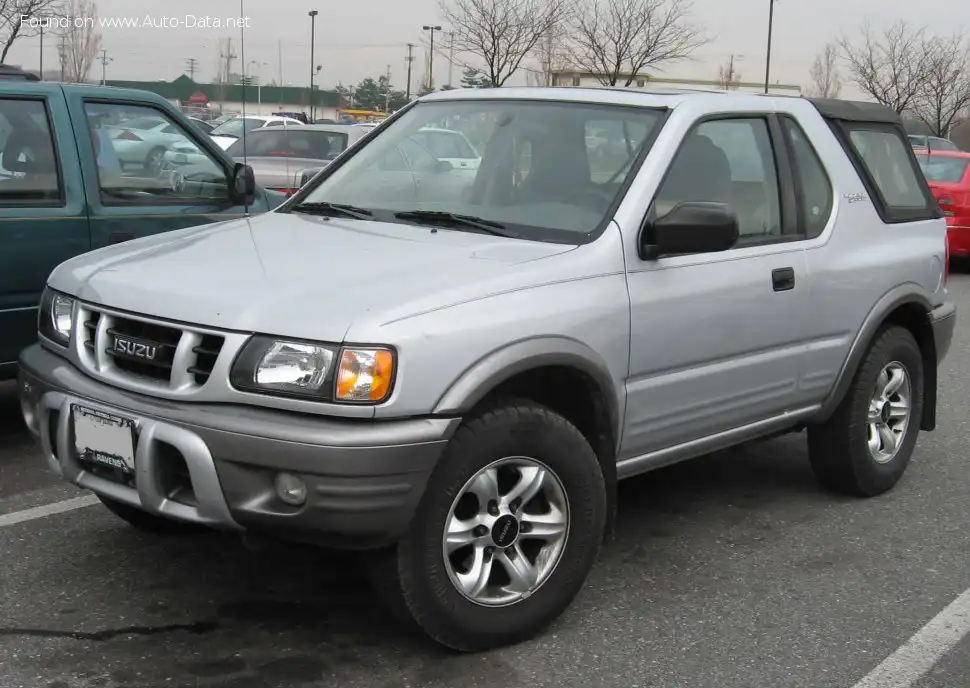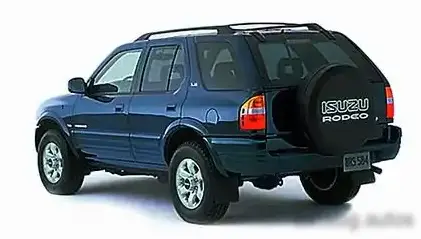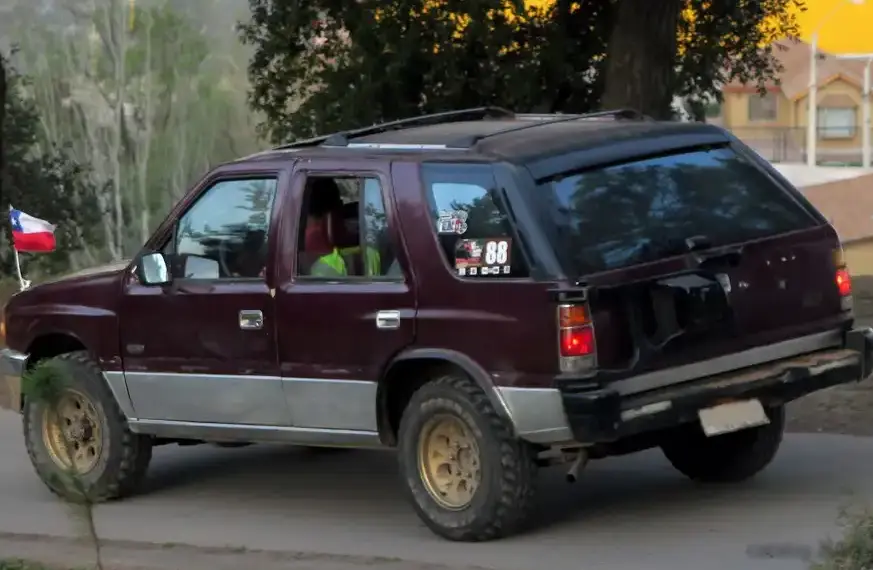
The Isuzu Rodeo 3.2i 4WD LS, produced between 1989 and 1998, marked Isuzu’s significant entry into the mid-size SUV market, particularly in North America. This variant, equipped with the 3.2-liter V6 engine and a five-speed manual transmission, was positioned as a capable and relatively well-equipped offering within the first generation Rodeo (internally known as the UBS series). It aimed to compete with established SUVs like the Ford Explorer and Chevrolet Blazer, offering a blend of off-road capability and on-road comfort. While the Rodeo didn’t achieve the sales volume of its American competitors, it carved out a niche among buyers seeking a dependable and less common alternative.
Technical Specifications
| Brand | Isuzu |
| Model | Rodeo |
| Generation | Rodeo (UBS Series) |
| Type | 3.2 i 4WD LS (177 Hp) |
| Start of production | 1989 |
| End of production | 1998 |
| Powertrain Architecture | Internal Combustion engine |
| Body type | SUV |
| Seats | 6 |
| Doors | 4 |
| Fuel consumption (combined) | 13.2 l/100 km (17.8 US mpg, 21.4 UK mpg, 7.6 km/l) |
| Fuel Type | Petrol (Gasoline) |
| Weight-to-power ratio | 10.1 kg/Hp, 98.8 Hp/tonne |
| Weight-to-torque ratio | 6.9 kg/Nm, 145.2 Nm/tonne |
| Power | 177 Hp @ 5200 rpm |
| Power per litre | 55.9 Hp/l |
| Torque | 260 Nm @ 3750 rpm (191.77 lb.-ft. @ 3750 rpm) |
| Engine layout | Front, Longitudinal |
| Engine displacement | 3165 cm3 (193.14 cu. in.) |
| Number of cylinders | 6 |
| Engine configuration | V-engine |
| Cylinder Bore | 93.4 mm (3.68 in.) |
| Piston Stroke | 77 mm (3.03 in.) |
| Compression ratio | 9.3:1 |
| Number of valves per cylinder | 4 |
| Fuel injection system | Multi-port manifold injection |
| Engine aspiration | Naturally aspirated engine |
| Valvetrain | OHC |
| Engine oil capacity | 4.7 l (4.97 US qt | 4.14 UK qt) |
| Coolant capacity | 11 l (11.62 US qt | 9.68 UK qt) |
| Kerb Weight | 1791 kg (3948.48 lbs.) |
| Max. weight | 2225 kg (4905.29 lbs.) |
| Max load | 434 kg (956.81 lbs.) |
| Fuel tank capacity | 83 l (21.93 US gal | 18.26 UK gal) |
| Length | 4480 mm (176.38 in.) |
| Width | 1690 mm (66.54 in.) |
| Height | 1660 mm (65.35 in.) |
| Wheelbase | 2760 mm (108.66 in.) |
| Front track | 1440 mm (56.69 in.) |
| Rear track | 1445 mm (56.89 in.) |
| Drive wheel | All wheel drive (4×4) |
| Number of gears and type of gearbox | 5 gears, manual transmission |
| Front suspension | Double wishbone |
| Rear suspension | Coil spring |
| Front brakes | Ventilated discs |
| Rear brakes | Ventilated discs |
| Assisting systems | ABS (Anti-lock braking system) |
| Power steering | Hydraulic Steering |
| Tires size | 225/75 R15 |
Powertrain & Engine Architecture
The heart of the Rodeo 3.2i LS is the 6VE1 3.2-liter V6 engine. This engine, a naturally aspirated design, utilizes a 90-degree V-configuration for smooth operation. It features a single overhead camshaft (OHC) design operating four valves per cylinder. The engine employs multi-port fuel injection, contributing to improved fuel efficiency and throttle response compared to earlier carbureted designs. The 3.2L V6 produced 177 horsepower at 5200 rpm and 260 Nm (191.77 lb-ft) of torque at 3750 rpm. The five-speed manual transmission offered with this variant provided drivers with greater control over gear selection, enhancing both performance and fuel economy. The transmission was a conventional design, known for its durability and relatively straightforward maintenance.
Driving Characteristics
The Rodeo 3.2i 4WD LS with the manual transmission offered a reasonably engaging driving experience. While not a performance-oriented SUV, the 3.2-liter V6 provided adequate power for both on-road cruising and moderate off-road excursions. The manual gearbox allowed drivers to keep the engine in its optimal power band, resulting in brisk acceleration. Compared to the later available 2.6-liter four-cylinder engine, the 3.2i offered significantly more power and torque, making it better suited for towing and tackling challenging terrain. The 4WD system, typically part-time with selectable 2H, 4H, and 4L modes, provided enhanced traction in slippery conditions. The Rodeo’s suspension, while comfortable for everyday driving, could feel somewhat soft during aggressive cornering.
Equipment & Trim Levels
The LS trim level represented a mid-range offering in the Rodeo lineup. Standard features typically included air conditioning, power windows and locks, a tilt steering wheel, and an upgraded sound system. The interior featured cloth upholstery and a relatively simple dashboard layout. Optional extras could include a sunroof, upgraded audio systems, and alloy wheels. The Rodeo LS aimed to provide a balance of comfort and convenience without the higher price tag of the top-tier trims.
Chassis & Braking
The Rodeo utilized a body-on-frame construction, a common practice for SUVs of that era, providing robust durability and off-road capability. The front suspension employed a double wishbone design, while the rear suspension utilized coil springs. This setup aimed to provide a comfortable ride while maintaining reasonable handling characteristics. Braking duties were handled by ventilated discs on all four wheels, supplemented by an anti-lock braking system (ABS) which was becoming increasingly common in the early 1990s. The Rodeo’s steering was hydraulically assisted, providing relatively light and easy steering effort.
Market Reception & Comparison
The Isuzu Rodeo 3.2i 4WD LS received generally positive reviews from automotive critics. It was praised for its spacious interior, comfortable ride, and capable 4WD system. However, it was often criticized for its somewhat bland styling and lack of brand recognition compared to established American and Japanese competitors. Fuel economy, at 17.8 US mpg combined, was typical for a V6-powered SUV of its size and era. Compared to the four-cylinder Rodeo, the 3.2i offered a significant performance advantage but at the cost of slightly lower fuel efficiency. Reliability was generally considered good, although some owners reported issues with the cooling system and minor electrical components.
Legacy
The Isuzu Rodeo, particularly the 3.2i variant, has developed a reputation as a dependable and relatively affordable used SUV. The 6VE1 engine, while not known for being particularly high-tech, is generally considered robust and long-lasting with proper maintenance. Parts availability remains reasonable, although some components may be becoming increasingly difficult to source. Today, the Rodeo 3.2i 4WD LS represents a viable option for buyers seeking a capable and reliable older SUV, particularly those who appreciate its simplicity and off-road potential. It remains a testament to Isuzu’s engineering prowess and its attempt to establish a foothold in the competitive North American SUV market.