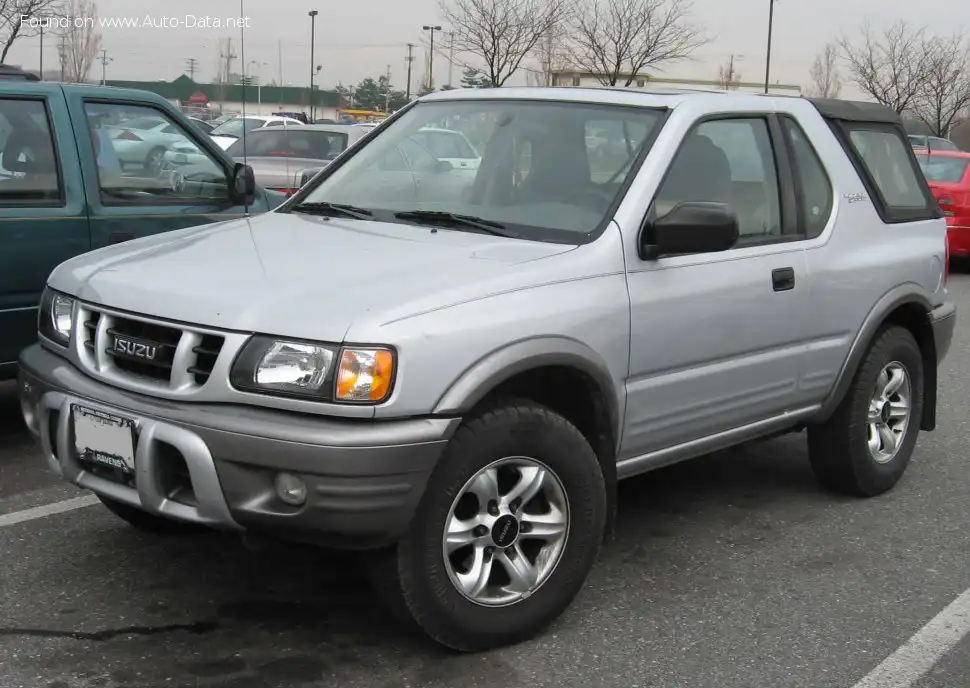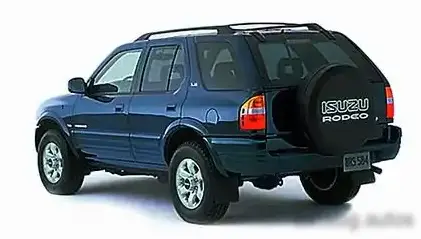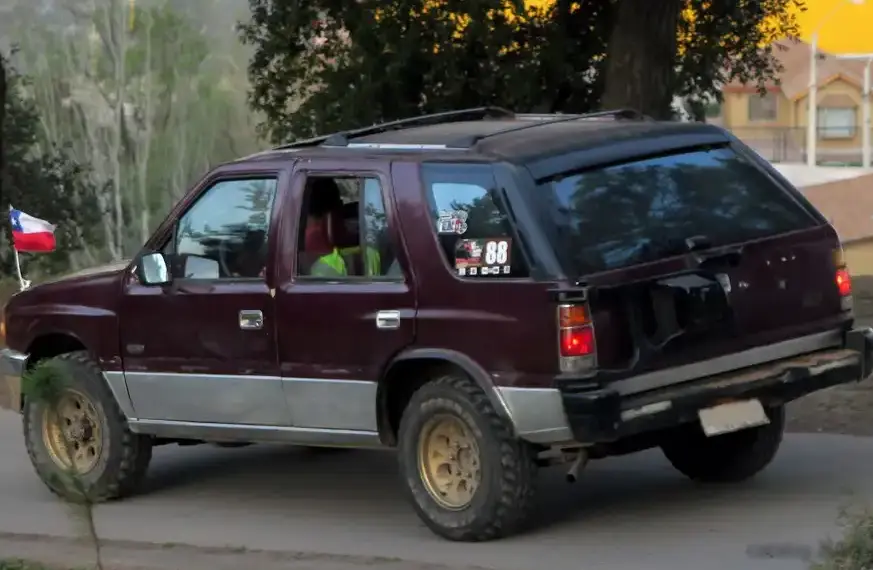
The Isuzu Rodeo 3.2i 4WD LS, produced between 1989 and 1998, represented Isuzu’s entry into the mid-size SUV market, primarily aimed at buyers seeking a capable and relatively affordable four-wheel-drive vehicle. This particular variant, equipped with the 3.2-liter V6 engine and a four-speed automatic transmission, occupied a mid-to-upper position within the Rodeo lineup, offering a balance of power, convenience, and off-road capability. The Rodeo, known as the Bighorn in some international markets, was Isuzu’s attempt to capitalize on the growing popularity of SUVs in North America and other regions. It shared a platform with the Chevrolet Trooper and Honda Passport, reflecting a period of collaborative vehicle development between these manufacturers.
Technical Specifications
| Brand | Isuzu |
| Model | Rodeo |
| Type | 3.2 i 4WD LS (177 Hp) Automatic |
| Start of production | 1989 |
| End of production | 1998 |
| Body type | SUV |
| Seats | 6 |
| Doors | 4 |
| Fuel consumption (combined) | 13.2 l/100 km (17.8 US mpg, 21.4 UK mpg, 7.6 km/l) |
| Fuel Type | Petrol (Gasoline) |
| Weight-to-power ratio | 10.1 kg/Hp, 98.8 Hp/tonne |
| Weight-to-torque ratio | 6.9 kg/Nm, 145.2 Nm/tonne |
| Power | 177 Hp @ 5200 rpm |
| Power per litre | 55.9 Hp/l |
| Torque | 260 Nm @ 3750 rpm (191.77 lb.-ft. @ 3750 rpm) |
| Engine layout | Front, Longitudinal |
| Engine displacement | 3165 cm3 (193.14 cu. in.) |
| Number of cylinders | 6 |
| Engine configuration | V-engine |
| Cylinder Bore | 93.4 mm (3.68 in.) |
| Piston Stroke | 77 mm (3.03 in.) |
| Compression ratio | 9.3:1 |
| Number of valves per cylinder | 4 |
| Fuel injection system | Multi-port manifold injection |
| Engine aspiration | Naturally aspirated engine |
| Valvetrain | OHC |
| Engine oil capacity | 4.7 l (4.97 US qt | 4.14 UK qt) |
| Coolant capacity | 11.1 l (11.73 US qt | 9.77 UK qt) |
| Kerb Weight | 1791 kg (3948.48 lbs.) |
| Max. weight | 2225 kg (4905.29 lbs.) |
| Max load | 434 kg (956.81 lbs.) |
| Fuel tank capacity | 83 l (21.93 US gal | 18.26 UK gal) |
| Length | 4480 mm (176.38 in.) |
| Width | 1690 mm (66.54 in.) |
| Height | 1660 mm (65.35 in.) |
| Wheelbase | 2760 mm (108.66 in.) |
| Front track | 1440 mm (56.69 in.) |
| Rear track | 1445 mm (56.89 in.) |
| Drive wheel | All wheel drive (4×4) |
| Number of gears | 4 |
| Gearbox type | Automatic transmission |
| Front suspension | Double wishbone |
| Rear suspension | Coil spring |
| Front brakes | Ventilated discs |
| Rear brakes | Ventilated discs |
| Assisting systems | ABS (Anti-lock braking system) |
| Power steering | Hydraulic Steering |
| Tires size | 225/75 R15 |
| Wheel rims size | 15 |
Powertrain & Engine Architecture
The heart of the Rodeo 3.2i LS was Isuzu’s 6VE1 engine, a 3.2-liter (3165 cc) naturally aspirated V6. This engine featured a 90-degree V-angle, contributing to a smoother running character compared to narrower V-angle designs. The 6VE1 utilized a single overhead camshaft (OHC) design, operating four valves per cylinder. Fuel delivery was managed by a multi-port fuel injection system, providing precise fuel metering for improved efficiency and performance. The engine produced 177 horsepower at 5200 rpm and 260 Nm (191.77 lb-ft) of torque at 3750 rpm. The four-speed automatic transmission, while providing convenience, was a somewhat dated design by the late 1990s. It featured conventional hydraulic control and lacked the overdrive gear found in many contemporary automatic transmissions.
Driving Characteristics
The 3.2i automatic Rodeo offered adequate, but not particularly exhilarating, performance. The automatic transmission, while smooth in operation, resulted in a noticeable reduction in acceleration compared to the five-speed manual transmission option. The gear ratios were tuned for everyday drivability rather than outright speed. The Rodeo felt competent on the highway, with sufficient power for merging and passing, but lacked the responsiveness of lighter or more powerful SUVs. Off-road, the four-wheel-drive system provided good traction in various conditions, but the automatic transmission could sometimes hunt for the right gear on steep inclines. The Rodeo’s weight of approximately 1791 kg (3948.48 lbs) contributed to a somewhat ponderous feel, especially during cornering.
Equipment & Trim Levels
The LS trim level represented a well-equipped version of the Rodeo. Standard features typically included air conditioning, power windows and locks, a tilt steering wheel, and an upgraded sound system. Interior upholstery was usually cloth, with options for leather available. The dashboard layout was functional and straightforward, prioritizing ease of use over stylistic flair. Optional extras could include a sunroof, upgraded audio systems, and alloy wheels. The Rodeo LS aimed to provide a comfortable and convenient driving experience without the premium price tag of luxury SUVs.
Chassis & Braking
The Rodeo utilized a body-on-frame construction, providing a robust and durable platform. The front suspension employed a double wishbone design, while the rear suspension featured coil springs. This setup offered a reasonable balance of ride comfort and off-road capability. Braking duties were handled by ventilated discs on all four wheels, providing adequate stopping power for the vehicle’s weight. An anti-lock braking system (ABS) was included as standard equipment on the LS trim, enhancing safety during emergency braking situations. Hydraulic power steering made maneuvering the Rodeo relatively easy, even at low speeds.
Market Reception & Comparison
The Isuzu Rodeo 3.2i 4WD LS received generally positive reviews for its capability and value. Critics praised its robust construction, comfortable ride, and competent four-wheel-drive system. However, the automatic transmission was often criticized for its lack of responsiveness and dated design. Compared to its competitors, such as the Ford Explorer and Jeep Cherokee, the Rodeo offered a more affordable alternative with a focus on practicality and durability. The 3.2-liter V6 provided adequate power, but it wasn’t as refined or fuel-efficient as some of the competing engines. The 1.8L and diesel variants offered better fuel economy, but at the expense of performance. The manual transmission versions were favored by enthusiasts seeking a more engaging driving experience.
Legacy
The Isuzu Rodeo, particularly the 3.2i 4WD LS variant, has developed a reputation for reliability and longevity. The 6VE1 engine, while not without its quirks, is generally considered to be a durable and dependable powerplant. The automatic transmission, however, can be prone to issues with age and high mileage. Today, the Rodeo remains a popular choice among budget-conscious buyers seeking a capable and affordable SUV. Parts availability is generally good, and the Rodeo’s simple mechanical design makes it relatively easy to maintain and repair. While it may not offer the refinement or features of more modern SUVs, the Isuzu Rodeo 3.2i 4WD LS remains a testament to Isuzu’s commitment to building durable and capable vehicles.