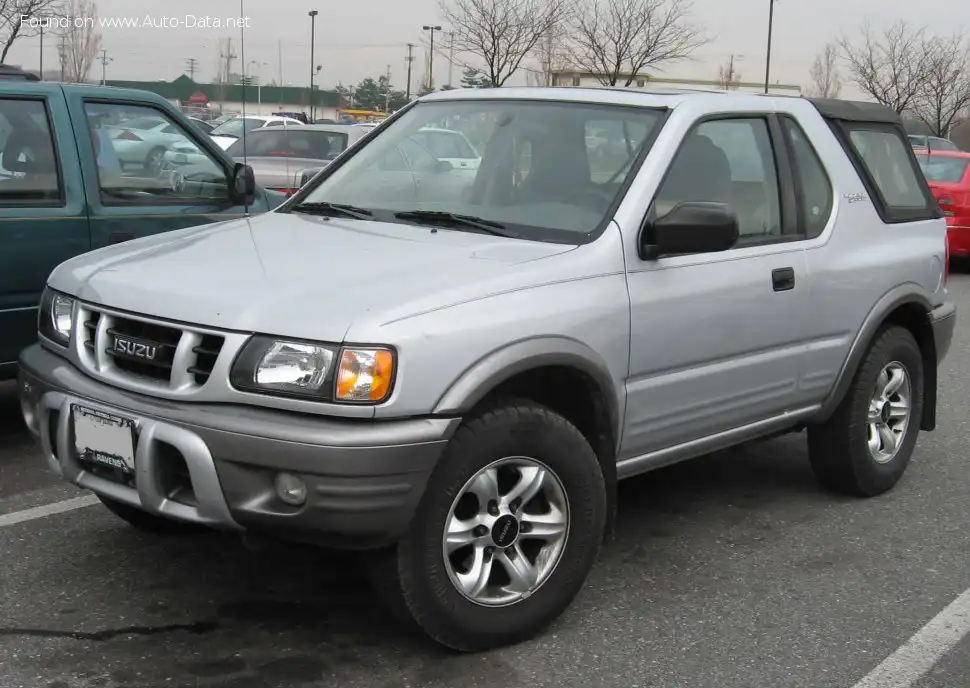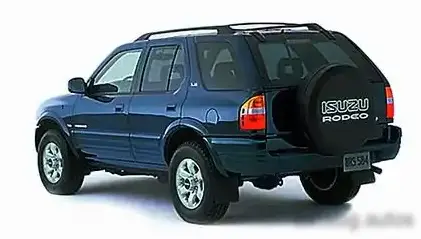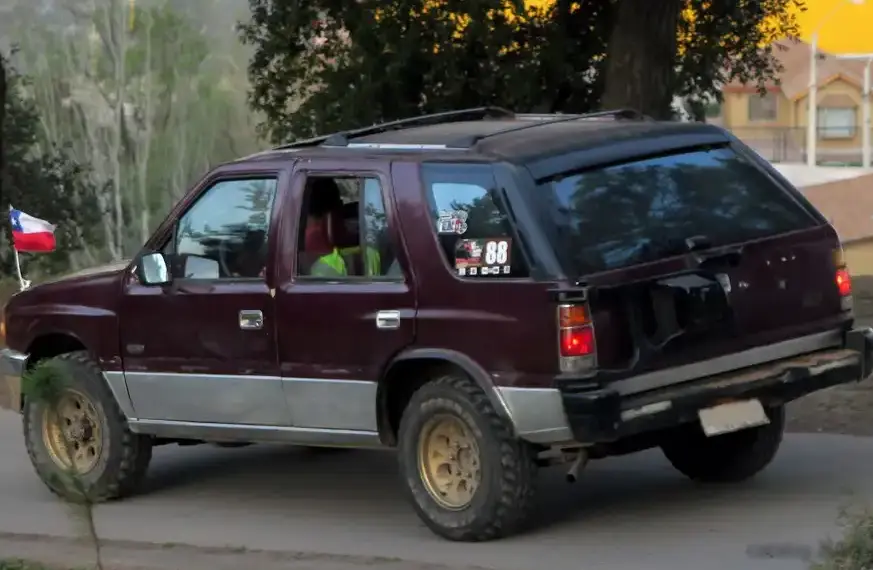
The Isuzu Rodeo 3.2 i S 2WD, produced from 1989 to 2000, represented a significant offering in the mid-size SUV segment. This particular variant, equipped with a 3.2-liter V6 engine and a four-speed automatic transmission, was positioned as a comfortable and capable option for buyers seeking a blend of utility and convenience. It was part of the first generation Rodeo (UBS series), which aimed to compete with established American and Japanese SUVs. The 3.2 i S 2WD trim sat in the middle of the Rodeo lineup, offering more power and refinement than the base models, but without the added expense and complexity of the four-wheel-drive versions.
Technical Specifications
| Brand | Isuzu |
| Model | Rodeo |
| Type | 3.2 i S 2WD (177 Hp) Automatic |
| Start of production | 1989 |
| End of production | 2000 |
| Body type | SUV |
| Seats | 6 |
| Doors | 4 |
| Fuel consumption (combined) | 13.2 l/100 km (17.8 US mpg, 21.4 UK mpg, 7.6 km/l) |
| Fuel Type | Petrol (Gasoline) |
| Weight-to-power ratio | 9.7 kg/Hp, 103.4 Hp/tonne |
| Weight-to-torque ratio | 6.6 kg/Nm, 151.9 Nm/tonne |
| Power | 177 Hp @ 5200 rpm |
| Power per litre | 55.9 Hp/l |
| Torque | 260 Nm @ 3750 rpm (191.77 lb.-ft. @ 3750 rpm) |
| Engine layout | Front, Longitudinal |
| Engine displacement | 3165 cm3 (193.14 cu. in.) |
| Number of cylinders | 6 |
| Engine configuration | V-engine |
| Cylinder Bore | 93.4 mm (3.68 in.) |
| Piston Stroke | 77 mm (3.03 in.) |
| Compression ratio | 9.3:1 |
| Number of valves per cylinder | 4 |
| Fuel injection system | Multi-port manifold injection |
| Engine aspiration | Naturally aspirated engine |
| Valvetrain | OHC |
| Engine oil capacity | 4.7 l (4.97 US qt | 4.14 UK qt) |
| Coolant capacity | 11.1 l (11.73 US qt | 9.77 UK qt) |
| Kerb Weight | 1712 kg (3774.31 lbs.) |
| Max. weight | 2111 kg (4653.96 lbs.) |
| Max load | 399 kg (879.64 lbs.) |
| Fuel tank capacity | 83 l (21.93 US gal | 18.26 UK gal) |
| Length | 4480 mm (176.38 in.) |
| Width | 1690 mm (66.54 in.) |
| Height | 1660 mm (65.35 in.) |
| Wheelbase | 2760 mm (108.66 in.) |
| Front track | 1440 mm (56.69 in.) |
| Rear track | 1445 mm (56.89 in.) |
| Drivetrain | Rear wheel drive |
| Number of gears | 4 |
| Gearbox type | Automatic transmission |
| Front suspension | Double wishbone |
| Rear suspension | Coil spring |
| Front brakes | Ventilated discs |
| Rear brakes | Ventilated discs |
| Assisting systems | ABS (Anti-lock braking system) |
| Tires size | 225/75 R15 |
| Wheel rims size | 15 |
Powertrain & Engine Architecture
The heart of the Rodeo 3.2 i S 2WD was Isuzu’s 3.2-liter 6VE1 V6 engine. This engine featured a 90-degree V-angle, contributing to a smoother running character compared to some narrower V6 designs. It utilized a multi-port fuel injection system, delivering fuel directly to each intake port for improved efficiency and power delivery. The engine employed an overhead camshaft (OHC) valvetrain, operating four valves per cylinder. This configuration helped optimize airflow and enhance volumetric efficiency. The 4-speed automatic transmission, while not the most modern by today’s standards, provided smooth and convenient shifting. It was designed to handle the engine’s torque output and deliver acceptable acceleration for everyday driving. The transmission’s gear ratios were tuned for a balance between fuel economy and responsiveness.
Driving Characteristics
The 177 horsepower and 192 lb-ft of torque offered by the 3.2-liter V6 and automatic transmission combination provided adequate performance for the Rodeo. Acceleration was respectable, though not particularly brisk, with a 0-60 mph time estimated around 10-11 seconds. Compared to the available manual transmission or the more powerful 3.5-liter V6 options, the 3.2L automatic felt less sporty and more geared towards relaxed cruising. The automatic transmission, while convenient, did result in some power loss compared to a manual. The Rodeo 3.2 i S 2WD was best suited for highway driving and moderate towing duties. The rear-wheel-drive configuration provided a stable feel on paved roads, but limited its off-road capability compared to the 4WD models.
Equipment & Trim Levels
The “S” designation in the 3.2 i S 2WD trim indicated a step up in features compared to the base Rodeo models. Standard equipment typically included air conditioning, power windows and locks, a tilt steering wheel, and an upgraded sound system. Interior upholstery was usually cloth, with options for leather available. The dashboard layout was functional and straightforward, prioritizing ease of use. Optional extras could include a sunroof, upgraded audio systems, and alloy wheels. The Rodeo aimed to provide a comfortable and well-equipped interior without the high price tag of luxury SUVs.
Chassis & Braking
The Rodeo 3.2 i S 2WD utilized a body-on-frame construction, providing a robust and durable platform. The front suspension featured a double wishbone design, offering a comfortable ride and good handling characteristics. The rear suspension employed coil springs, contributing to a smoother ride quality. Braking duties were handled by ventilated discs on all four wheels, providing adequate stopping power. An anti-lock braking system (ABS) was included as standard equipment, enhancing safety and control during emergency braking situations. The rear-wheel-drive configuration and relatively modest weight contributed to balanced handling.
Market Reception & Comparison
The Isuzu Rodeo 3.2 i S 2WD was generally well-received by automotive critics as a competent and reliable SUV. It offered a good value proposition, providing a spacious interior, comfortable ride, and adequate performance at a competitive price point. However, some reviewers noted that the automatic transmission could feel sluggish at times, and the rear-wheel-drive configuration limited its off-road capabilities. Compared to the 4WD Rodeo models, the 2WD version offered better fuel economy but less versatility. Against competitors like the Ford Explorer and Chevrolet Blazer, the Rodeo offered a slightly more refined driving experience and a reputation for reliability.
Legacy
The Isuzu Rodeo, particularly the 3.2-liter V6 variants, developed a reputation for long-term reliability. The 6VE1 engine proved to be durable and relatively easy to maintain. While not without its quirks, the Rodeo’s powertrain generally held up well over time. In the used car market today, these Rodeos are often sought after by buyers looking for a dependable and affordable SUV. Parts availability can be a concern, but many components are still readily accessible. The Rodeo 3.2 i S 2WD remains a testament to Isuzu’s commitment to building robust and practical vehicles.