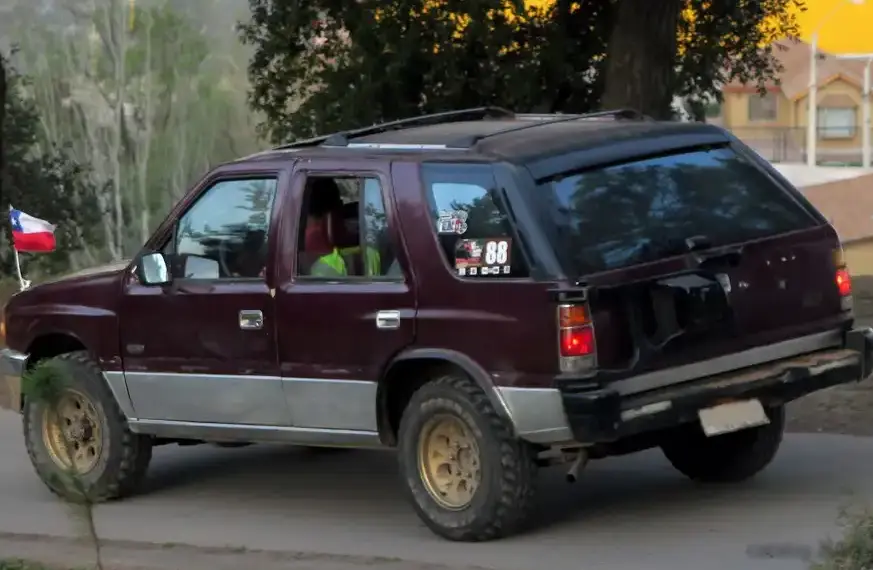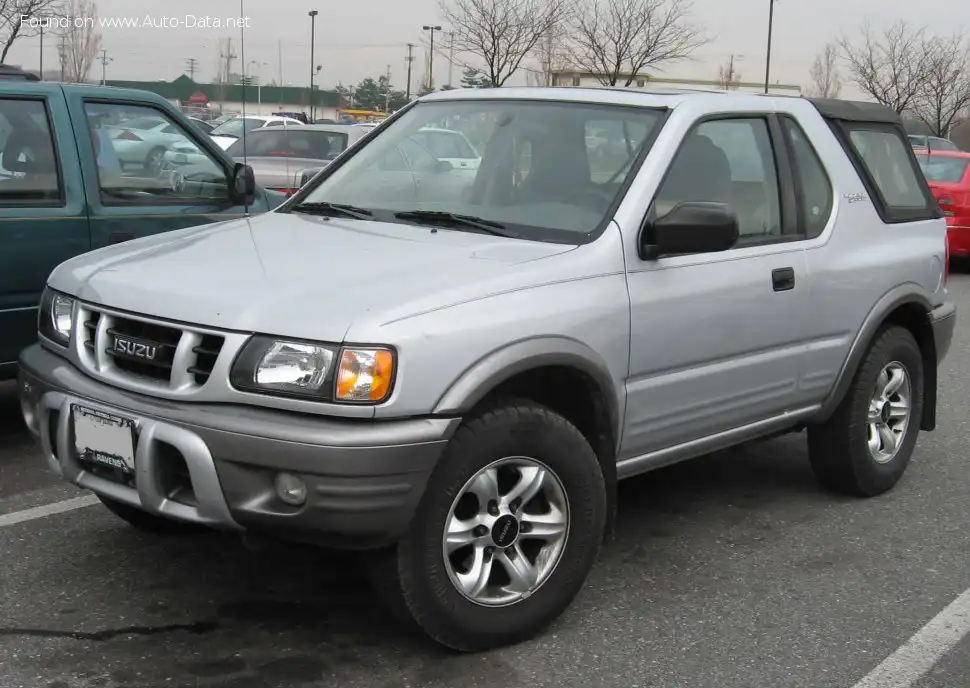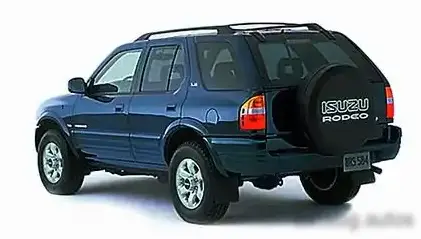
The Isuzu Rodeo (UTS-145) 3.2i V6 24V L 4WD, produced between 1998 and 2004, represents the second generation of Isuzu’s popular mid-size SUV. This particular variant, equipped with the 6VD1-W 3.2-liter V6 engine and a five-speed manual transmission, was positioned as a capable and well-equipped offering within the Rodeo lineup, aimed at buyers needing both on-road comfort and off-road capability. The UTS-145 Rodeo was Isuzu’s primary offering in the competitive North American SUV market during this period, competing with vehicles like the Ford Explorer, Jeep Cherokee, and Toyota 4Runner. It was a key model for Isuzu, leveraging the platform sharing agreement with General Motors, and was also sold as the Chevrolet Blazer and GMC Jimmy in some markets.
Technical Specifications
| Brand | Isuzu |
| Model | Rodeo |
| Generation | Rodeo (UTS-145) |
| Type | 3.2 i V6 24V L 4WD (208 Hp) |
| Start of production | 1998 |
| End of production | 2004 |
| Powertrain Architecture | Internal Combustion engine |
| Body type | SUV |
| Seats | 5 |
| Doors | 5 |
| Fuel consumption (urban) | 13.1 l/100 km (18 US mpg, 21.6 UK mpg) |
| Fuel consumption (extra urban) | 11.8 l/100 km (19.9 US mpg, 23.9 UK mpg) |
| Fuel Type | Petrol (Gasoline) |
| Maximum speed | 185 km/h (114.95 mph) |
| Weight-to-power ratio | 8.4 kg/Hp |
| Weight-to-torque ratio | 6 kg/Nm |
| Power | 208 Hp @ 5400 rpm |
| Power per litre | 65.7 Hp/l |
| Torque | 290 Nm @ 3000 rpm (213.89 lb.-ft. @ 3000 rpm) |
| Engine layout | Front, Longitudinal |
| Engine Model/Code | 6VD1-W |
| Engine displacement | 3165 cm3 (193.14 cu. in.) |
| Number of cylinders | 6 |
| Engine configuration | V-engine |
| Cylinder Bore | 93.4 mm (3.68 in.) |
| Piston Stroke | 77 mm (3.03 in.) |
| Compression ratio | 9.1:1 |
| Number of valves per cylinder | 4 |
| Fuel injection system | Multi-port manifold injection |
| Engine aspiration | Naturally aspirated engine |
| Engine oil capacity | 4.7 l (4.97 US qt | 4.14 UK qt) |
| Coolant capacity | 11 l (11.62 US qt | 9.68 UK qt) |
| Kerb Weight | 1745 kg (3847.07 lbs.) |
| Max. weight | 2200 kg (4850.17 lbs.) |
| Max load | 455 kg (1003.1 lbs.) |
| Trunk (boot) space – minimum | 933 l (32.95 cu. ft.) |
| Trunk (boot) space – maximum | 2297 l (81.12 cu. ft.) |
| Fuel tank capacity | 80 l (21.13 US gal | 17.6 UK gal) |
| Length | 4510 mm (177.56 in.) |
| Width | 1787 mm (70.35 in.) |
| Height | 1680 mm (66.14 in.) |
| Wheelbase | 2702 mm (106.38 in.) |
| Front track | 1515 mm (59.65 in.) |
| Rear track | 1520 mm (59.84 in.) |
| Drive wheel | All wheel drive (4×4) |
| Number of gears | 5 |
| Gearbox type | Manual transmission |
| Front suspension | Coil spring |
| Rear suspension | Coil spring |
| Front brakes | Ventilated discs |
| Rear brakes | Disc |
| Assisting systems | ABS (Anti-lock braking system) |
| Power steering | Hydraulic Steering |
| Tires size | 235/75 R15 |
INTRODUCTION
The 1998-2004 Isuzu Rodeo (UTS-145) represented a significant step forward for the brand, moving towards a more modern and refined SUV. The 3.2i V6 24V L 4WD variant, with its 208 horsepower and five-speed manual transmission, was a popular choice for buyers who wanted a balance of performance, capability, and fuel efficiency. Built on the GM GMT180 platform, shared with the Chevrolet Blazer and GMC Jimmy, the Rodeo benefited from economies of scale and a proven mechanical foundation. This generation Rodeo aimed to provide a more comfortable and user-friendly experience than its predecessor, while still maintaining Isuzu’s reputation for ruggedness and reliability.
Powertrain & Engine Architecture
The heart of the Rodeo 3.2i is the 6VD1-W 3.2-liter V6 engine. This engine is a naturally aspirated, 24-valve (four valves per cylinder) powerplant featuring a 9.1:1 compression ratio. It utilizes a multi-port fuel injection system, delivering fuel directly to each intake port for optimized combustion. The engine’s design emphasizes smooth power delivery and reasonable fuel economy. The 6VD1-W is known for its durability, though it can be susceptible to timing chain wear with higher mileage. The five-speed manual transmission paired with this engine provides precise control and allows the driver to fully utilize the engine’s power band. Gear ratios are tuned for a balance of acceleration and highway cruising, with a relatively tall fifth gear for fuel efficiency.
Driving Characteristics
The Rodeo 3.2i with the manual transmission offers a more engaging driving experience than the automatic variants. The 208 horsepower and 290 lb-ft of torque provide adequate acceleration for everyday driving and confident passing maneuvers. While not a sports car, the Rodeo feels responsive and capable, especially when compared to the lower-powered four-cylinder models. The manual transmission allows for precise gear selection, enabling the driver to maintain optimal engine speed for various driving conditions. Off-road, the 4WD system provides excellent traction, and the relatively short wheelbase contributes to good maneuverability. The suspension, while comfortable on paved roads, can feel somewhat soft during aggressive off-road driving.
Equipment & Trim Levels
The “L” trim level of the Rodeo 3.2i typically included standard features such as air conditioning, power windows and locks, a CD player, and cloth upholstery. Optional extras included a sunroof, upgraded sound system, leather upholstery, and alloy wheels. Safety features such as anti-lock brakes (ABS) were also standard. The interior design was functional and straightforward, prioritizing practicality over luxury. The dashboard layout is relatively simple, with easy-to-read gauges and logically placed controls. The Rodeo’s interior space is competitive within its class, offering comfortable seating for five passengers and ample cargo space, especially with the rear seats folded down.
Chassis & Braking
The Rodeo’s chassis utilizes a body-on-frame construction, providing a robust and durable platform. The front suspension consists of coil springs and independent double wishbone setup, while the rear suspension employs a coil-sprung solid axle. This configuration provides a good balance of ride comfort and off-road capability. Braking duties are handled by ventilated discs at the front and solid discs at the rear. The ABS system helps to maintain control during hard braking situations. The Rodeo’s steering is hydraulically assisted, providing a responsive and predictable feel.
Market Reception & Comparison
The Isuzu Rodeo 3.2i V6 manual was generally well-received by automotive critics. It was praised for its capable engine, comfortable ride, and spacious interior. However, some reviewers noted that the interior materials were not as refined as those found in some competing SUVs. Compared to the four-cylinder Rodeo models, the 3.2i V6 offered a significant performance advantage. Compared to the automatic transmission version, the manual provided better fuel economy and a more engaging driving experience. Reliability was generally considered good, although some owners reported issues with the timing chain and cooling system.
Legacy
The Isuzu Rodeo 3.2i V6, particularly the manual transmission variant, has developed a loyal following among enthusiasts. The 6VD1-W engine is known for its durability and relatively simple maintenance requirements. Today, well-maintained examples of the Rodeo 3.2i can be found on the used car market at affordable prices. While not as popular as some of its competitors, the Rodeo remains a capable and reliable SUV, offering a unique blend of performance, practicality, and off-road capability. Its robust construction and relatively simple mechanicals make it a good choice for those seeking a durable and affordable SUV for everyday use or light off-road adventures.