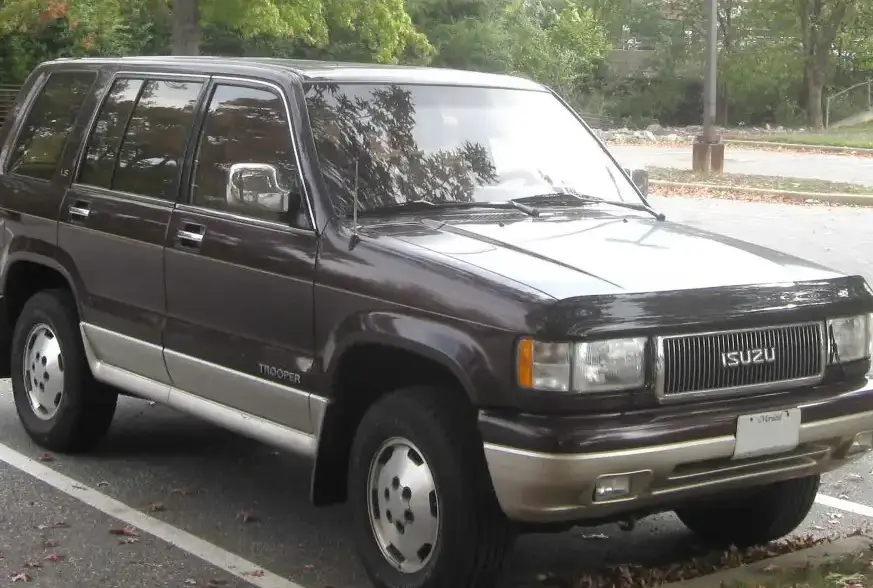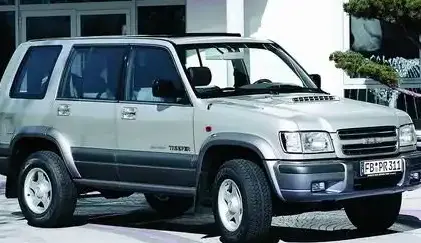
The Isuzu Trooper 3.0 DTI Wagon, produced between 2000 and 2002, represented a refinement of Isuzu’s popular SUV, aimed at the European and other international markets where diesel engines were favored. This variant, equipped with the 4JX1 3.0-liter turbocharged diesel engine and a four-speed automatic transmission, occupied a middle ground in the Trooper lineup, offering a balance between fuel efficiency, reasonable performance, and convenience. It was part of the second-generation Trooper (UBS series), known for its robust build quality and off-road capability. The 3.0 DTI Wagon aimed to provide a more comfortable and refined experience compared to the base models, while remaining a practical and capable SUV.
Technical Specifications
| Brand | Isuzu |
| Model | Trooper |
| Generation | Trooper (UBS Series) |
| Type | 3.0 DTI Wagon (159 Hp) Automatic |
| Start of production | 2000 |
| End of production | 2002 |
| Powertrain Architecture | Internal Combustion Engine |
| Body type | SUV |
| Seats | 5 |
| Doors | 5 |
| Fuel consumption (urban) | 14 l/100 km (16.8 US mpg, 20.2 UK mpg, 7.1 km/l) |
| Fuel consumption (extra urban) | 9.1 l/100 km (25.8 US mpg, 31 UK mpg, 11 km/l) |
| Fuel Type | Diesel |
| Acceleration 0 – 100 km/h | 14 sec |
| Acceleration 0 – 62 mph | 14 sec |
| Acceleration 0 – 60 mph | 13.3 sec |
| Maximum speed | 160 km/h (99.42 mph) |
| Weight-to-power ratio | 13.5 kg/Hp (74.1 Hp/tonne) |
| Weight-to-torque ratio | 6.4 kg/Nm (155.2 Nm/tonne) |
| Power | 159 Hp @ 3900 rpm |
| Power per litre | 53 Hp/l |
| Torque | 333 Nm @ 2000 rpm (245.61 lb.-ft. @ 2000 rpm) |
| Engine layout | Front, Longitudinal |
| Engine Model/Code | 4JX1 |
| Engine displacement | 2999 cm3 (183.01 cu. in.) |
| Number of cylinders | 4 |
| Engine configuration | Inline |
| Cylinder Bore | 95.4 mm (3.76 in.) |
| Piston Stroke | 104.9 mm (4.13 in.) |
| Compression ratio | 19:1 |
| Number of valves per cylinder | 4 |
| Fuel injection system | Diesel Commonrail |
| Engine aspiration | Turbocharger |
| Valvetrain | DOHC |
| Engine oil capacity | 6 l (6.34 US qt | 5.28 UK qt) |
| Kerb Weight | 2145 kg (4728.92 lbs.) |
| Max. weight | 2810 kg (6194.99 lbs.) |
| Max load | 665 kg (1466.07 lbs.) |
| Trunk (boot) space – minimum | 1190 l (42.02 cu. ft.) |
| Trunk (boot) space – maximum | 2746 l (96.97 cu. ft.) |
| Fuel tank capacity | 85 l (22.45 US gal | 18.7 UK gal) |
| Length | 4795 mm (188.78 in.) |
| Width | 1835 mm (72.24 in.) |
| Height | 1840 mm (72.44 in.) |
| Wheelbase | 2760 mm (108.66 in.) |
| Front track | 1515 mm (59.65 in.) |
| Rear (Back) track | 1520 mm (59.84 in.) |
| Drive wheel | All wheel drive (4×4) |
| Number of gears and type of gearbox | 4 gears, automatic transmission |
| Front suspension | Torsion |
| Rear suspension | Coil spring |
| Front brakes | Ventilated discs |
| Rear brakes | Disc |
| Assisting systems | ABS (Anti-lock braking system) |
| Power steering | Hydraulic Steering |
| Tires size | 245/70 R16 |
| Wheel rims size | 16 |
Powertrain & Engine Architecture
The heart of the 3.0 DTI Wagon is the 4JX1-T 3.0-liter inline-four cylinder diesel engine. This engine utilized a direct injection common rail system, a significant advancement over earlier diesel designs. Common rail injection allowed for more precise fuel delivery, resulting in improved combustion efficiency, reduced noise, and lower emissions. The engine featured a single turbocharger with an intercooler, boosting power output to 159 horsepower at 3900 rpm and 333 Nm (245.61 lb-ft) of torque at 2000 rpm. The engine’s robust construction and relatively simple design contributed to its durability. The four-speed automatic transmission, while not as sophisticated as modern gearboxes, was chosen for its reliability and ease of use. It provided smooth, if not particularly quick, shifts, and was well-suited to the engine’s torque characteristics.
Driving Characteristics
The 3.0 DTI Wagon with the automatic transmission offered a comfortable and relaxed driving experience. Acceleration was adequate, with a 0-60 mph time of around 13.3 seconds, but it wasn’t designed for sporty performance. The automatic transmission’s gear ratios were optimized for fuel efficiency and cruising, rather than rapid acceleration. The engine delivered strong low-end torque, making it capable of handling moderate inclines and towing light loads. Compared to the five-speed manual version of the same engine, the automatic sacrificed some responsiveness and fuel economy, but gained in convenience. The automatic was also noticeably slower than the 3.1-liter V6 petrol versions of the Trooper.
Equipment & Trim Levels
The 3.0 DTI Wagon typically came with a reasonable level of standard equipment. This included power windows, central locking, air conditioning, and an AM/FM radio. Higher trim levels offered options such as leather upholstery, a sunroof, and upgraded audio systems. The interior was generally functional and durable, with a focus on practicality rather than luxury. The wagon body style provided ample cargo space, with a minimum of 1190 liters (42.02 cu. ft.) behind the rear seats, expanding to 2746 liters (96.97 cu. ft.) with the rear seats folded down.
Chassis & Braking
The Trooper’s chassis featured a body-on-frame construction, providing a robust and durable platform. The front suspension utilized torsion bars, while the rear suspension employed coil springs. This setup offered a good balance between ride comfort and off-road capability. Braking duties were handled by ventilated discs at the front and solid discs at the rear. An anti-lock braking system (ABS) was standard, enhancing safety and control. The steering was hydraulic power-assisted, providing relatively light and easy steering effort.
Market Reception & Comparison
The Isuzu Trooper 3.0 DTI Wagon was generally well-received in markets where diesel SUVs were popular. Critics praised its fuel efficiency, comfortable ride, and spacious interior. However, the automatic transmission was sometimes criticized for its lack of responsiveness. Compared to other SUVs in its class, such as the Mitsubishi Pajero and the Toyota Land Cruiser, the Trooper offered a competitive price point and a good level of standard equipment. The 3.0 DTI Wagon was often seen as a more practical and economical alternative to the more powerful, but less fuel-efficient, petrol-powered versions of the Trooper.
Legacy
The Isuzu Trooper 3.0 DTI Wagon, particularly the automatic variant, has proven to be a relatively reliable vehicle over the long term. The 4JX1 engine is known for its durability, and with proper maintenance, can last for many miles. However, like any older vehicle, it is prone to age-related issues such as corrosion and wear and tear on suspension components. In the used car market, these Troopers are often sought after by those looking for a capable and affordable SUV. While not as popular as some of its competitors, the 3.0 DTI Wagon remains a respected and capable vehicle, offering a blend of practicality, reliability, and fuel efficiency.