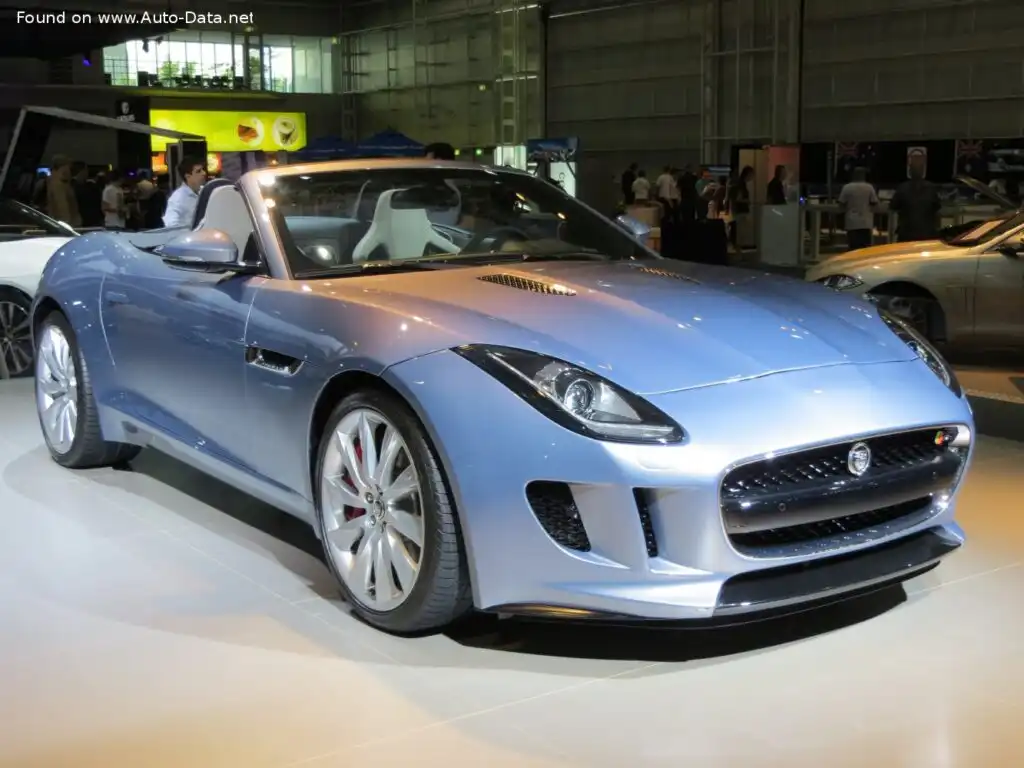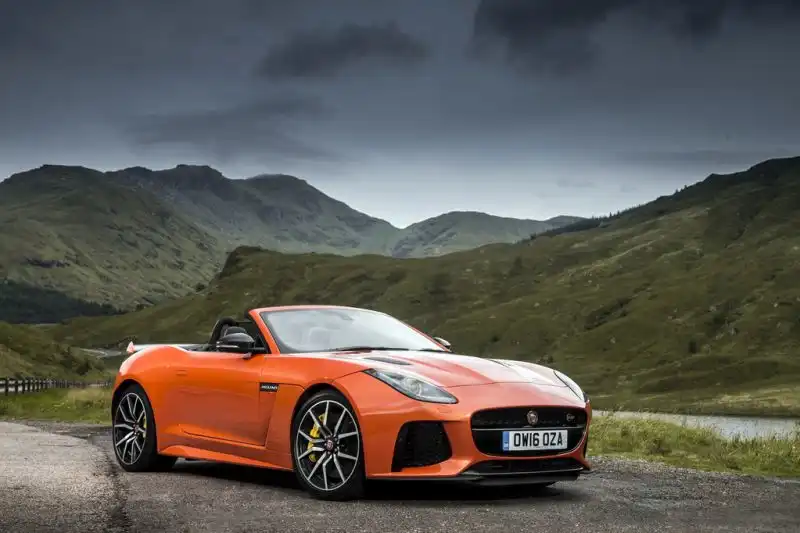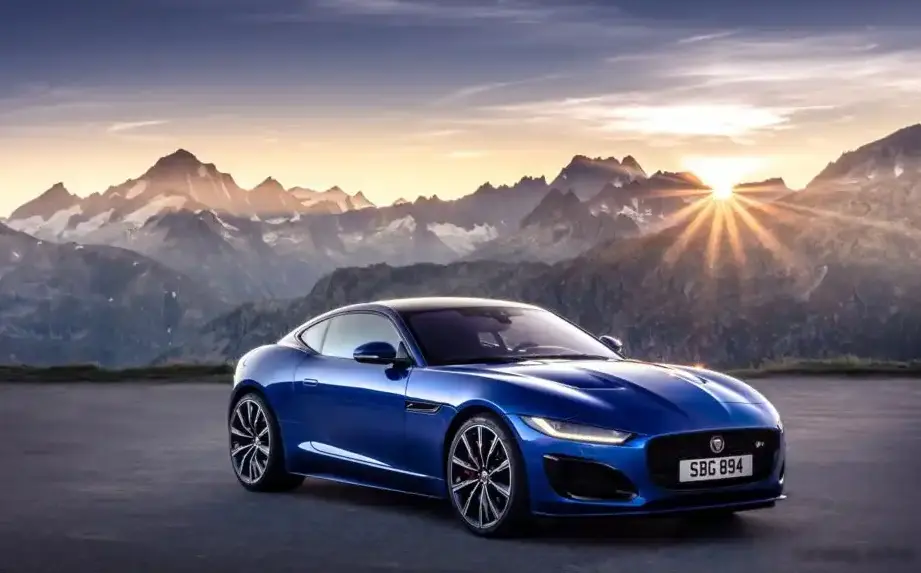
The Jaguar F-Type Coupe (facelift 2020) 2.0 (300 Hp) Quickshift represents a significant entry point into the F-Type range, offering a blend of performance and efficiency. Introduced in December 2019 as part of a broader refresh of the F-Type lineup, this variant aimed to broaden the car’s appeal by providing a more accessible price point without entirely sacrificing the core F-Type driving experience. It slots into the lineup below the more potent supercharged V6 and V8 models, targeting buyers who prioritize a balance of style, handling, and fuel economy. The 2.0L model is built on the Jaguar’s aluminum-intensive architecture, a key component of the F-Type’s lightweight construction.
Technical Specifications
| Brand | Jaguar |
| Model | F-type |
| Generation | F-type Coupe (facelift 2020) |
| Type (Engine) | 2.0 (300 Hp) Quickshift |
| Start of production | December, 2019 |
| Powertrain Architecture | Internal Combustion engine |
| Body type | Coupe |
| Seats | 2 |
| Doors | 2 |
| Fuel consumption (economy) – combined | 8.1 l/100 km |
| Fuel consumption (economy) – combined | 29 US mpg |
| Fuel consumption (economy) – combined | 34.9 UK mpg |
| Fuel consumption (economy) – combined | 12.3 km/l |
| CO2 emissions | 184 g/km |
| Fuel Type | Petrol (Gasoline) |
| Acceleration 0 – 100 km/h | 5.7 sec |
| Acceleration 0 – 62 mph | 5.7 sec |
| Acceleration 0 – 60 mph | 5.4 sec |
| Maximum speed | 250 km/h |
| Maximum speed | 155.34 mph |
| Weight-to-power ratio | 5.1 kg/Hp |
| Weight-to-power ratio | 197.4 Hp/tonne |
| Weight-to-torque ratio | 3.8 kg/Nm |
| Weight-to-torque ratio | 263.2 Nm/tonne |
| Power | 300 Hp @ 5500 rpm |
| Power per litre | 150.2 Hp/l |
| Torque | 400 Nm @ 1500-4500 rpm |
| Torque | 295.02 lb.-ft. @ 1500-4500 rpm |
| Engine Model/Code | Ingenium / PT204 |
| Engine displacement | 1997 cm3 |
| Engine displacement | 121.86 cu. in. |
| Number of cylinders | 4 |
| Engine configuration | Inline |
| Cylinder Bore | 83 mm |
| Cylinder Bore | 3.27 in. |
| Piston Stroke | 92.3 mm |
| Piston Stroke | 3.63 in. |
| Compression ratio | 9.5:1 |
| Number of valves per cylinder | 4 |
| Fuel injection system | Direct injection |
| Engine aspiration | Turbocharger, Intercooler |
| Valvetrain | DOHC |
| Engine oil capacity | 6.5 l |
| Engine oil capacity | 6.87 US qt |
| Engine oil capacity | 5.72 UK qt |
| Kerb Weight | 1520 kg |
| Kerb Weight | 3351.03 lbs |
| Trunk (boot) space – minimum | 299 l |
| Trunk (boot) space – minimum | 10.56 cu. ft. |
| Trunk (boot) space – maximum | 509 l |
| Trunk (boot) space – maximum | 17.98 cu. ft. |
| Fuel tank capacity | 63 l |
| Fuel tank capacity | 16.64 US gal |
| Fuel tank capacity | 13.86 UK gal |
| Length | 4470 mm |
| Length | 175.98 in. |
| Width | 1923 mm |
| Width | 75.71 in. |
| Width including mirrors | 2042 mm |
| Width including mirrors | 80.39 in. |
| Height | 1311 mm |
| Height | 51.61 in. |
| Wheelbase | 2622 mm |
| Wheelbase | 103.23 in. |
| Front track | 1596 mm |
| Front track | 62.83 in. |
| Rear (Back) track | 1647 mm |
| Rear (Back) track | 64.84 in. |
| Drivetrain Architecture | Rear wheel drive |
| Number of gears and type of gearbox | 8 gears, automatic transmission Quickshift |
| Front suspension | Double wishbone |
| Rear suspension | Double wishbone |
| Front brakes | Ventilated discs, 355 mm |
| Rear brakes | Ventilated discs, 325 mm |
| Assisting systems | ABS (Anti-lock braking system) |
| Steering type | Steering rack and pinion |
| Power steering | Electric Steering |
Powertrain & Engine Architecture
The heart of the F-Type 2.0 is Jaguar Land Rover’s Ingenium engine family, specifically the PT204 2.0-liter turbocharged inline-four. This engine, a cornerstone of JLR’s modular engine strategy, utilizes direct injection and a single twin-scroll turbocharger to produce 300 horsepower at 5500 rpm and 400 Nm (295 lb-ft) of torque between 1500 and 4500 rpm. The engine features a relatively high 9.5:1 compression ratio and a DOHC valvetrain with four valves per cylinder. The ‘Quickshift’ transmission is an 8-speed automatic, known for its rapid and smooth gear changes. It’s a conventional torque-converter automatic, optimized for both performance and efficiency. The transmission’s programming is tailored to provide responsive shifts during spirited driving while maintaining comfortable cruising.
Driving Characteristics
The 2.0L F-Type Coupe delivers a noticeably different driving experience compared to its V6 and V8 siblings. While it doesn’t possess the raw acceleration of the higher-powered models, it still offers a respectable 0-60 mph time of around 5.4 seconds. The turbocharger provides a good surge of power in the mid-range, making it suitable for everyday driving and overtaking maneuvers. The 8-speed automatic transmission contributes to a smooth and refined driving experience, although some enthusiasts may miss the engagement of a manual gearbox. The gear ratios are tuned to maximize fuel efficiency without sacrificing too much performance. Compared to the manual versions, the automatic prioritizes ease of use and comfort over outright driver involvement.
Equipment & Trim Levels
The 2.0L F-Type Coupe typically came well-equipped as standard, including leather upholstery, a touchscreen infotainment system with navigation, automatic climate control, and LED headlights. Optional extras included a panoramic sunroof, upgraded sound system, and various cosmetic enhancements. The interior design mirrored that of other F-Type models, with a driver-focused cockpit and high-quality materials. Trim levels were relatively streamlined, with most customization options available through individual selections rather than distinct packages. Sport seats were often specified for enhanced support during spirited driving.
Chassis & Braking
The F-Type’s chassis is constructed from a combination of aluminum and steel, prioritizing lightweight construction and rigidity. The 2.0L model utilizes double wishbone suspension at both the front and rear, providing a comfortable yet controlled ride. The braking system consists of ventilated discs all around, with 355mm discs at the front and 325mm discs at the rear. ABS (Anti-lock Braking System) is standard. Due to the lower weight compared to the V6 and V8 models, the 2.0L F-Type often felt more agile and responsive in corners.
Market Reception & Comparison
The introduction of the 2.0L F-Type Coupe was generally well-received by automotive critics. It was praised for its attractive price point, stylish design, and engaging driving dynamics. However, some reviewers noted that it lacked the visceral excitement of the higher-powered models. In terms of fuel economy, the 2.0L F-Type offered a significant improvement over its V6 and V8 counterparts, achieving around 29 US mpg in combined driving. Reliability has been generally good, although, like all modern vehicles, it’s susceptible to occasional electronic glitches. Compared to competitors like the Porsche 718 Cayman, the F-Type 2.0 offered a more luxurious interior and a more distinctive design.
Legacy
The Jaguar F-Type Coupe 2.0 (300 Hp) Quickshift has established itself as a desirable entry point into the F-Type family on the used car market. Its combination of style, performance, and relative affordability has made it a popular choice among buyers seeking a sporty and luxurious coupe. The Ingenium engine has proven to be a reliable and efficient powerplant, and the 8-speed automatic transmission has also demonstrated good durability. As the F-Type nears the end of its production run, the 2.0L model is likely to become increasingly sought after by collectors and enthusiasts.