
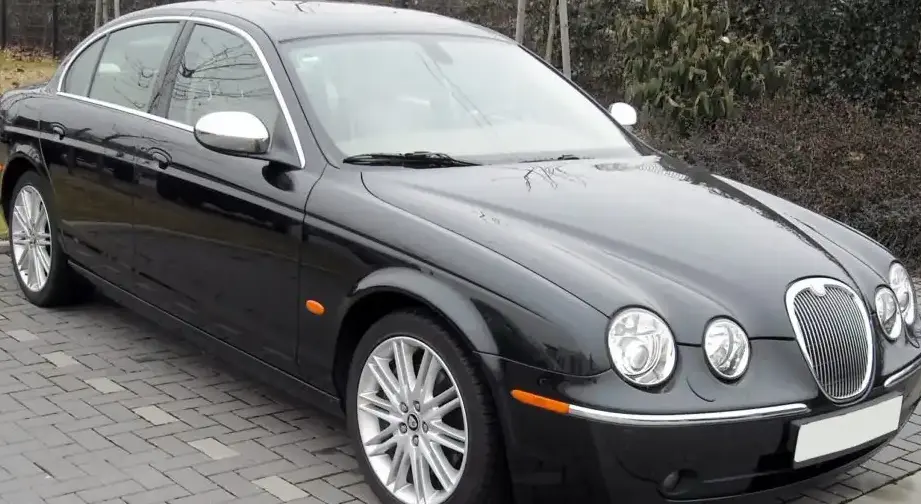
The Jaguar S-Type 3.0i, produced between 1998 and 2007, represented a significant departure for Jaguar, aiming to blend traditional British luxury with more contemporary styling and technology. This variant, equipped with the 3.0-liter AJ30 V6 engine and a six-speed automatic transmission, occupied a mid-range position within the S-Type lineup, offering a balance between performance and refinement. It was positioned above the entry-level 2.5-liter models and below the flagship 4.0-liter V8 versions. The S-Type (CCX) generation, internally designated as X200, aimed to recapture some of the market share lost to German rivals like BMW and Mercedes-Benz.
Technical Specifications
| Brand | Jaguar |
| Model | S-type |
| Generation | S-type (CCX) |
| Type (Engine) | 3.0i V6 24V (238 Hp) Automatic |
| Start of production | 1998 |
| End of production | 2007 |
| Powertrain Architecture | Internal Combustion engine |
| Body type | Sedan |
| Seats | 5 |
| Doors | 4 |
| Fuel consumption (urban) | 16.3 l/100 km (14.4 US mpg, 17.3 UK mpg, 6.1 km/l) |
| Fuel consumption (extra urban) | 8.2 l/100 km (28.7 US mpg, 34.4 UK mpg, 12.2 km/l) |
| Fuel consumption (combined) | 11.2 l/100 km (21 US mpg, 25.2 UK mpg, 8.9 km/l) |
| Fuel Type | Petrol (Gasoline) |
| Acceleration 0 – 100 km/h | 7.9 sec |
| Acceleration 0 – 62 mph | 7.9 sec |
| Acceleration 0 – 60 mph | 7.5 sec |
| Maximum speed | 235 km/h (146.02 mph) |
| Weight-to-power ratio | 7.2 kg/Hp, 139.6 Hp/tonne |
| Weight-to-torque ratio | 5.8 kg/Nm, 171.8 Nm/tonne |
| Power | 238 Hp @ 6800 rpm |
| Power per litre | 80.2 Hp/l |
| Torque | 293 Nm @ 4500 rpm (216.11 lb.-ft. @ 4500 rpm) |
| Engine layout | Front, Longitudinal |
| Engine Model/Code | AJ30 |
| Engine displacement | 2967 cm3 (181.06 cu. in.) |
| Number of cylinders | 6 |
| Engine configuration | V-engine |
| Cylinder Bore | 89 mm (3.5 in.) |
| Piston Stroke | 79.5 mm (3.13 in.) |
| Compression ratio | 10.5:1 |
| Number of valves per cylinder | 4 |
| Fuel injection system | Multi-port manifold injection |
| Engine aspiration | Naturally aspirated engine |
| Valvetrain | DOHC |
| Engine oil capacity | 6.4 l (6.76 US qt | 5.63 UK qt) |
| Coolant capacity | 10.4 l (10.99 US qt | 9.15 UK qt) |
| Kerb Weight | 1705 kg (3758.88 lbs.) |
| Max. weight | 2175 kg (4795.05 lbs.) |
| Max load | 470 kg (1036.17 lbs.) |
| Trunk (boot) space – minimum | 370 l (13.07 cu. ft.) |
| Trunk (boot) space – maximum | 810 l (28.6 cu. ft.) |
| Fuel tank capacity | 68 l (17.96 US gal | 14.96 UK gal) |
| Length | 4861 mm (191.38 in.) |
| Width | 1819 mm (71.61 in.) |
| Height | 1441 mm (56.73 in.) |
| Wheelbase | 2909 mm (114.53 in.) |
| Front track | 1537 mm (60.51 in.) |
| Rear (Back) track | 1544 mm (60.79 in.) |
| Drivetrain Architecture | Rear wheel drive |
| Number of gears and type of gearbox | 6 gears, automatic transmission |
| Front suspension | Double wishbone |
| Rear suspension | Double wishbone |
| Front brakes | Ventilated discs |
| Rear brakes | Ventilated discs |
| Assisting systems | ABS (Anti-lock braking system) |
| Steering type | Steering rack and pinion |
| Power steering | Hydraulic Steering |
| Tires size | 225/55 R16 W |
| Wheel rims size | 16 |
Powertrain & Engine Architecture
The heart of the S-Type 3.0i is the AJ30 V6 engine. This 2.967-liter, naturally aspirated engine features a 60-degree V-configuration, four valves per cylinder, and dual overhead camshafts (DOHC). The AJ30 utilizes a multi-port fuel injection system, delivering fuel directly into the intake ports. The engine’s design prioritized smooth power delivery and refinement over outright performance. The six-speed automatic transmission, a ZF 6HP26 unit, was a key component in providing a comfortable driving experience. This transmission offered smooth shifts and a relatively wide range of gear ratios, optimized for both city driving and highway cruising. The transmission was electronically controlled, adapting shift points based on driving conditions and throttle input.
Driving Characteristics
The 3.0i S-Type offered a comfortable and refined driving experience. With 238 horsepower and 293 lb-ft of torque, acceleration was respectable, achieving 0-60 mph in around 7.5 seconds. However, it wasn’t designed to be a sports sedan. The automatic transmission, while smooth, could feel somewhat hesitant during quick overtaking maneuvers. Compared to the 4.0-liter V8 models, the 3.0i lacked the raw power and responsiveness. The gear ratios were tuned for fuel efficiency and comfort, rather than aggressive acceleration. The rear-wheel-drive configuration provided a balanced feel, but the S-Type wasn’t particularly engaging to drive from a sporting perspective.
Equipment & Trim Levels
The 3.0i S-Type typically came standard with features such as leather upholstery, automatic climate control, power-adjustable front seats, and a premium audio system. Wood veneer trim was common throughout the interior, contributing to the car’s luxurious ambiance. Optional extras included a sunroof, navigation system, upgraded audio systems, and heated seats. Trim levels varied slightly depending on the market, but generally, the 3.0i offered a good balance of features without the higher price tag of the V8 models.
Chassis & Braking
The S-Type utilized a double wishbone suspension system at both the front and rear, providing a comfortable ride quality. The suspension was tuned to prioritize comfort over handling sharpness. Braking duties were handled by ventilated disc brakes on all four wheels, providing adequate stopping power. Anti-lock Braking System (ABS) was standard. The S-Type’s chassis was designed to provide a stable and predictable driving experience, but it wasn’t particularly lightweight, contributing to a slightly ponderous feel.
Market Reception & Comparison
The S-Type 3.0i was generally well-received by critics as a comfortable and refined luxury sedan. However, it often faced criticism for not being as engaging to drive as its German rivals. Fuel economy was considered average for its class. Compared to the 2.5-liter models, the 3.0i offered a noticeable performance improvement, making it a more appealing option for drivers who wanted more power. Compared to the 4.0-liter V8, the 3.0i was more affordable and offered better fuel economy, but at the expense of performance. Reliability was generally good, although some owners reported issues with the automatic transmission over the long term.
Legacy
The Jaguar S-Type 3.0i remains a popular choice among used car buyers seeking a comfortable and stylish British sedan. The AJ30 V6 engine is generally considered to be a reliable unit, although regular maintenance is essential. The six-speed automatic transmission can be prone to issues if not properly serviced. Today, the S-Type 3.0i represents a relatively affordable entry point into Jaguar ownership, offering a blend of luxury, comfort, and British charm. Its classic styling and comfortable ride continue to appeal to enthusiasts.
