
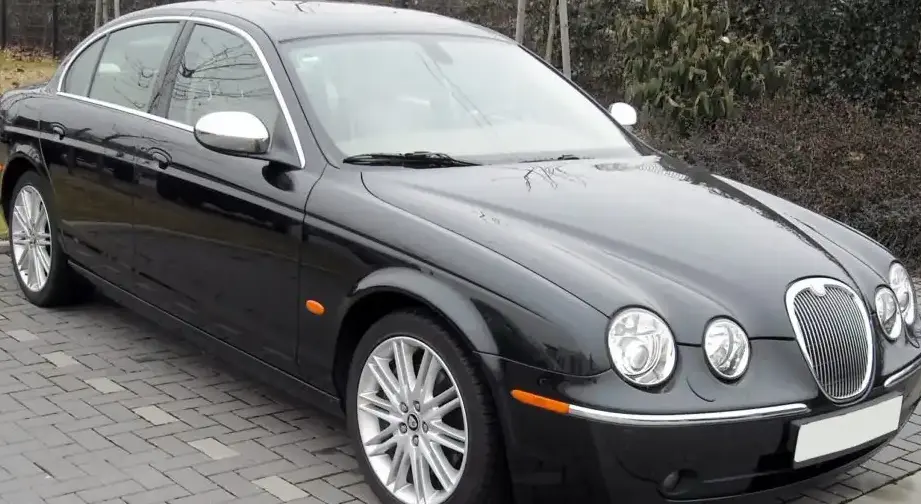
The Jaguar S-Type 4.2 i V8, produced between 2001 and 2007, represented a significant step in Jaguar’s attempt to blend traditional British luxury with modern performance and technology. Part of the CCX generation (X200 chassis), this variant occupied the upper echelon of the S-Type lineup, offering a substantial increase in power and refinement compared to the four-cylinder and smaller V6 models. It aimed to provide a sporting alternative within the executive sedan segment, competing with vehicles like the BMW 5 Series and Mercedes-Benz E-Class.
Technical Specifications
| Brand | Jaguar |
| Model | S-type |
| Generation | S-type (CCX) |
| Type (Engine) | 4.2 i V8 32V (298 Hp) |
| Start of production | 2001 |
| End of production | 2007 |
| Powertrain Architecture | Internal Combustion engine |
| Body type | Sedan |
| Seats | 5 |
| Doors | 4 |
| Fuel consumption (urban) | 17.6 l/100 km (13.4 US mpg, 16.1 UK mpg, 5.7 km/l) |
| Fuel consumption (extra urban) | 9.2 l/100 km (25.6 US mpg, 30.7 UK mpg, 10.9 km/l) |
| Fuel consumption (combined) | 12.3 l/100 km (19.1 US mpg, 23 UK mpg, 8.1 km/l) |
| Fuel Type | Petrol (Gasoline) |
| Acceleration 0 – 100 km/h | 6.5 sec |
| Acceleration 0 – 62 mph | 6.5 sec |
| Acceleration 0 – 60 mph | 6.2 sec |
| Maximum speed | 250 km/h (155.34 mph) |
| Weight-to-power ratio | 5.9 kg/Hp, 170.3 Hp/tonne |
| Weight-to-torque ratio | 4.3 kg/Nm, 234.9 Nm/tonne |
| Power | 298 Hp @ 6800 rpm |
| Power per litre | 71 Hp/l |
| Torque | 411 Nm @ 4100 rpm (303.14 lb.-ft. @ 4100 rpm) |
| Engine layout | Front, Longitudinal |
| Engine Model/Code | AJ33 |
| Engine displacement | 4196 cm3 (256.06 cu. in.) |
| Number of cylinders | 8 |
| Engine configuration | V-engine |
| Cylinder Bore | 86 mm (3.39 in.) |
| Piston Stroke | 90.3 mm (3.56 in.) |
| Compression ratio | 11:1 |
| Number of valves per cylinder | 4 |
| Fuel injection system | Multi-port manifold injection |
| Engine aspiration | Naturally aspirated engine |
| Valvetrain | DOHC |
| Engine oil capacity | 6.3 l (6.66 US qt | 5.54 UK qt) |
| Coolant capacity | 10 l (10.57 US qt | 8.8 UK qt) |
| Kerb Weight | 1750 kg (3858.09 lbs.) |
| Max. weight | 2210 kg (4872.22 lbs.) |
| Max load | 460 kg (1014.13 lbs.) |
| Trunk (boot) space – minimum | 370 l (13.07 cu. ft.) |
| Trunk (boot) space – maximum | 810 l (28.6 cu. ft.) |
| Fuel tank capacity | 68 l (17.96 US gal | 14.96 UK gal) |
| Length | 4861 mm (191.38 in.) |
| Width | 1819 mm (71.61 in.) |
| Height | 1441 mm (56.73 in.) |
| Wheelbase | 2909 mm (114.53 in.) |
| Front track | 1537 mm (60.51 in.) |
| Rear (Back) track | 1544 mm (60.79 in.) |
| Drivetrain Architecture | Rear wheel drive |
| Number of gears and type of gearbox | 6 gears, automatic transmission |
| Front suspension | Double wishbone |
| Rear suspension | Double wishbone |
| Front brakes | Ventilated discs |
| Rear brakes | Ventilated discs |
| Assisting systems | ABS (Anti-lock braking system) |
| Steering type | Steering rack and pinion |
| Power steering | Hydraulic Steering |
| Tires size | 235/50 R17 |
INTRODUCTION
The Jaguar S-Type 4.2 i V8, launched in 2001, was a key component of Jaguar’s efforts to modernize its image while retaining its core values of luxury and performance. Built on the X200 platform, it represented a complete redesign of the S-Type, moving away from the retro styling of the earlier X300 series towards a more contemporary aesthetic. This generation S-Type aimed to appeal to a broader audience, offering a blend of British elegance and modern technology. The 4.2-liter V8 variant was positioned as the flagship model, offering the highest level of performance and refinement within the S-Type range.
Powertrain & Engine Architecture
At the heart of the S-Type 4.2 i V8 lies the AJ33 engine, a naturally aspirated 4.2-liter V8. This engine, a significant departure from the previous S-Type’s inline-six and smaller V6 options, produced 298 horsepower at 6800 rpm and 411 Nm (303 lb-ft) of torque at 4100 rpm. The AJ33 featured a 60-degree V-angle, a cast aluminum block, and four valves per cylinder operated by a double overhead camshaft (DOHC) design. Fuel delivery was handled by a multi-port fuel injection system. The engine’s architecture prioritized smooth power delivery and a refined driving experience. Paired with the AJ33 was a six-speed automatic transmission, designed to provide seamless gear changes and enhance the car’s overall drivability. This transmission was not a traditional torque converter automatic, but rather a “J-Gate” style selector, offering a degree of manual control.
Driving Characteristics
The S-Type 4.2 i V8 offered a noticeably different driving experience compared to the lower-spec models. The substantial torque output of the V8 engine provided strong acceleration, with a 0-60 mph time of around 6.2 seconds and a top speed limited to 155 mph. The six-speed automatic transmission, while generally smooth, could sometimes feel slightly hesitant during quick downshifts. The gear ratios were tuned for a balance between performance and fuel economy, but the car’s weight (approximately 3858 lbs) meant that it wasn’t as agile as some of its German rivals. The suspension, tuned for comfort, provided a smooth ride, but body roll was noticeable during aggressive cornering. Overall, the driving experience was characterized by a blend of effortless power and refined comfort, making it a capable grand tourer.
Equipment & Trim Levels
The S-Type 4.2 i V8 typically came well-equipped as standard. Interior features included leather upholstery, wood veneer trim, automatic climate control, and a premium sound system. Standard safety features included ABS, traction control, and multiple airbags. Optional extras included a navigation system, heated seats, sunroof, and upgraded audio options. The trim level often dictated the specific leather color and wood trim choices available. The 4.2 V8 was generally offered in higher trim levels, such as the ‘Sport’ or ‘Luxury’ packages, which added further enhancements to the interior and exterior styling.
Chassis & Braking
The S-Type 4.2 i V8 utilized a double wishbone suspension system at both the front and rear, providing a comfortable ride and reasonable handling. Ventilated disc brakes were fitted to all four wheels, providing ample stopping power. The car’s weight distribution was relatively balanced, contributing to its stability. The steering was hydraulically assisted, offering a good balance between feel and ease of use. The standard tire size was 235/50 R17, providing a good compromise between grip and ride comfort.
Market Reception & Comparison
The S-Type 4.2 i V8 was generally well-received by automotive critics, who praised its powerful engine, luxurious interior, and comfortable ride. However, some critics noted that it lacked the dynamic sharpness of its German competitors. Fuel economy was also a concern, with combined fuel consumption averaging around 19.1 US mpg. Compared to the smaller V6 models, the 4.2 V8 offered a significant performance upgrade but came at a higher price point and with increased running costs. The 4.2 V8 was also more complex to maintain than the simpler V6 engines, potentially leading to higher repair bills.
Legacy
The Jaguar S-Type 4.2 i V8 remains a desirable classic car for enthusiasts seeking a blend of British luxury and V8 power. The AJ33 engine, while not without its quirks, is generally considered to be a robust and reliable unit when properly maintained. However, like all older Jaguars, it requires regular attention to prevent issues with cooling systems, electrical components, and suspension parts. On the used car market, the 4.2 V8 models command a premium over the lower-spec variants, reflecting their increased performance and exclusivity. The S-Type 4.2 i V8 represents a significant chapter in Jaguar’s history, showcasing the brand’s commitment to building luxurious and powerful automobiles.
