
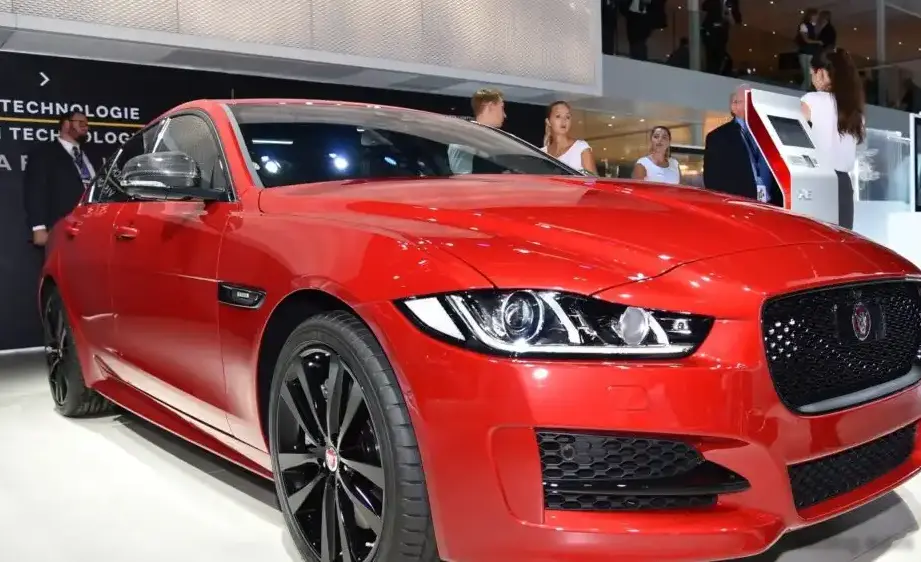
The Jaguar XE (X760) 2.0 (300 Hp) Automatic, produced from 2017 to 2018, represented a significant offering in Jaguar’s entry-level luxury sedan lineup. Positioned as a mid-to-high trim level, this variant aimed to deliver a compelling blend of performance, refinement, and technology. It was a key component of Jaguar’s strategy to compete with established German rivals like the BMW 3 Series, Audi A4, and Mercedes-Benz C-Class. The X760 designation refers to the first generation of the XE, built on Jaguar’s aluminum-intensive iQ[Al] platform, designed to reduce weight and enhance rigidity.
Technical Specifications
| Brand | Jaguar |
| Model | XE |
| Generation | XE (X760) |
| Type (Engine) | 2.0 (300 Hp) Automatic |
| Start of production | 2017 |
| End of production | 2018 |
| Powertrain Architecture | Internal Combustion engine |
| Body type | Sedan |
| Seats | 5 |
| Doors | 4 |
| Fuel consumption (combined) | 6.7 l/100 km |
| Fuel consumption (US mpg) | 35.1 US mpg |
| Fuel consumption (UK mpg) | 42.2 UK mpg |
| Fuel consumption (km/l) | 14.9 km/l |
| CO2 emissions | 153 g/km |
| Fuel Type | Petrol (Gasoline) |
| Acceleration 0 – 100 km/h | 5.7 sec |
| Acceleration 0 – 62 mph | 5.7 sec |
| Acceleration 0 – 60 mph | 5.4 sec |
| Maximum speed | 250 km/h (155.34 mph) |
| Emission standard | Euro 6 |
| Weight-to-power ratio | 5.2 kg/Hp |
| Weight-to-torque ratio | 3.9 kg/Nm |
| Power | 300 Hp @ 5500 rpm |
| Power per litre | 150.2 Hp/l |
| Torque | 400 Nm @ 1500-4500 rpm (295.02 lb.-ft. @ 1500-4500 rpm) |
| Engine layout | Front, Longitudinal |
| Engine Model/Code | Ingenium / PT204 |
| Engine displacement | 1997 cm3 (121.86 cu. in.) |
| Number of cylinders | 4 |
| Engine configuration | Inline |
| Cylinder Bore | 83 mm (3.27 in.) |
| Piston Stroke | 92.4 mm (3.64 in.) |
| Compression ratio | 9.5:1 |
| Number of valves per cylinder | 4 |
| Fuel injection system | Direct injection |
| Engine aspiration | Turbocharger, Intercooler |
| Valvetrain | DOHC |
| Engine oil capacity | 7 l (7.4 US qt | 6.16 UK qt) |
| Coolant capacity | 11.2 l (11.83 US qt | 9.85 UK qt) |
| Kerb Weight | 1565 kg (3450.23 lbs.) |
| Trunk (boot) space – minimum | 415 l (14.66 cu. ft.) |
| Trunk (boot) space – maximum | 455 l (16.07 cu. ft.) |
| Fuel tank capacity | 63 l (16.64 US gal | 13.86 UK gal) |
| Length | 4686 mm (184.49 in.) |
| Width | 1967 mm (77.44 in.) |
| Width with mirrors folded | 2075 mm (81.69 in.) |
| Height | 1425 mm (56.1 in.) |
| Wheelbase | 2835 mm (111.61 in.) |
| Front track | 1597-1602 mm (62.87 – 63.07 in.) |
| Rear track | 1598-1603 mm (62.91 – 63.11 in.) |
| Drivetrain Architecture | Rear wheel drive |
| Number of gears | 8 |
| Gearbox type | Automatic transmission |
| Front suspension | Double wishbone |
| Rear suspension | Coil spring |
| Front brakes | Ventilated discs |
| Rear brakes | Ventilated discs |
| Steering type | Steering rack and pinion |
| Power steering | Electric |
Powertrain & Engine Architecture
At the heart of the XE 2.0 (300 Hp) lies Jaguar Land Rover’s Ingenium engine family, specifically the PT204 code. This is a 2.0-liter turbocharged inline-four cylinder engine. The Ingenium engines were designed for modularity and efficiency, utilizing direct injection and a twin-scroll turbocharger to deliver both power and responsiveness. The 300 horsepower output was achieved through careful tuning of the engine management system and the turbocharger. The engine features a DOHC (Double Overhead Camshaft) valvetrain with four valves per cylinder, optimizing airflow for increased performance. The engine is longitudinally mounted, driving the rear wheels. The eight-speed automatic transmission, sourced from ZF, is a crucial component of this powertrain. It provides smooth and quick shifts, contributing to the car’s overall driving experience. The transmission’s gear ratios are optimized for both acceleration and fuel efficiency.
Driving Characteristics
The 300 hp output, combined with the eight-speed automatic, provided the XE with brisk acceleration. The 0-60 mph sprint was achievable in around 5.4 seconds, making it a competitive performer in its class. While not as raw or visceral as some of its rivals, the XE offered a refined and comfortable driving experience. The automatic transmission generally shifted smoothly, although some drivers noted a slight hesitation in certain situations. Compared to the lower-powered 2.0-liter variants or the diesel models, the 300 hp version offered a significantly more engaging driving experience. The power delivery was linear and predictable, making it easy to control. However, it lacked the low-end torque of the diesel engines and the sharper responsiveness of a manual transmission.
Equipment & Trim Levels
The 2.0 (300 Hp) Automatic trim typically included a generous level of standard equipment. This included leather upholstery, a touchscreen infotainment system with navigation, automatic climate control, and a suite of driver-assistance features such as lane departure warning and autonomous emergency braking. Optional extras included a panoramic sunroof, premium sound system, and adaptive cruise control. Interior trim options varied, allowing buyers to personalize the cabin to their preferences. The dashboard layout was generally clean and modern, with a focus on usability.
Chassis & Braking
The XE’s chassis was a key selling point, utilizing a significant amount of aluminum in its construction to reduce weight and improve rigidity. The suspension consisted of double wishbones at the front and a coil spring setup at the rear. This configuration provided a good balance between comfort and handling. The XE 2.0 (300 Hp) was equipped with ventilated disc brakes on all four wheels, providing ample stopping power. ABS (Anti-lock Braking System) was standard, enhancing safety and control. The electric power steering offered a precise and responsive feel.
Market Reception & Comparison
Critics generally praised the XE for its stylish design, comfortable interior, and engaging driving dynamics. The 300 hp engine was well-received, offering a competitive level of performance. However, some reviewers noted that the XE’s infotainment system could be slow and unintuitive. Compared to its rivals, the XE offered a compelling value proposition, often undercutting the prices of the German competitors. Fuel economy was respectable, although not class-leading. Reliability was a mixed bag, with some owners reporting issues with the infotainment system and electrical components.
Legacy
The Jaguar XE 2.0 (300 Hp) Automatic, while a relatively short-lived variant, remains a desirable option in the used car market. The Ingenium engine has proven to be generally reliable, although regular maintenance is essential. The aluminum-intensive construction of the chassis contributes to the car’s longevity. As with any used vehicle, potential buyers should carefully inspect the car’s history and condition before making a purchase. The XE’s blend of performance, luxury, and technology continues to appeal to enthusiasts seeking a stylish and engaging driving experience.
