
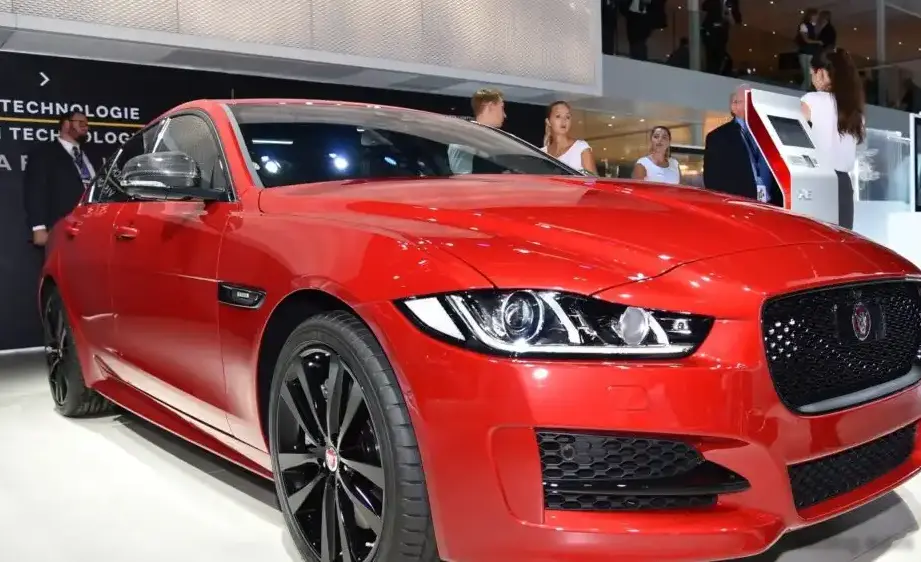
The Jaguar XE (X760) 2.0d, producing 180 horsepower, was a key variant in Jaguar’s entry into the compact executive car segment. Introduced in 2015 and remaining in production through 2018, this model aimed to compete with established rivals like the BMW 3 Series, Audi A4, and Mercedes-Benz C-Class. Positioned as a mid-range offering within the XE lineup, the 2.0d provided a balance between performance, fuel efficiency, and affordability. It represented Jaguar’s attempt to broaden its appeal and attract a wider customer base. This specific configuration utilized Jaguar’s Ingenium engine family and was primarily sold in European and Asian markets, with limited availability in North America.
Technical Specifications
| Brand | Jaguar |
| Model | XE |
| Generation | XE (X760) |
| Type (Engine) | 2.0d (180 Hp) |
| Start of production | 2015 |
| End of production | 2018 |
| Powertrain Architecture | Internal Combustion engine |
| Body type | Sedan |
| Seats | 5 |
| Doors | 4 |
| CO2 emissions | 109-111 g/km |
| Fuel Type | Diesel |
| Acceleration 0 – 100 km/h | 7.8 sec |
| Acceleration 0 – 62 mph | 7.8 sec |
| Acceleration 0 – 60 mph | 7.4 sec |
| Maximum speed | 225 km/h (139.81 mph) |
| Weight-to-power ratio | 8.6 kg/Hp, 116.1 Hp/tonne |
| Weight-to-torque ratio | 3.6 kg/Nm, 277.4 Nm/tonne |
| Power | 180 Hp @ 4000 rpm |
| Power per litre | 90 Hp/l |
| Torque | 430 Nm @ 1750-2500 rpm (317.15 lb.-ft. @ 1750-2500 rpm) |
| Engine layout | Front, Longitudinal |
| Engine Model/Code | Ingenium / 204DTD |
| Engine displacement | 1999 cm3 (121.99 cu. in.) |
| Number of cylinders | 4 |
| Engine configuration | Inline |
| Fuel injection system | Diesel Commonrail |
| Engine aspiration | Turbocharger, Intercooler |
| Engine oil capacity | 6.5 l (6.87 US qt | 5.72 UK qt) |
| Coolant | 6.5 l (6.87 US qt | 5.72 UK qt) |
| Kerb Weight | 1550 kg (3417.17 lbs) |
| Max. weight | 2135 kg (4706.87 lbs) |
| Max load | 585 kg (1289.7 lbs) |
| Trunk (boot) space – minimum | 455 l (16.07 cu. ft.) |
| Fuel tank capacity | 56 l (14.79 US gal | 12.32 UK gal) |
| Length | 4672 mm (183.94 in) |
| Width | 1850 mm (72.83 in) |
| Width including mirrors | 2075 mm (81.69 in) |
| Height | 1416 mm (55.75 in) |
| Wheelbase | 2835 mm (111.61 in) |
| Minimum turning circle | 11.66 m (38.25 ft) |
| Drivetrain Architecture | Rear wheel drive |
| Number of gears | 6 gears, manual transmission |
| Front brakes | Ventilated discs |
| Rear brakes | Disc |
| Assisting systems | ABS (Anti-lock braking system) |
| Steering type | Steering rack and pinion |
Powertrain & Engine Architecture
The heart of the XE 2.0d was Jaguar’s Ingenium engine family, specifically the 204DTD code. This 2.0-liter inline-four diesel engine was designed for modularity and efficiency. It featured a cast aluminum block, a low-pressure exhaust gas recirculation (EPR) system to reduce NOx emissions, and a two-stage turbocharger. The commonrail direct injection system operated at a maximum pressure of 2,200 bar, optimizing fuel atomization and combustion. The engine utilized a belt-driven dual overhead camshaft (DOHC) valvetrain with four valves per cylinder. The six-speed manual transmission was the standard offering, providing a direct connection to the rear wheels. While an eight-speed automatic transmission was available as an option on other XE models, the 180 hp variant was primarily offered with the manual gearbox. This choice was likely made to keep the price point competitive and appeal to drivers who preferred a more involved driving experience.
Driving Characteristics
The 180 horsepower and 430 Nm (317 lb-ft) of torque delivered by the 2.0d engine provided adequate performance for everyday driving. Acceleration from 0 to 60 mph took approximately 7.4-7.8 seconds, making it competitive within its class. The manual transmission offered a more engaging driving experience compared to the automatic options available on higher-spec XE models. However, the power delivery wasn’t as immediate or forceful as the more powerful 2.0d variants (200 hp) or the supercharged petrol engines. The gear ratios were tuned for a balance between fuel economy and responsiveness, with a relatively long sixth gear for highway cruising. The rear-wheel-drive configuration contributed to a balanced chassis and predictable handling, although it could be less forgiving in adverse weather conditions compared to all-wheel-drive competitors. The steering was generally well-weighted and provided good feedback, enhancing the overall driving experience.
Equipment & Trim Levels
The XE 2.0d typically came equipped with a respectable level of standard features. These included alloy wheels, automatic headlights, rain-sensing wipers, a leather-wrapped steering wheel, and a touchscreen infotainment system. Interior upholstery was generally cloth, although leather options were available. Standard safety features included ABS, electronic stability control, and multiple airbags. Optional extras included navigation, premium sound systems, heated seats, and parking assistance features. The trim level often dictated the availability of these options, with higher trims offering more customization possibilities. The 2.0d was often positioned as the entry-level diesel option, making it a popular choice for fleet buyers and customers prioritizing fuel efficiency. It served as a gateway into the Jaguar brand for many buyers.
Chassis & Braking
The XE’s chassis was a significant departure from previous Jaguar designs, utilizing a lightweight aluminum construction. This contributed to the car’s relatively low curb weight of around 1550 kg (3417 lbs). The suspension consisted of aluminum double wishbones at the front and a multi-link setup at the rear. The 2.0d variant typically featured smaller brakes compared to the higher-performance models, with ventilated discs at the front and solid discs at the rear. ABS (Anti-lock Braking System) was standard, providing enhanced braking control. Stabilizer bars were fitted front and rear to reduce body roll during cornering. The aluminum construction not only reduced weight but also improved rigidity, contributing to better handling and ride quality.
Market Reception & Comparison
The Jaguar XE 2.0d received generally positive reviews, with critics praising its stylish design, comfortable interior, and engaging driving dynamics. However, some reviewers noted that the 180 hp engine felt somewhat underpowered compared to its rivals, particularly when fully loaded. Fuel economy was a strong point, with the 2.0d achieving combined fuel consumption figures of around 5.0-5.5 liters per 100 kilometers (47-51 mpg). Compared to the higher-output 2.0d variants, the 180 hp model offered a more affordable entry point into the XE range, but at the expense of performance. Compared to the petrol-powered XE models, the 2.0d provided significantly better fuel economy, making it a more practical choice for high-mileage drivers. It often represented a sweet spot for buyers seeking a balance between economy and driving pleasure.
Legacy
The Jaguar XE 2.0d, while not the most powerful or prestigious variant in the lineup, proved to be a reliable and fuel-efficient option. The Ingenium engine family has since become a mainstay of Jaguar Land Rover’s powertrain offerings, demonstrating its durability and adaptability. On the used car market, the XE 2.0d represents a relatively affordable entry point into Jaguar ownership. While maintenance costs can be higher than some competitors, the car’s overall reliability is generally good, particularly for well-maintained examples. The 2.0d’s blend of style, comfort, and efficiency continues to appeal to buyers seeking a premium compact executive car. It remains a viable option for those looking for a well-rounded and reasonably priced used vehicle.
