
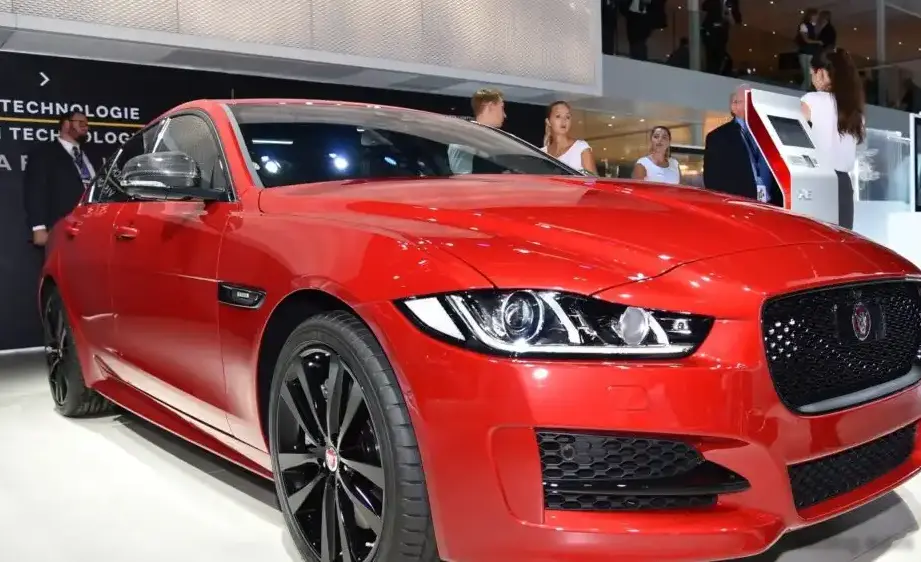
The Jaguar XE 2.0d, producing 240 horsepower, with all-wheel drive and an automatic transmission, was a key variant in Jaguar’s entry into the compact executive car segment. Introduced for the 2017 and 2018 model years, this version aimed to balance performance, efficiency, and all-weather capability within the XE lineup. It represented Jaguar’s attempt to compete directly with established German rivals like the BMW 3 Series and Audi A4, offering a more sporting driving experience than traditionally associated with the brand. This particular configuration occupied a mid-range position within the XE portfolio, slotting above the lower-powered diesel options and below the supercharged petrol variants.
Technical Specifications
| Brand | Jaguar |
| Model | XE |
| Generation | XE (X760) |
| Type (Engine) | 2.0d (240 Hp) AWD Automatic |
| Start of production | 2017 |
| End of production | 2018 |
| Powertrain Architecture | Internal Combustion engine |
| Body type | Sedan |
| Seats | 5 |
| Doors | 4 |
| Fuel consumption (combined) | 5.2 l/100 km |
| Fuel consumption (US mpg) | 45.2 US mpg |
| Fuel consumption (UK mpg) | 54.3 UK mpg |
| Fuel consumption (km/l) | 19.2 km/l |
| CO2 emissions | 137 g/km |
| Fuel Type | Diesel |
| Acceleration 0 – 100 km/h | 6.1 sec |
| Acceleration 0 – 62 mph | 6.1 sec |
| Acceleration 0 – 60 mph | 5.8 sec |
| Maximum speed | 250 km/h (155.34 mph) |
| Emission standard | Euro 6 |
| Weight-to-power ratio | 6.9 kg/Hp, 145.5 Hp/tonne |
| Weight-to-torque ratio | 3.3 kg/Nm, 303 Nm/tonne |
| Power | 240 Hp @ 4000 rpm |
| Power per litre | 120.1 Hp/l |
| Torque | 500 Nm @ 1500 rpm (368.78 lb.-ft. @ 1500 rpm) |
| Engine layout | Front, Longitudinal |
| Engine Model/Code | Ingenium / 204DTA |
| Engine displacement | 1999 cm3 (121.99 cu. in.) |
| Number of cylinders | 4 |
| Engine configuration | Inline |
| Cylinder Bore | 83 mm (3.27 in.) |
| Piston Stroke | 92.4 mm (3.64 in.) |
| Compression ratio | 15.5:1 |
| Number of valves per cylinder | 4 |
| Fuel injection system | Diesel Commonrail |
| Engine aspiration | Turbocharger, Intercooler |
| Valvetrain | DOHC |
| Engine oil capacity | 6.5 l (6.87 US qt | 5.72 UK qt) |
| Coolant capacity | 7 l (7.4 US qt | 6.16 UK qt) |
| Kerb Weight | 1650 kg (3637.63 lbs.) |
| Trunk (boot) space – minimum | 455 l (16.07 cu. ft.) |
| Fuel tank capacity | 56 l (14.79 US gal | 12.32 UK gal) |
| Length | 4672 mm (183.94 in.) |
| Width with mirrors folded | 1967 mm (77.44 in.) |
| Width including mirrors | 2075 mm (81.69 in.) |
| Height | 1425 mm (56.1 in.) |
| Wheelbase | 2835 mm (111.61 in.) |
| Front track | 1597-1602 mm (62.87 – 63.07 in.) |
| Rear (Back) track | 1598-1603 mm (62.91 – 63.11 in.) |
| Drive wheel | All wheel drive (4×4) |
| Number of gears and type of gearbox | 8 gears, automatic transmission |
| Front suspension | Double wishbone |
| Rear suspension | Independent coil spring |
| Front brakes | Ventilated discs |
| Rear brakes | Ventilated discs |
| Assisting systems | ABS (Anti-lock braking system) |
| Steering type | Steering rack and pinion |
| Power steering | Electric Steering |
Powertrain & Engine Architecture
The heart of the XE 2.0d was Jaguar Land Rover’s Ingenium engine family, specifically the 204DTA four-cylinder diesel. This engine represented a significant investment by JLR, designed for modularity and efficiency. The 2.0-liter displacement was achieved with a bore of 83mm and a stroke of 92.4mm, operating with a high compression ratio of 15.5:1. A single turbocharger with an intercooler boosted the engine, delivering peak torque of 500 Nm (368.78 lb-ft) at a low 1500 rpm. The engine utilized a diesel commonrail fuel injection system for precise fuel delivery and optimized combustion. The DOHC valvetrain, with four valves per cylinder, further enhanced breathing and performance. Paired with the engine was an eight-speed automatic transmission, providing smooth and relatively quick gear changes. This transmission was crucial for balancing performance with the fuel efficiency expected of a diesel engine.
Driving Characteristics
The 240 horsepower and 500 Nm of torque provided by the 2.0d powertrain delivered a respectable driving experience. Acceleration from 0 to 60 mph took approximately 5.8 seconds, making it a competitive performer in its class. While not as overtly sporty as the higher-powered petrol versions, the 2.0d offered ample power for everyday driving and overtaking maneuvers. The automatic transmission, while generally smooth, could occasionally feel hesitant during downshifts. Compared to the six-speed manual transmission available on some XE models, the automatic prioritized comfort and ease of use over outright driver engagement. The all-wheel-drive system provided enhanced traction, particularly in inclement weather, making it a more practical choice for drivers in regions with challenging road conditions.
Equipment & Trim Levels
The XE 2.0d AWD Automatic typically came equipped with a reasonable level of standard features. These included leather upholstery, dual-zone climate control, a touchscreen infotainment system with navigation, and a suite of safety features such as autonomous emergency braking and lane departure warning. Optional extras included a panoramic sunroof, premium sound system, and adaptive cruise control. Trim levels varied slightly depending on the market, but generally offered progressive upgrades in terms of interior materials and technology. The XE 2.0d aimed for a balance between luxury and affordability, offering a premium experience without the higher price tag of the flagship models.
Chassis & Braking
The XE’s chassis was a key selling point, utilizing a lightweight aluminum construction to enhance handling and agility. The 2.0d variant featured a double wishbone front suspension and an independent coil spring rear suspension. Braking duties were handled by ventilated discs on all four wheels, providing ample stopping power. The suspension tuning was generally geared towards comfort, but still offered a reasonably controlled and engaging driving experience. The all-wheel-drive system contributed to improved stability and cornering grip.
Market Reception & Comparison
The Jaguar XE 2.0d AWD Automatic received generally positive reviews from automotive critics. It was praised for its stylish design, comfortable interior, and refined driving experience. However, some critics noted that the infotainment system could be laggy and that the rear seat space was somewhat limited compared to rivals. Fuel economy was a strong point, with the 2.0d achieving around 45.2 US mpg in combined driving. Compared to the petrol-powered XE variants, the 2.0d offered significantly better fuel efficiency, but at the expense of some performance. Against competitors like the BMW 320d and Audi A4 2.0 TDI, the XE 2.0d offered a compelling alternative, often at a slightly lower price point.
Legacy
The Ingenium engine family proved to be relatively reliable, although some early examples experienced issues with oil leaks and injector failures. The eight-speed automatic transmission also demonstrated good durability. On the used car market, the XE 2.0d AWD Automatic represents a relatively affordable entry point into Jaguar ownership. Maintenance costs are generally comparable to those of its German rivals, but it’s important to ensure that the vehicle has been properly serviced and that any known issues have been addressed. The XE 2.0d, while not a groundbreaking model, played a significant role in Jaguar’s attempt to establish itself as a serious contender in the competitive compact executive car segment.
