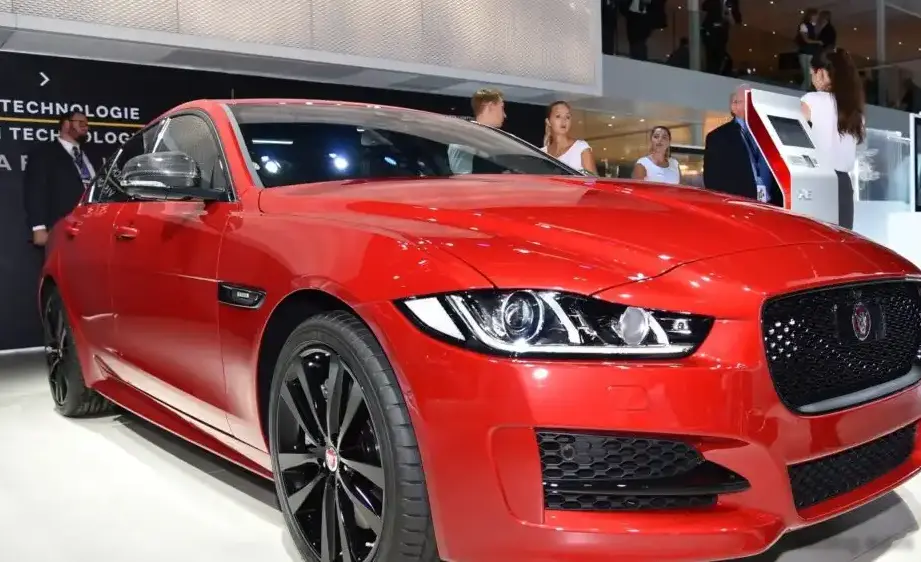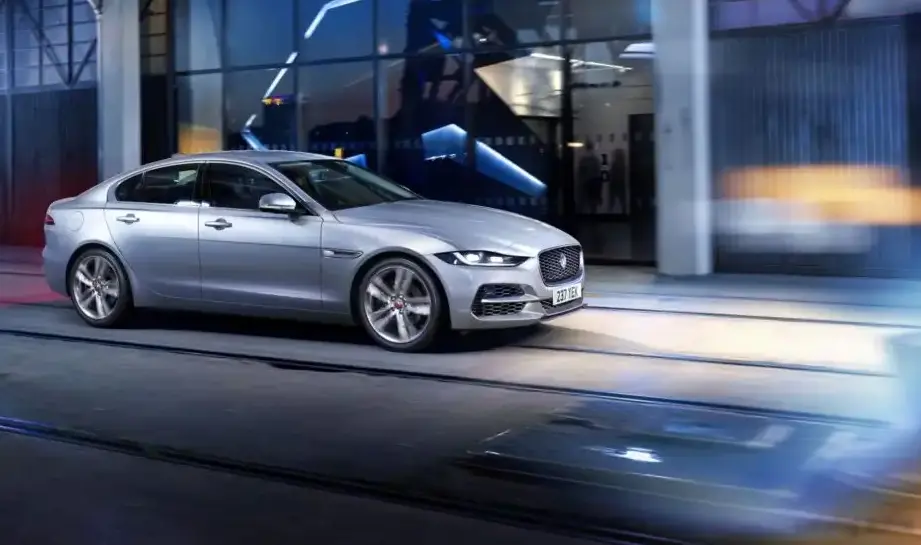
The Jaguar XE (X760) facelift, introduced in October 2020, represented a significant refresh of Jaguar’s compact executive sedan. Among the engine options available, the 2.0i variant producing 300 horsepower with all-wheel drive and an 8-speed automatic transmission occupied a prominent position in the lineup, offering a blend of performance and refinement. Production of this configuration continued through 2024. This variant aimed to appeal to buyers seeking a more engaging driving experience than the lower-powered options, while still benefiting from the convenience of an automatic transmission and the added security of all-wheel drive. It sat near the top of the XE range, below only the more focused and powerful P380 and P400 models.
Technical Specifications
| Brand | Jaguar |
| Model | XE |
| Generation | XE (X760, facelift 2020) |
| Type (Engine) | 2.0i (300 Hp) AWD Automatic |
| Start of production | October, 2020 |
| End of production | 2024 |
| Powertrain Architecture | Internal Combustion engine |
| Body type | Sedan |
| Seats | 5 |
| Doors | 4 |
| Combined fuel consumption (WLTP) | 8.7-9.5 l/100 km |
| Combined fuel consumption (US mpg) | 27 – 24.8 |
| CO2 emissions (WLTP) | 196-215 g/km |
| Fuel Type | Petrol (Gasoline) |
| Acceleration 0 – 100 km/h | 5.9 sec |
| Acceleration 0 – 60 mph | 5.6 sec |
| Maximum speed | 250 km/h (155.34 mph) |
| Emission standard | Euro 6d |
| Weight-to-power ratio | 5.4 kg/Hp |
| Weight-to-torque ratio | 4 kg/Nm |
| Power | 300 Hp @ 5500 rpm |
| Torque | 400 Nm @ 1500-4500 rpm (295.02 lb.-ft. @ 1500-4500 rpm) |
| Engine layout | Front, Longitudinal |
| Engine Model/Code | Ingenium / PT204 |
| Engine displacement | 1997 cm3 (121.86 cu. in.) |
| Number of cylinders | 4 |
| Engine configuration | Inline |
| Cylinder Bore | 83 mm (3.27 in.) |
| Piston Stroke | 92.29 mm (3.63 in.) |
| Compression ratio | 9.5:1 |
| Number of valves per cylinder | 4 |
| Fuel injection system | Direct injection |
| Engine aspiration | Turbocharger, Intercooler |
| Engine oil capacity | 7 l (7.4 US qt | 6.16 UK qt) |
| Coolant capacity | 11.2 l (11.83 US qt | 9.85 UK qt) |
| Kerb Weight | 1615 kg (3560.47 lbs.) |
| Trunk (boot) space – minimum | 394 l (13.91 cu. ft.) |
| Trunk (boot) space – maximum | 1275 l (45.03 cu. ft.) |
| Fuel tank capacity | 62 l (16.38 US gal | 13.64 UK gal) |
| Permitted trailer load with brakes (12%) | 1800 kg (3968.32 lbs.) |
| Permitted trailer load without brakes | 750 kg (1653.47 lbs.) |
| Length | 4678 mm (184.17 in.) |
| Width with mirrors folded | 1967 mm (77.44 in.) |
| Width including mirrors | 2075 mm (81.69 in.) |
| Height | 1410 mm (55.51 in.) |
| Wheelbase | 2835 mm (111.61 in.) |
| Front track | 1608 mm (63.31 in.) |
| Rear track | 1606 mm (63.23 in.) |
| Drag coefficient (Cd) | 0.30 |
| Minimum turning circle | 11.23 m (36.84 ft.) |
| Drivetrain Architecture | All wheel drive (4×4) |
| Number of gears | 8 |
| Gearbox type | Automatic transmission ZF |
| Front suspension | Double wishbone |
| Rear suspension | Independent coil spring |
| Front brakes | Ventilated discs, 350 mm |
| Rear brakes | Ventilated discs, 325 mm |
Powertrain & Engine Architecture
At the heart of the XE 2.0i 300 AWD lies Jaguar Land Rover’s Ingenium engine family, specifically the PT204 code. This is a 2.0-liter turbocharged inline-four cylinder engine. The Ingenium engines were designed for modularity and efficiency, utilizing direct injection and a single twin-scroll turbocharger to deliver a broad torque curve. The 300 horsepower variant benefits from upgraded internals and revised engine management software compared to lower-output versions. The engine produces peak torque of 400 Nm (295 lb-ft) between 1500 and 4500 rpm, providing strong acceleration in everyday driving situations. The engine is longitudinally mounted, driving all four wheels through a sophisticated all-wheel-drive system. The 8-speed automatic transmission, sourced from ZF, is known for its smooth and quick shifts. It features a torque converter and is programmed for both comfort and performance, adapting to the driver’s style.
Driving Characteristics
The 300 horsepower and all-wheel-drive combination delivers a noticeably more spirited driving experience than the base XE models. Acceleration to 60 mph takes approximately 5.6 seconds. The ZF 8-speed automatic transmission contributes to this performance, providing seamless gear changes and keeping the engine within its optimal power band. While not as raw or engaging as a manual transmission, the automatic offers convenience and ease of use, particularly in urban environments. The all-wheel-drive system provides enhanced traction, especially in inclement weather, improving stability and confidence. Compared to the 250 horsepower version, the 300 hp model offers a more substantial power increase, making overtaking maneuvers easier and providing a more rewarding experience on winding roads. However, it doesn’t quite match the outright performance of the supercharged V6 models.
Equipment & Trim Levels
The 2.0i 300 AWD typically came well-equipped, often positioned as a mid-to-high trim level. Standard features generally included leather upholstery, a touchscreen infotainment system with Apple CarPlay and Android Auto integration, navigation, automatic climate control, and a suite of driver-assistance systems such as lane departure warning and emergency braking. Optional extras could include a panoramic sunroof, premium audio system, adaptive cruise control, and upgraded interior trim materials. The specific trim level (e.g., S, SE, HSE) dictated the level of standard equipment and available options.
Chassis & Braking
The XE utilizes a lightweight aluminum chassis, contributing to its agile handling. The suspension consists of double wishbones at the front and an independent multi-link setup at the rear. The 300 AWD variant typically featured slightly stiffer spring rates and dampers compared to the lower-powered models to manage the increased power and torque. Braking duties are handled by ventilated discs all around, with larger front discs (350mm) and rear discs (325mm) providing ample stopping power. The all-wheel-drive system distributes torque between the front and rear axles as needed, optimizing traction and stability. ABS (Anti-lock Braking System) and electronic stability control are standard features.
Market Reception & Comparison
The Jaguar XE 2.0i 300 AWD was generally well-received by automotive critics. It was praised for its refined engine, comfortable ride, and engaging handling. Fuel economy, while not exceptional, was considered reasonable for a performance-oriented sedan, averaging around 27-24.8 US mpg. Compared to rivals like the BMW 330i and Audi A4 2.0T, the XE offered a distinctive British character and a more luxurious interior. However, some critics noted that the infotainment system could be less intuitive than those offered by its German competitors. Reliability was a mixed bag, with some reports of minor electrical issues, but overall, the Ingenium engine proved to be relatively robust.
Legacy
The Jaguar XE 2.0i 300 AWD represents a compelling option in the used car market. The Ingenium engine has proven to be reasonably reliable, and parts availability is generally good. The car’s blend of performance, luxury, and technology continues to appeal to buyers seeking a sophisticated and engaging driving experience. While it may not have the brand recognition of its German rivals, the XE offers a unique alternative with a distinctive British flair. Maintenance costs are comparable to other premium European sedans, and the car’s relatively modern technology ensures it remains competitive in today’s automotive landscape.