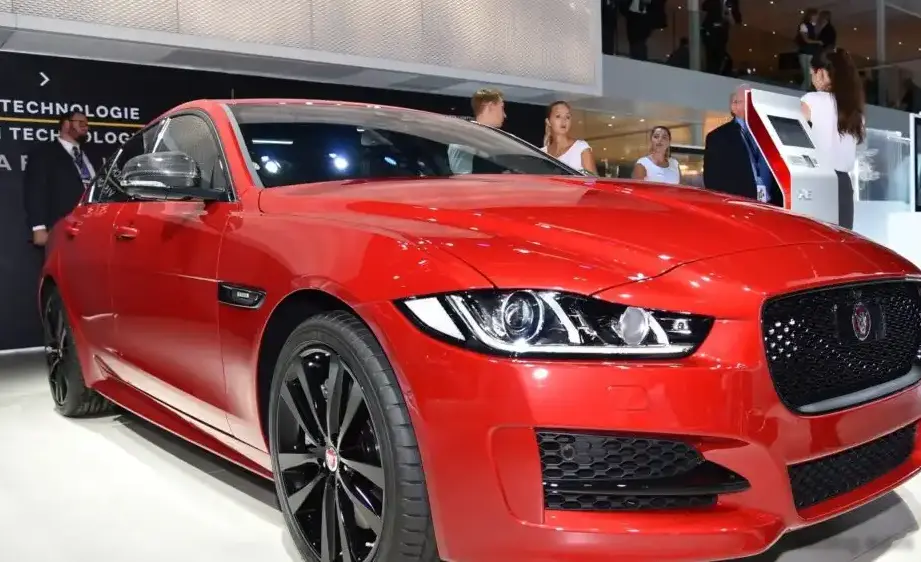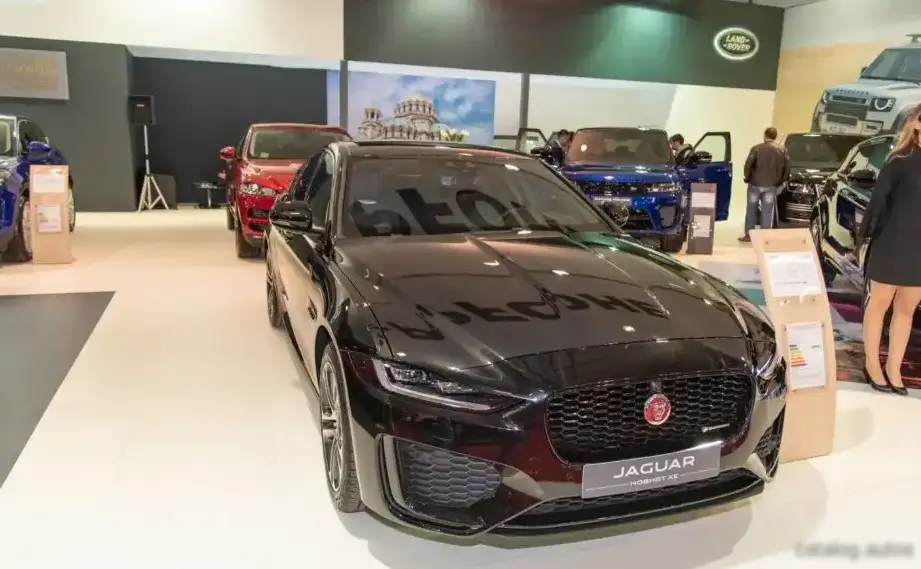
The Jaguar XE D180 Automatic, produced from February 2019 to October 2020, represents a mid-range offering within the X760 facelift generation of the XE executive sedan. Positioned between the entry-level D165 and the more potent D200 and D300 models, the D180 aimed to balance fuel efficiency with respectable performance for the European and select international markets. This variant utilized Jaguar Land Rover’s Ingenium engine family, paired with an eight-speed automatic transmission, and was designed to appeal to drivers seeking a refined and comfortable driving experience. The facelift brought updated styling, improved technology, and enhanced interior refinement to the XE line, solidifying its position as a competitor to the BMW 3 Series, Audi A4, and Mercedes-Benz C-Class.
Technical Specifications
| Brand | Jaguar |
| Model | XE |
| Generation | XE (X760, facelift 2019) |
| Type (Engine) | D180 (180 Hp) Automatic |
| Start of production | February, 2019 |
| End of production | October, 2020 |
| Powertrain Architecture | Internal Combustion engine |
| Body type | Sedan |
| Seats | 5 |
| Doors | 4 |
| Fuel consumption (combined) | 4.9 l/100 km (48 US mpg, 57.6 UK mpg, 20.4 km/l) |
| CO2 emissions | 130 g/km |
| Fuel Type | Diesel |
| Acceleration 0 – 100 km/h | 8.1 sec |
| Acceleration 0 – 62 mph | 8.1 sec |
| Acceleration 0 – 60 mph | 7.7 sec |
| Maximum speed | 228 km/h (141.67 mph) |
| Emission standard | Euro 6 |
| Weight-to-power ratio | 8.7 kg/Hp, 115 Hp/tonne |
| Weight-to-torque ratio | 3.6 kg/Nm, 274.8 Nm/tonne |
| Power | 180 Hp @ 4000 rpm |
| Power per litre | 90 Hp/l |
| Torque | 430 Nm @ 1750-2500 rpm (317.15 lb.-ft. @ 1750-2500 rpm) |
| Engine layout | Front, Longitudinal |
| Engine Model/Code | Ingenium / 204DTD |
| Engine displacement | 1999 cm3 (121.99 cu. in.) |
| Number of cylinders | 4 |
| Engine configuration | Inline |
| Cylinder Bore | 83 mm (3.27 in.) |
| Piston Stroke | 92.4 mm (3.64 in.) |
| Compression ratio | 15.5:1 |
| Number of valves per cylinder | 4 |
| Fuel injection system | Diesel Commonrail |
| Engine aspiration | Turbocharger, Intercooler |
| Valvetrain | DOHC |
| Engine oil capacity | 6.5 l (6.87 US qt | 5.72 UK qt) |
| Coolant | 7 l (7.4 US qt | 6.16 UK qt) |
| Kerb Weight | 1565 kg (3450.23 lbs.) |
| Max. weight | 2190 kg (4828.12 lbs.) |
| Max load | 625 kg (1377.89 lbs.) |
| Trunk (boot) space – minimum | 410 l (14.48 cu. ft.) |
| Fuel tank capacity | 56 l (14.79 US gal | 12.32 UK gal) |
| AdBlue tank | 16 l (4.23 US gal | 3.52 UK gal) |
| Max. roof load | 75 kg (165.35 lbs.) |
| Permitted trailer load with brakes (12%) | 1800 kg (3968.32 lbs.) |
| Permitted trailer load without brakes | 750 kg (1653.47 lbs.) |
| Permitted towbar download | 75 kg (165.35 lbs.) |
| Length | 4678 mm (184.17 in.) |
| Width with mirrors folded | 1967 mm (77.44 in.) |
| Width including mirrors | 2075 mm (81.69 in.) |
| Height | 1416 mm (55.75 in.) |
| Wheelbase | 2835 mm (111.61 in.) |
| Front track | 1602 mm (63.07 in.) |
| Rear (Back) track | 1585 mm (62.4 in.) |
| Front overhang | 841 mm (33.11 in.) |
| Rear overhang | 1002 mm (39.45 in.) |
| Ride height (ground clearance) | 125 mm (4.92 in.) |
| Drag coefficient (Cd) | 0.26 |
| Minimum turning circle (turning diameter) | 11.3 m (37.07 ft.) |
| Drivetrain Architecture | The Internal combustion engine (ICE) drives the rear wheels of the vehicle. |
| Drive wheel | Rear wheel drive |
| Number of gears and type of gearbox | 8 gears, automatic transmission |
| Front suspension | Double wishbone |
| Rear suspension | Independent coil spring |
| Front brakes | Ventilated discs, 325 mm |
| Rear brakes | Ventilated discs, 325 mm |
Powertrain & Engine Architecture
The Jaguar XE D180 is powered by the 2.0-liter Ingenium diesel engine, specifically the 204DTD code. This engine is a four-cylinder, inline configuration with a displacement of 1999cc. It features a high-pressure common rail direct injection system, delivering fuel directly into the cylinders at pressures up to 2,200 bar. The engine utilizes a single turbocharger with an intercooler to enhance power and efficiency. The DOHC (Double Overhead Camshaft) valvetrain, with four valves per cylinder, optimizes gas flow for improved performance. The eight-speed automatic transmission, sourced from ZF, is a key component of the powertrain. This transmission offers smooth and quick gear changes, contributing to both performance and fuel economy. It features a torque converter and sophisticated electronic control for optimal shift points.
Driving Characteristics
The D180 Automatic provides a comfortable and refined driving experience. While not as overtly sporty as the higher-powered variants, the 180 horsepower and 430 Nm (317 lb-ft) of torque provide adequate performance for everyday driving and highway cruising. Acceleration from 0-60 mph takes approximately 7.7 seconds. The eight-speed automatic transmission is well-tuned, offering smooth upshifts and downshifts. The gear ratios are optimized for fuel efficiency, but also provide enough punch for overtaking maneuvers. Compared to the manual transmission versions, the automatic offers greater convenience, particularly in urban traffic. However, it may feel slightly less engaging for drivers who prefer more control. The D180’s power delivery is linear and predictable, making it easy to modulate the throttle and maintain control in various driving conditions.
Equipment & Trim Levels
The D180 typically came equipped with a generous level of standard features. These included leather upholstery, automatic climate control, a touchscreen infotainment system with navigation, and a suite of safety features such as autonomous emergency braking, lane departure warning, and front and rear parking sensors. Optional extras included a panoramic sunroof, premium sound system, adaptive cruise control, and heated seats. Trim levels varied slightly depending on the market, but generally offered progressive upgrades in terms of interior materials and technology. The D180 often served as a stepping stone into the XE range, offering a balance of luxury and affordability.
Chassis & Braking
The XE’s chassis is based on a lightweight aluminum construction, contributing to its agile handling. The D180 variant utilizes double wishbone suspension at the front and an independent coil spring setup at the rear. The braking system consists of ventilated discs on all four wheels, providing ample stopping power. ABS (Anti-lock Braking System) is standard, enhancing safety and stability during emergency braking. The suspension tuning is geared towards comfort, providing a smooth ride over most road surfaces. However, it still offers a reasonable level of body control and responsiveness in corners.
Market Reception & Comparison
The Jaguar XE D180 Automatic was generally well-received by automotive critics. It was praised for its comfortable ride, refined interior, and fuel efficiency. However, some reviewers noted that it lacked the outright performance of its more powerful siblings. Compared to the D165, the D180 offered a noticeable improvement in performance, making it a more appealing option for drivers who frequently travel on highways or carry passengers. Compared to the D200 and D300, the D180 was more affordable and offered better fuel economy, but at the expense of outright speed and acceleration. Its fuel economy of around 48 US mpg made it a competitive option in its class.
Legacy
The Ingenium engine family, including the 204DTD used in the D180, has proven to be relatively reliable. While some early examples experienced minor software glitches, these were generally addressed through software updates. The eight-speed ZF automatic transmission is also known for its durability. In the used car market, the XE D180 Automatic represents a good value proposition for buyers seeking a comfortable and refined executive sedan. Maintenance costs are generally reasonable, and parts availability is good. However, as with any used car, it’s important to have a thorough inspection performed before purchasing to identify any potential issues.