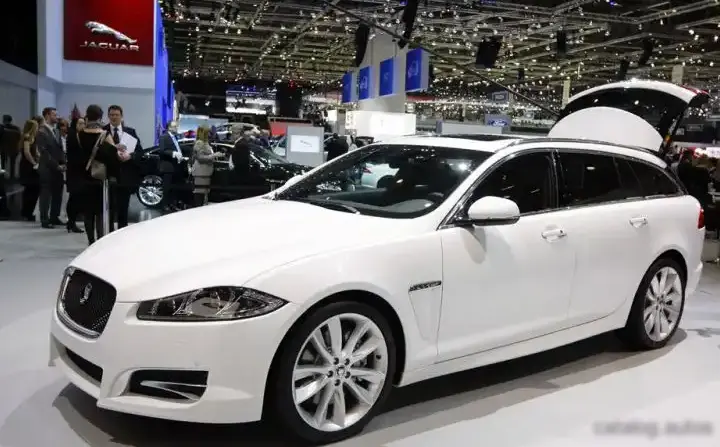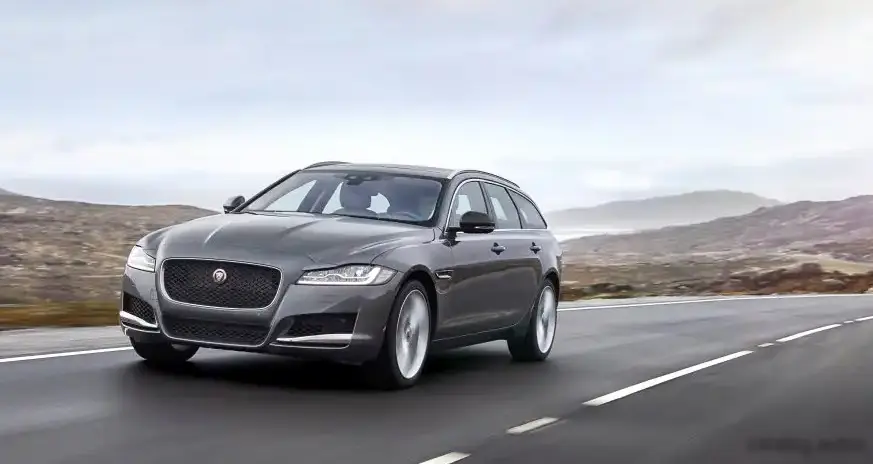
The Jaguar XF Sportbrake (X260) 2.0d, produced between 2015 and 2018, represents Jaguar’s entry into the premium, sporty estate (station wagon) market. Positioned as a more practical alternative to the XF sedan, the Sportbrake offered a compelling blend of luxury, performance, and cargo capacity. This particular variant, powered by the 2.0-liter Ingenium diesel engine producing 180 horsepower and paired with an 8-speed automatic transmission, served as a key volume seller, appealing to buyers seeking a balance between fuel efficiency and respectable performance. It occupied the lower-mid range of the Sportbrake lineup, sitting below the more powerful 3.0-liter diesel and petrol options, and above any potential base-level trims.
Technical Specifications
| Brand | Jaguar |
| Model | XF |
| Generation | XF Sportbrake (X260) |
| Type (Engine) | 2.0d (180 Hp) Automatic |
| Start of production | 2015 |
| End of production | 2018 |
| Powertrain Architecture | Internal Combustion engine |
| Body type | Station wagon (estate) |
| Seats | 5 |
| Doors | 5 |
| Fuel consumption (combined) | 4.8 l/100 km (49 US mpg, 58.9 UK mpg, 20.8 km/l) |
| CO2 emissions | 124 g/km |
| Fuel Type | Diesel |
| Acceleration 0 – 100 km/h | 8.8 sec |
| Acceleration 0 – 62 mph | 8.8 sec |
| Acceleration 0 – 60 mph | 8.4 sec |
| Maximum speed | 221 km/h (137.32 mph) |
| Emission standard | Euro 6 |
| Weight-to-power ratio | 9.6 kg/Hp, 104.7 Hp/tonne |
| Weight-to-torque ratio | 4 kg/Nm, 250 Nm/tonne |
| Power | 180 Hp @ 4000 rpm |
| Power per litre | 90 Hp/l |
| Torque | 430 Nm @ 1750-2500 rpm (317.15 lb.-ft. @ 1750-2500 rpm) |
| Engine layout | Front, Longitudinal |
| Engine Model/Code | Ingenium / 204DTH |
| Engine displacement | 1999 cm3 (121.99 cu. in.) |
| Number of cylinders | 4 |
| Engine configuration | Inline |
| Cylinder Bore | 83 mm (3.27 in.) |
| Piston Stroke | 92.4 mm (3.64 in.) |
| Compression ratio | 15.5:1 |
| Number of valves per cylinder | 4 |
| Fuel injection system | Diesel Commonrail |
| Engine aspiration | Turbocharger, Intercooler |
| Valvetrain | DOHC |
| Engine oil capacity | 6.5 l (6.87 US qt | 5.72 UK qt) |
| Kerb Weight | 1720 kg (3791.95 lbs.) |
| Trunk (boot) space – minimum | 565 l (19.95 cu. ft.) |
| Trunk (boot) space – maximum | 1700 l (60.03 cu. ft.) |
| Fuel tank capacity | 66 l (17.44 US gal | 14.52 UK gal) |
| Length | 4955 mm (195.08 in.) |
| Width | 1987 mm (78.23 in.) |
| Width including mirrors | 2091 mm (82.32 in.) |
| Height | 1496 mm (58.9 in.) |
| Wheelbase | 2960 mm (116.54 in.) |
| Front track | 1605 mm (63.19 in.) |
| Rear (Back) track | 1607 mm (63.27 in.) |
| Ride height (ground clearance) | 116 mm (4.57 in.) |
| Drivetrain Architecture | Rear wheel drive |
| Number of gears and type of gearbox | 8 gears, automatic transmission |
| Front suspension | Double wishbone |
| Rear suspension | Independent multi-link suspension, Air suspension |
| Front brakes | Ventilated discs |
| Rear brakes | Ventilated discs |
| Assisting systems | ABS (Anti-lock braking system) |
| Steering type | Steering rack and pinion |
| Power steering | Electric Steering |
| Tires size | 245/45 R18 |
| Wheel rims size | 18 |
Powertrain & Engine Architecture
The heart of the XF Sportbrake 2.0d is Jaguar Land Rover’s Ingenium engine family. The 204DTH variant is a 2.0-liter inline-four cylinder diesel engine. This engine utilizes a sophisticated common-rail direct injection system, delivering fuel at extremely high pressures for optimized combustion. A single turbocharger, coupled with an intercooler, provides forced induction, boosting power and torque. The engine features a double overhead camshaft (DOHC) valvetrain with four valves per cylinder, enhancing breathing and efficiency. The high compression ratio of 15.5:1 contributes to the engine’s thermal efficiency. Paired with this engine is a ZF 8HP80 eight-speed automatic transmission, known for its smooth shifts and wide gear ratio spread. This transmission is controlled electronically and offers a manual shift mode for driver engagement.
Driving Characteristics
The 180 horsepower and 430 Nm (317 lb-ft) of torque delivered by the 2.0d powertrain provide adequate, though not exhilarating, performance. Acceleration from 0-60 mph takes approximately 8.4 seconds, and the car reaches a top speed of 137 mph. The automatic transmission is well-tuned, offering smooth and responsive gear changes. Compared to the more powerful 3.0-liter diesel variants, the 2.0d feels less urgent in acceleration, particularly during overtaking maneuvers. However, the lower weight over the front axle, due to the smaller engine, contributes to a more balanced feel in corners. The gear ratios are optimized for fuel efficiency, with higher gears engaged at lower speeds during cruising. The 8-speed transmission helps keep the engine within its optimal torque band, providing good in-gear acceleration.
Equipment & Trim Levels
The 2.0d Sportbrake typically came equipped with a generous level of standard features. Interior appointments included leather upholstery, power-adjustable front seats, and a touchscreen infotainment system with navigation. Standard safety features included ABS, traction control, stability control, and multiple airbags. Common optional extras included a panoramic sunroof, heated seats, upgraded audio systems, and advanced driver-assistance systems such as adaptive cruise control and blind-spot monitoring. Trim levels varied by market, but generally offered progressive upgrades in interior materials, exterior styling, and technology features. The 2.0d often served as the base for the ‘Portfolio’ trim, offering a good balance of luxury and value.
Chassis & Braking
The XF Sportbrake utilizes a sophisticated chassis design. The front suspension employs a double wishbone setup, while the rear features an independent multi-link suspension, often incorporating air suspension on higher trim levels. This combination provides a comfortable ride quality and good handling characteristics. The 2.0d models typically featured ventilated disc brakes on all four wheels, providing ample stopping power. ABS (Anti-lock Braking System) is standard, enhancing braking performance and stability. The steering system is a rack-and-pinion setup with electric power assistance, offering precise and responsive steering feel.
Market Reception & Comparison
The Jaguar XF Sportbrake 2.0d was generally well-received by automotive critics. It was praised for its stylish design, comfortable interior, and refined driving experience. The fuel economy of around 49 US mpg was a significant selling point, making it an attractive option for buyers seeking a practical and efficient estate car. Compared to rivals such as the BMW 5 Series Touring and Audi A6 Avant, the XF Sportbrake offered a more distinctive design and a more luxurious interior. However, some critics noted that the 2.0d engine lacked the outright performance of its competitors’ larger engines. Reliability reports have been generally positive, with the Ingenium engine proving to be a robust and dependable unit.
Legacy
The Jaguar XF Sportbrake 2.0d has established itself as a solid and reliable used car option. The Ingenium engine has proven to be durable, and the ZF 8-speed automatic transmission is known for its longevity. While maintenance costs can be higher than some mainstream brands, the XF Sportbrake offers a compelling combination of luxury, practicality, and driving enjoyment. The availability of parts and qualified technicians is generally good, ensuring that these vehicles can be kept on the road for many years to come. Today, the XF Sportbrake 2.0d represents a good value proposition for buyers seeking a premium estate car with a proven track record.