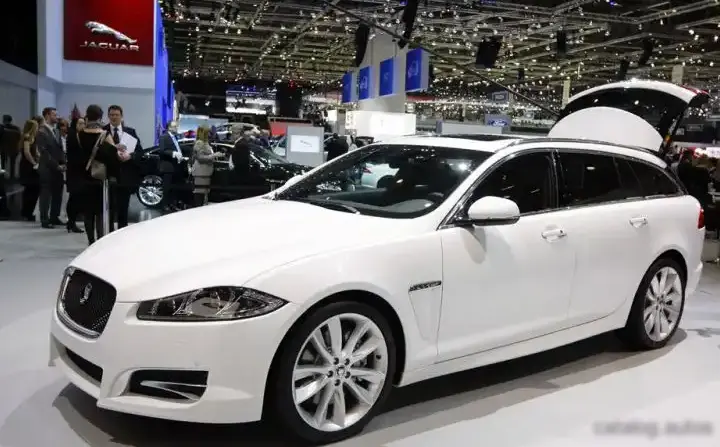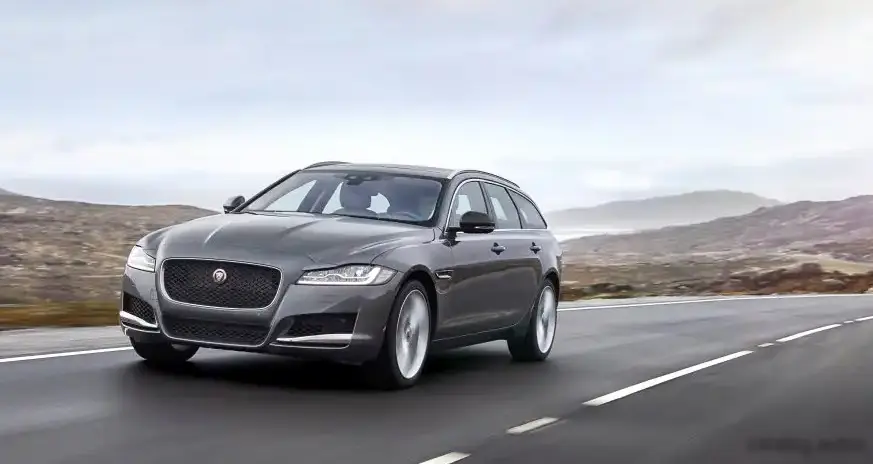
The Jaguar XF Sportbrake (X260) 3.0d V6 Automatic, produced between 2015 and 2018, represents Jaguar’s entry into the premium, performance-oriented estate (station wagon) market. Built on the X260 platform – the Sportbrake variant of the second-generation XF – this model combined the luxurious appointments and sporting dynamics expected of the XF line with the practicality of a wagon body style. The 3.0d V6, delivering 300 horsepower, served as a mid-to-upper tier engine option, positioned above the 2.0L Ingenium engines and below the supercharged V6 and V8 models. It aimed to provide a balance of performance, efficiency, and refinement for buyers seeking a versatile luxury vehicle.
Technical Specifications
| Brand | Jaguar |
| Model | XF |
| Generation | XF Sportbrake (X260) |
| Type (Engine) | 3.0d V6 (300 Hp) Automatic |
| Start of production | 2015 |
| End of production | 2018 |
| Powertrain Architecture | Internal Combustion engine |
| Body type | Station wagon (estate) |
| Seats | 5 |
| Doors | 5 |
| Fuel consumption (combined) | 5.7 l/100 km (41.3 US mpg, 49.6 UK mpg, 17.5 km/l) |
| CO2 emissions | 149 g/km |
| Fuel Type | Diesel |
| Acceleration 0 – 100 km/h | 6.6 sec |
| Acceleration 0 – 62 mph | 6.6 sec |
| Acceleration 0 – 60 mph | 6.3 sec |
| Maximum speed | 250 km/h (155.34 mph) |
| Emission standard | Euro 6 |
| Weight-to-power ratio | 6.2 kg/Hp, 161.7 Hp/tonne |
| Weight-to-torque ratio | 2.7 kg/Nm, 377.4 Nm/tonne |
| Power | 300 Hp @ 4000 rpm |
| Power per litre | 100.2 Hp/l |
| Torque | 700 Nm @ 2000 rpm (516.29 lb.-ft. @ 2000 rpm) |
| Engine layout | Front, Longitudinal |
| Engine Model/Code | 306DT |
| Engine displacement | 2993 cm3 (182.64 cu. in.) |
| Number of cylinders | 6 |
| Engine configuration | V-engine |
| Cylinder Bore | 84 mm (3.31 in.) |
| Piston Stroke | 90 mm (3.54 in.) |
| Compression ratio | 16.1:1 |
| Number of valves per cylinder | 4 |
| Fuel injection system | Diesel Commonrail |
| Engine aspiration | Turbocharger, Intercooler |
| Valvetrain | DOHC |
| Engine oil capacity | 6.6 l (6.97 US qt | 5.81 UK qt) |
| Kerb Weight | 1855 kg (4089.57 lbs.) |
| Trunk (boot) space – minimum | 565 l (19.95 cu. ft.) |
| Trunk (boot) space – maximum | 1700 l (60.03 cu. ft.) |
| Fuel tank capacity | 66 l (17.44 US gal | 14.52 UK gal) |
| Length | 4955 mm (195.08 in.) |
| Width | 1987 mm (78.23 in.) |
| Width including mirrors | 2091 mm (82.32 in.) |
| Height | 1496 mm (58.9 in.) |
| Wheelbase | 2960 mm (116.54 in.) |
| Front track | 1605 mm (63.19 in.) |
| Rear (Back) track | 1607 mm (63.27 in.) |
| Ride height (ground clearance) | 110 mm (4.33 in.) |
| Drivetrain Architecture | Rear wheel drive |
| Number of gears and type of gearbox | 8 gears, automatic transmission |
| Front suspension | Double wishbone |
| Rear suspension | Independent multi-link suspension, Air suspension |
| Front brakes | Ventilated discs |
| Rear brakes | Ventilated discs |
| Assisting systems | ABS (Anti-lock braking system) |
| Steering type | Steering rack and pinion |
| Power steering | Electric Steering |
| Tires size | 245/45 R18 |
| Wheel rims size | 18 |
Powertrain & Engine Architecture
The heart of the XF Sportbrake 3.0d is Jaguar’s 306DT engine, a 3.0-liter turbocharged diesel V6. This engine is part of the AJD family, known for its robust construction and smooth operation. The 306DT utilizes a common-rail direct injection system, delivering fuel at extremely high pressures for optimized combustion. A single variable geometry turbocharger (VGT) with an intercooler provides forced induction, contributing to both power and torque output. The engine features a double overhead camshaft (DOHC) valvetrain with four valves per cylinder, enhancing breathing and efficiency. The 300 horsepower and 700 Nm (516 lb-ft) of torque are substantial figures, providing strong acceleration. Paired with the engine is an eight-speed automatic transmission, sourced from ZF. This transmission is renowned for its smooth shifts and responsiveness, contributing to a refined driving experience. The transmission’s gear ratios are tuned to balance performance and fuel economy, with closer ratios in the lower gears for quicker acceleration and taller ratios for efficient cruising.
Driving Characteristics
The 3.0d V6 Automatic Sportbrake delivers a compelling blend of performance and comfort. Acceleration to 60 mph takes approximately 6.3 seconds, making it a genuinely quick estate car. The engine’s substantial torque is readily available from low RPMs, providing strong pull in everyday driving situations. The eight-speed automatic transmission shifts smoothly and intelligently, rarely exhibiting hesitation. Compared to the 2.0L Ingenium models, the 3.0d offers significantly more power and a more relaxed driving experience, particularly when fully loaded or towing. While not as overtly sporty as the supercharged XF variants, the 3.0d provides ample power for spirited driving. The rear-wheel-drive configuration contributes to a balanced chassis, enhancing handling and cornering stability. The air suspension on the rear axle, often standard on higher trim levels, further improves ride comfort and allows for self-leveling when carrying heavy loads.
Equipment & Trim Levels
The 3.0d V6 Automatic typically came in higher trim levels, such as Portfolio or R-Sport. Standard equipment generally included leather upholstery, heated front seats, a premium sound system, navigation, and a suite of driver-assistance features like parking sensors and a rearview camera. R-Sport models added sportier styling cues, including unique exterior trim, sport seats, and a sport-tuned suspension. Optional extras included a panoramic sunroof, upgraded leather options, adaptive cruise control, and a blind-spot monitoring system. The interior design emphasized luxury and craftsmanship, with high-quality materials and a driver-focused layout.
Chassis & Braking
The XF Sportbrake utilizes a sophisticated chassis design. The front suspension employs a double wishbone setup, while the rear features an independent multi-link suspension. Higher trim levels often included air suspension on the rear axle, providing adjustable ride height and improved comfort. Braking duties are handled by ventilated discs on all four wheels, providing ample stopping power. Anti-lock braking system (ABS) and electronic stability control (ESC) are standard features, enhancing safety and control. The steering is a rack-and-pinion system with electric power assistance, offering precise and responsive steering feel.
Market Reception & Comparison
The Jaguar XF Sportbrake 3.0d V6 Automatic was generally well-received by automotive critics. It was praised for its refined driving experience, spacious interior, and stylish design. The 3.0d engine was lauded for its power and smoothness, while the eight-speed automatic transmission was commended for its responsiveness. Compared to rivals like the BMW 5 Series Touring and Audi A6 Avant, the XF Sportbrake offered a more distinctive character and a more luxurious interior. Fuel economy was competitive for its class, averaging around 41.3 US mpg. Reliability was generally good, although some owners reported minor issues with the electronic systems.
Legacy
The Jaguar XF Sportbrake 3.0d V6 Automatic remains a desirable used car today. The 306DT engine is known for its durability, provided it has been properly maintained. The ZF eight-speed automatic transmission is also highly regarded for its reliability. While maintenance costs can be higher than for some mainstream brands, the XF Sportbrake offers a unique combination of luxury, performance, and practicality. Its elegant design and refined driving experience continue to appeal to buyers seeking a premium estate car.