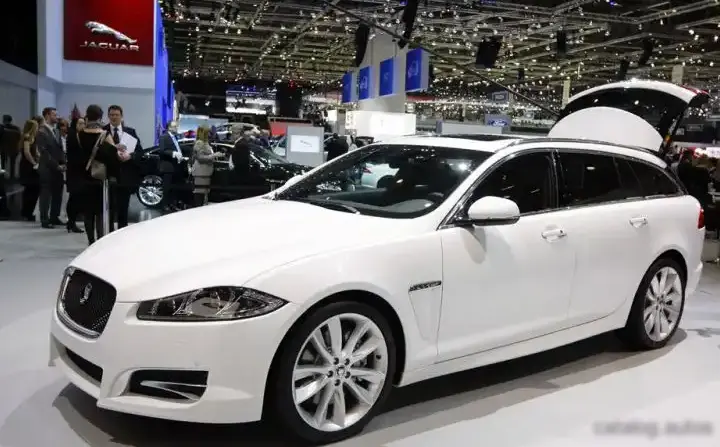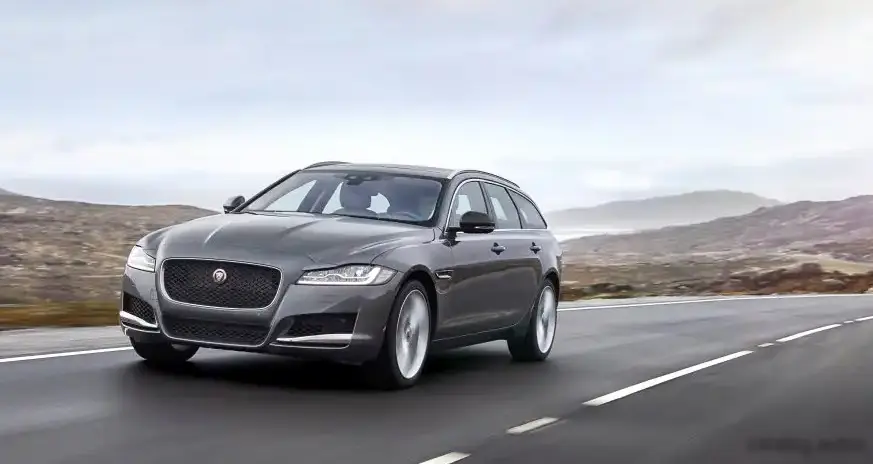
The Jaguar XF Sportbrake (X260) S 3.0 V6 AWD Automatic, produced from 2015 to 2018, represents Jaguar’s entry into the premium sport wagon segment. Based on the X260 XF platform, it offered a compelling blend of performance, luxury, and practicality. This variant, positioned as a high-performance offering within the Sportbrake range, featured a supercharged 3.0-liter V6 engine paired with an eight-speed automatic transmission and all-wheel drive. It aimed to compete with established European rivals like the BMW 5 Series Touring and Audi A6 Avant, offering a distinctly British alternative with a focus on driving dynamics and sophisticated styling.
Technical Specifications
| Brand | Jaguar |
| Model | XF |
| Generation | XF Sportbrake (X260) |
| Type (Engine) | S 3.0 V6 (380 Hp) AWD Automatic |
| Start of production | 2015 |
| End of production | 2018 |
| Powertrain Architecture | Internal Combustion engine |
| Body type | Station wagon (estate) |
| Seats | 5 |
| Doors | 5 |
| Fuel consumption (economy) – urban (EPA) | 13.1 l/100 km (18 US mpg, 21.6 UK mpg, 7.6 km/l) |
| Fuel consumption (economy) – extra urban (EPA) | 9.4 l/100 km (25 US mpg, 30.1 UK mpg, 10.6 km/l) |
| Fuel consumption (economy) – combined (EPA) | 11.2 l/100 km (21 US mpg, 25.2 UK mpg, 8.9 km/l) |
| Fuel Type | Petrol (Gasoline) |
| Acceleration 0 – 100 km/h | 5.5 sec |
| Acceleration 0 – 62 mph | 5.5 sec |
| Acceleration 0 – 60 mph | 5.3 sec |
| Maximum speed | 250 km/h (155.34 mph), Electronically limited |
| Emission standard | Euro 6 |
| Weight-to-power ratio | 4.8 kg/Hp, 207.1 Hp/tonne |
| Weight-to-torque ratio | 4.1 kg/Nm, 245.2 Nm/tonne |
| Power | 380 Hp @ 6500 rpm |
| Power per litre | 126.9 Hp/l |
| Torque | 450 Nm @ 4500 rpm (331.9 lb.-ft. @ 4500 rpm) |
| Engine layout | Front, Longitudinal |
| Engine Model/Code | 306PS |
| Engine displacement | 2995 cm3 (182.77 cu. in.) |
| Number of cylinders | 6 |
| Engine configuration | V-engine |
| Cylinder Bore | 84.5 mm (3.33 in.) |
| Piston Stroke | 89 mm (3.5 in.) |
| Compression ratio | 10.5:1 |
| Number of valves per cylinder | 4 |
| Fuel injection system | Direct injection |
| Engine aspiration | Supercharger, Intercooler |
| Valvetrain | DOHC |
| Engine oil capacity | 6.5 l (6.87 US qt | 5.72 UK qt) |
| Kerb Weight | 1835 kg (4045.48 lbs.) |
| Max. weight | 2430 kg (5357.23 lbs.) |
| Max load | 595 kg (1311.75 lbs.) |
| Trunk (boot) space – minimum | 565 l (19.95 cu. ft.) |
| Trunk (boot) space – maximum | 1700 l (60.03 cu. ft.) |
| Fuel tank capacity | 74 l (19.55 US gal | 16.28 UK gal) |
| Length | 4954 mm (195.04 in.) |
| Width with mirrors folded | 1987 mm (78.23 in.) |
| Width including mirrors | 2091 mm (82.32 in.) |
| Height | 1496 mm (58.9 in.) |
| Wheelbase | 2960 mm (116.54 in.) |
| Front track | 1597-1605 mm (62.87 – 63.19 in.) |
| Rear (Back) track | 1599-1607 mm (62.95 – 63.27 in.) |
| Ride height (ground clearance) | 116 mm (4.57 in.) |
| Minimum turning circle (turning diameter) | 11.61 m (38.09 ft.) |
| Drivetrain Architecture | The Internal combustion engine (ICE) drives the rear wheels permanently, and the front wheels are driven through an electrically or mechanically operated clutch if necessary. |
| Drive wheel | All wheel drive (4×4) |
| Number of gears and type of gearbox | 8 gears, automatic transmission |
| Front suspension | Double wishbone, Transverse stabilizer |
| Rear suspension | Independent multi-link suspension, Air suspension, Transverse stabilizer |
| Front brakes | Ventilated discs |
| Rear brakes | Ventilated discs |
| Assisting systems | ABS (Anti-lock braking system) |
| Steering type | Steering rack and pinion |
| Power steering | Electric Steering |
| Tires size | 255/35 R20 |
| Wheel rims size | 8.5J x 20 |
Powertrain & Engine Architecture
At the heart of the XF Sportbrake S 3.0 V6 lies Jaguar’s AJ126 engine, a 2.995-liter supercharged V6. This engine, part of the Jaguar-Land Rover Ingenium engine family, utilizes direct injection and a Roots-type supercharger to deliver a potent 380 horsepower at 6,500 rpm and 450 Nm (331.9 lb-ft) of torque at 4,500 rpm. The engine features a double overhead camshaft (DOHC) valvetrain with four valves per cylinder. The eight-speed automatic transmission, sourced from ZF, is a key component of the powertrain. It provides smooth and responsive gear changes, contributing to both performance and efficiency. The all-wheel-drive system employs a full-time system with an electronically controlled clutch to distribute torque between the front and rear axles, enhancing traction and stability in various driving conditions.
Driving Characteristics
The XF Sportbrake S 3.0 V6 AWD Automatic delivers a refined yet engaging driving experience. Acceleration is brisk, with a 0-60 mph time of around 5.3 seconds. The supercharger provides immediate throttle response, offering strong pull throughout the rev range. The eight-speed transmission is well-tuned, providing seamless shifts and keeping the engine in its optimal power band. Compared to the 2.0-liter four-cylinder models, the V6 offers significantly more power and torque, resulting in a more effortless driving experience, especially when fully loaded or towing. While not as overtly sporty as some of its German rivals, the XF Sportbrake S provides a comfortable ride and confident handling, making it well-suited for long-distance journeys.
Equipment & Trim Levels
The ‘S’ trim level of the XF Sportbrake was well-equipped as standard. Key features included leather upholstery, heated front seats, a panoramic sunroof, a premium sound system, and a touchscreen infotainment system with navigation. Optional extras included adaptive cruise control, a head-up display, and upgraded interior trim materials. The interior design emphasized luxury and craftsmanship, with high-quality materials and a driver-focused layout. The Sportbrake’s wagon body style offered a generous 565 liters (19.95 cu ft) of cargo space with the rear seats up, expanding to 1700 liters (60.03 cu ft) with the seats folded down.
Chassis & Braking
The XF Sportbrake utilizes an aluminum-intensive chassis to minimize weight and maximize rigidity. The front suspension features a double wishbone setup with a transverse stabilizer, while the rear suspension employs an independent multi-link design with air suspension. The air suspension system provides adjustable ride height and damping, allowing drivers to tailor the ride to their preferences. Braking duties are handled by ventilated discs on all four wheels, coupled with an anti-lock braking system (ABS) and electronic stability control. The braking system provides ample stopping power and confident control.
Market Reception & Comparison
The Jaguar XF Sportbrake S 3.0 V6 AWD Automatic was generally well-received by automotive critics. It was praised for its stylish design, luxurious interior, and strong performance. However, some reviewers noted that its fuel economy was relatively high compared to some of its rivals. Compared to the XF 2.0-liter models, the V6 offered a significant performance upgrade but came at a higher price point. The V6 also offered a more refined and engaging driving experience. Against competitors like the BMW 5 Series Touring and Audi A6 Avant, the XF Sportbrake S offered a unique blend of British luxury and performance.
Legacy
The Jaguar XF Sportbrake S 3.0 V6 AWD Automatic has proven to be a relatively reliable vehicle, with the supercharged V6 engine generally holding up well over time. However, like any complex vehicle, it is susceptible to age-related issues, such as oil leaks and sensor failures. The eight-speed automatic transmission has also proven to be durable, but regular maintenance is essential. In the used car market, the XF Sportbrake S 3.0 V6 remains a desirable option for buyers seeking a stylish, practical, and performance-oriented wagon. Its combination of luxury, performance, and practicality continues to appeal to enthusiasts and discerning buyers alike.