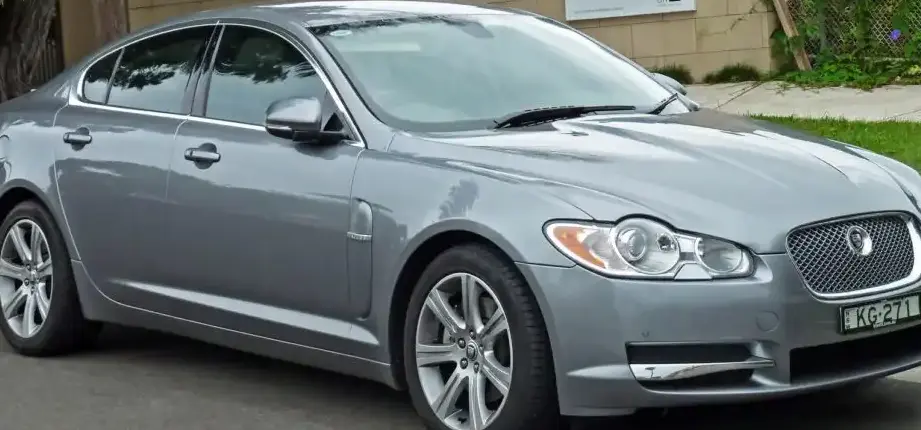
The Jaguar XF (X250) 3.0d V6 Automatic, produced between 2009 and 2011, represented a significant step forward for the British marque. Positioned as a mid-to-upper trim level within the first generation XF range, it offered a blend of luxury, performance, and efficiency. This variant aimed to appeal to buyers seeking a sophisticated executive sedan with the benefits of a modern diesel powertrain. It was a key model in Jaguar’s attempt to broaden its appeal beyond traditional luxury buyers and compete more effectively with German rivals like BMW and Mercedes-Benz.
Technical Specifications
| Brand | Jaguar |
| Model | XF |
| Generation | XF (X250) |
| Type (Engine) | 3.0d V6 (240 Hp) Automatic |
| Start of production | 2009 |
| End of production | 2011 |
| Powertrain Architecture | Internal Combustion engine |
| Body type | Sedan |
| Seats | 5 |
| Doors | 4 |
| Fuel consumption (economy) – urban (NEDC) | 9.5 l/100 km (24.8 US mpg, 29.7 UK mpg, 10.5 km/l) |
| Fuel consumption (economy) – extra urban (NEDC) | 5.5 l/100 km (42.8 US mpg, 51.4 UK mpg, 18.2 km/l) |
| Fuel consumption (economy) – combined (NEDC) | 6.8 l/100 km (34.6 US mpg, 41.5 UK mpg, 14.7 km/l) |
| CO2 emissions (NEDC) | 179 g/km |
| Fuel Type | Diesel |
| Acceleration 0 – 100 km/h | 7.1 sec |
| Acceleration 0 – 62 mph | 7.1 sec |
| Acceleration 0 – 60 mph | 6.7 sec |
| Maximum speed | 240 km/h (149.13 mph) |
| Emission standard | Euro 5 |
| Weight-to-power ratio | 7.6 kg/Hp, 131.9 Hp/tonne |
| Weight-to-torque ratio | 3.6 kg/Nm, 274.7 Nm/tonne |
| Power | 240 Hp @ 4000 rpm |
| Power per litre | 80.2 Hp/l |
| Torque | 500 Nm @ 2000 rpm (368.78 lb.-ft. @ 2000 rpm) |
| Engine layout | Front, Longitudinal |
| Engine Model/Code | AJTDV6, 306DT |
| Engine displacement | 2993 cm3 (182.64 cu. in.) |
| Number of cylinders | 6 |
| Engine configuration | V-engine |
| Cylinder Bore | 84 mm (3.31 in.) |
| Piston Stroke | 90 mm (3.54 in.) |
| Compression ratio | 16:1 |
| Number of valves per cylinder | 4 |
| Fuel injection system | Diesel Commonrail |
| Engine aspiration | BiTurbo, Intercooler |
| Valvetrain | DOHC |
| Engine oil capacity | 6.6 l (6.97 US qt, 5.81 UK qt) |
| Coolant | 12.5 l (13.21 US qt, 11 UK qt) |
| Kerb Weight | 1820 kg (4012.41 lbs.) |
| Max. weight | 2360 kg (5202.91 lbs.) |
| Max load | 540 kg (1190.5 lbs.) |
| Trunk (boot) space – minimum | 540 l (19.07 cu. ft.) |
| Trunk (boot) space – maximum | 963 l (34.01 cu. ft.) |
| Fuel tank capacity | 69.5 l (18.36 US gal, 15.29 UK gal) |
| Permitted trailer load with brakes (12%) | 1850 kg (4078.55 lbs.) |
| Permitted trailer load without brakes | 750 kg (1653.47 lbs.) |
| Permitted towbar download | 75 kg (165.35 lbs.) |
| Length | 4961 mm (195.31 in.) |
| Width | 1877 mm (73.9 in.) |
| Width including mirrors | 2053 mm (80.83 in.) |
| Height | 1460 mm (57.48 in.) |
| Wheelbase | 2909 mm (114.53 in.) |
| Front track | 1559 mm (61.38 in.) |
| Rear (Back) track | 1605 mm (63.19 in.) |
| Drag coefficient (Cd) | 0.29 |
| Minimum turning circle (turning diameter) | 11.48 m (37.66 ft.) |
| Drivetrain Architecture | Rear wheel drive |
| Drive wheel | Rear wheel drive |
| Number of gears and type of gearbox | 6 gears, automatic transmission |
| Front suspension | Coil spring, Double wishbone, Transverse stabilizer |
| Rear suspension | Independent multi-link spring suspension with stabilizer |
| Front brakes | Ventilated discs |
| Rear brakes | Ventilated discs |
| Assisting systems | ABS (Anti-lock braking system) |
| Steering type | Steering rack and pinion |
| Power steering | Hydraulic Steering |
| Tires size | 245/45 R18; 245/40 R19; 255/35 R20 |
| Wheel rims size | 8.5J x 18; 8.5J x 19; 8.5J x 20 |
INTRODUCTION
The Jaguar XF (X250) 3.0d V6 Automatic, launched in 2009, was a crucial model in Jaguar’s revitalization efforts. Built on the X250 platform (shared with the later XJ), it represented a departure from the traditional Jaguar styling cues, adopting a more contemporary and sporty aesthetic. The 3.0d V6 Automatic trim sat comfortably in the middle of the XF range, offering a compelling alternative to the entry-level 2.7d and the high-performance SV8 models. It aimed to deliver a refined driving experience with respectable performance and improved fuel economy compared to its petrol-powered siblings.
Powertrain & Engine Architecture
At the heart of the XF 3.0d was the AJTDV6 engine, specifically the 306DT variant. This 2,993cc V6 diesel engine utilized a twin-turbocharger setup with an intercooler, delivering 240 horsepower at 4,000 rpm and a substantial 500 Nm (368 lb-ft) of torque from just 2,000 rpm. The engine employed a Diesel Commonrail fuel injection system, ensuring efficient combustion and reduced emissions. The valvetrain featured Double Overhead Camshafts (DOHC) with four valves per cylinder. The engine was longitudinally mounted, driving the rear wheels. The six-speed automatic transmission, sourced from ZF, was a key component, offering smooth and responsive gear changes. This transmission was known for its reliability and contributed significantly to the car’s overall refinement.
Driving Characteristics
The 3.0d V6 Automatic offered a distinctly different driving experience compared to the other XF variants. While not as overtly sporty as the SV8, it provided ample power for effortless cruising and confident overtaking. The high torque output meant strong acceleration in everyday driving situations. The automatic transmission, while smooth, wasn’t particularly quick to shift, especially in comparison to some of its German rivals. The gear ratios were tuned for a balance between fuel efficiency and performance. Compared to the manual transmission versions of the 3.0d, the automatic offered greater convenience but slightly diminished responsiveness. The weight distribution, combined with the well-tuned suspension, resulted in a comfortable and composed ride.
Equipment & Trim Levels
The XF 3.0d Automatic typically came well-equipped as standard. Interior features included leather upholstery, wood veneer trim, and a premium audio system. Standard safety equipment included ABS, traction control, and multiple airbags. Optional extras included a panoramic sunroof, heated seats, upgraded navigation system, and adaptive cruise control. Trim levels varied slightly depending on the market, but generally, the 3.0d Automatic offered a step up in luxury and features compared to the base 2.7d models. The dashboard layout was characterized by the ‘R-Rotary’ gear selector and a clean, modern design.
Chassis & Braking
The XF 3.0d utilized a sophisticated chassis design. The front suspension featured coil springs and a double wishbone setup with a transverse stabilizer bar. The rear suspension employed an independent multi-link spring suspension, also with a stabilizer bar. This configuration provided a good balance between ride comfort and handling. Braking duties were handled by ventilated discs on all four wheels, providing ample stopping power. The hydraulic power steering offered precise and responsive control. The car’s relatively heavy weight (1,820 kg / 4,012 lbs) necessitated a robust braking system and suspension setup.
Market Reception & Comparison
The Jaguar XF 3.0d Automatic was generally well-received by automotive critics. It was praised for its refined driving experience, luxurious interior, and efficient diesel engine. However, some critics noted that the automatic transmission wasn’t as responsive as some competitors, and the fuel economy, while good, wasn’t class-leading. Compared to the 2.7d, the 3.0d offered significantly more power and refinement. Compared to the SV8, it provided a more sensible balance between performance and running costs. Against rivals like the BMW 530d and Mercedes-Benz E350 CDI, the XF 3.0d offered a compelling alternative with its distinctive styling and British character.
Legacy
The Jaguar XF 3.0d V6 Automatic has proven to be a relatively reliable vehicle in the long term, particularly the engine and transmission. However, like all luxury cars, it requires regular maintenance to prevent issues. Common issues include problems with the electronic parking brake and occasional issues with the air suspension (if equipped). On the used car market, the XF 3.0d remains a popular choice for buyers seeking a stylish and comfortable executive sedan. Its combination of performance, refinement, and relative affordability makes it an attractive option, and well-maintained examples continue to command reasonable prices. The 306DT engine is known for its durability, making it a desirable powertrain for those seeking a long-lasting luxury vehicle.