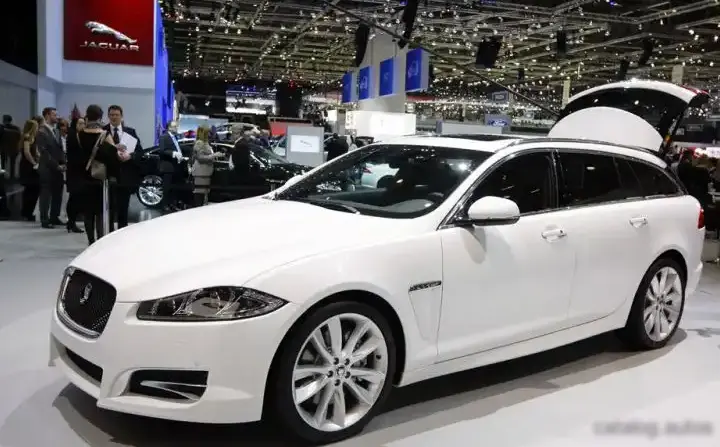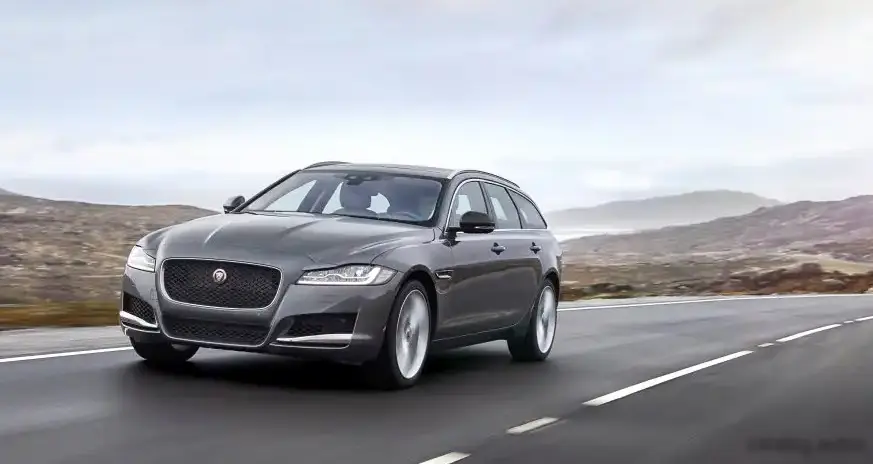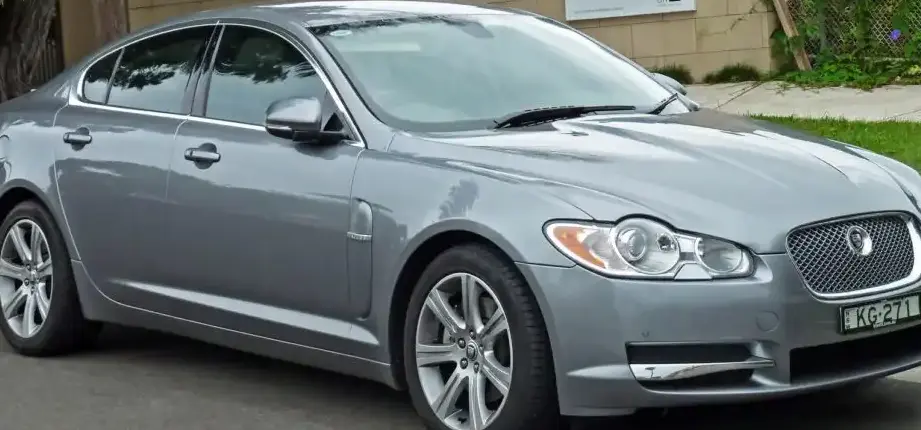
The Jaguar XF (X250) 5.0 V8 Automatic, produced between 2009 and 2011, represented the flagship powertrain option for the first generation of the XF sedan. Introduced as a replacement for the Jaguar S-Type, the XF aimed to modernize Jaguar’s lineup with a more dynamic and contemporary design. The 5.0 V8 Automatic variant positioned itself as the performance-oriented choice within the XF range, offering a substantial increase in power and refinement compared to the four-cylinder and V6 models. It was a key model in Jaguar’s attempt to attract a younger, more performance-focused clientele while maintaining the brand’s reputation for luxury and sophistication.
Technical Specifications
| Brand | Jaguar |
| Model | XF |
| Generation | XF (X250) |
| Type (Engine) | 5.0 V8 (385 Hp) Automatic |
| Start of production | 2009 |
| End of production | 2011 |
| Powertrain Architecture | Internal Combustion engine |
| Body type | Sedan |
| Seats | 5 |
| Doors | 4 |
| Fuel consumption (economy) – urban | 17.3 l/100 km (13.6 US mpg, 16.3 UK mpg, 5.8 km/l) |
| Fuel consumption (economy) – extra urban | 7.8 l/100 km (30.2 US mpg, 36.2 UK mpg, 12.8 km/l) |
| Fuel consumption (economy) – combined | 11.1 l/100 km (21.2 US mpg, 25.4 UK mpg, 9 km/l) |
| CO2 emissions | 264 g/km |
| Fuel Type | Petrol (Gasoline) |
| Acceleration 0 – 100 km/h | 5.7 sec |
| Acceleration 0 – 62 mph | 5.7 sec |
| Acceleration 0 – 60 mph | 5.5 sec |
| Maximum speed | 250 km/h (155.34 mph), Electronically limited |
| Emission standard | Euro 5 |
| Weight-to-power ratio | 4.6 kg/Hp, 216.3 Hp/tonne |
| Weight-to-torque ratio | 3.5 kg/Nm, 289.3 Nm/tonne |
| Power | 385 Hp @ 6500 rpm |
| Power per litre | 77 Hp/l |
| Torque | 515 Nm @ 3500 rpm (379.84 lb.-ft. @ 3500 rpm) |
| Engine layout | Front, Longitudinal |
| Engine Model/Code | AJ133, 508PN |
| Engine displacement | 5000 cm3 (305.12 cu. in.) |
| Number of cylinders | 8 |
| Engine configuration | V-engine |
| Cylinder Bore | 92.5 mm (3.64 in.) |
| Piston Stroke | 93 mm (3.66 in.) |
| Compression ratio | 11.5:1 |
| Number of valves per cylinder | 4 |
| Fuel injection system | Direct injection |
| Engine aspiration | Naturally aspirated engine |
| Valvetrain | DOHC |
| Engine oil capacity | 7.25 l (7.66 US qt | 6.38 UK qt) |
| Coolant | 12.5 l (13.21 US qt | 11 UK qt) |
| Kerb Weight | 1780 kg (3924.23 lbs.) |
| Max. weight | 2285 kg (5037.56 lbs.) |
| Max load | 505 kg (1113.33 lbs.) |
| Trunk (boot) space – minimum | 500 l (17.66 cu. ft.) |
| Trunk (boot) space – maximum | 923 l (32.6 cu. ft.) |
| Fuel tank capacity | 70 l (18.49 US gal | 15.4 UK gal) |
| Permitted trailer load with brakes (12%) | 1850 kg (4078.55 lbs.) |
| Permitted trailer load without brakes | 750 kg (1653.47 lbs.) |
| Permitted towbar download | 75 kg (165.35 lbs.) |
| Length | 4961 mm (195.31 in.) |
| Width | 1877 mm (73.9 in.) |
| Width including mirrors | 2053 mm (80.83 in.) |
| Height | 1460 mm (57.48 in.) |
| Wheelbase | 2909 mm (114.53 in.) |
| Front track | 1559 mm (61.38 in.) |
| Rear (Back) track | 1605 mm (63.19 in.) |
| Drag coefficient (Cd) | 0.29 |
| Minimum turning circle (turning diameter) | 11.48 m (37.66 ft.) |
| Drivetrain Architecture | The Internal combustion engine (ICE) drives the rear wheels of the vehicle. |
| Drive wheel | Rear wheel drive |
| Number of gears and type of gearbox | 6 gears, automatic transmission |
| Front suspension | Coil spring, Double wishbone, Transverse stabilizer |
| Rear suspension | Independent multi-link spring suspension with stabilizer |
| Front brakes | Ventilated discs |
| Rear brakes | Ventilated discs |
| Assisting systems | ABS (Anti-lock braking system) |
| Steering type | Steering rack and pinion |
| Power steering | Hydraulic Steering |
| Tires size | 245/45 R18; 245/40 R19; 255/35 R20 |
| Wheel rims size | 8.5J x 18; 8.5J x 19; 8.5J x 20 |
Powertrain & Engine Architecture
At the heart of the XF 5.0 V8 Automatic lies Jaguar’s AJ133 engine, a naturally aspirated 5.0-liter V8. This engine, designated with code 508PN, is a significant departure from the earlier Jaguar V8s, featuring a more modern architecture with direct fuel injection and variable valve timing. The direct injection system, coupled with a high 11.5:1 compression ratio, contributes to both power output and improved fuel efficiency. The engine utilizes a double overhead camshaft (DOHC) valvetrain, optimizing airflow for enhanced performance. The six-speed automatic transmission, sourced from ZF, was specifically tuned to handle the high torque output of the V8 engine. This transmission offered smooth shifts and a responsive driving experience, although it wasn’t as quick-shifting as some of the dual-clutch transmissions emerging at the time.
Driving Characteristics
The 5.0 V8 Automatic XF delivered a markedly different driving experience compared to the lower-spec models. The 385 horsepower and 379.84 lb-ft of torque provided effortless acceleration, with a 0-60 mph time of around 5.5 seconds. The ZF six-speed automatic transmission, while smooth, was geared more towards grand touring than outright sportiness. Gear ratios were optimized for comfortable cruising, and while manual shift control was available, it didn’t offer the same level of engagement as a dedicated sports mode or paddle shifters. Compared to the 4.2-liter supercharged V8 available in some markets, the 5.0-liter naturally aspirated version offered a more linear power delivery, making it more accessible and predictable for everyday driving.
Equipment & Trim Levels
The 5.0 V8 Automatic typically came with a high level of standard equipment. Leather upholstery, wood veneer trim, and a premium audio system were common features. Standard amenities included automatic climate control, power-adjustable seats, and a navigation system. Optional extras included adaptive cruise control, heated and ventilated seats, and a panoramic sunroof. The XF trim levels were relatively straightforward, with the 5.0 V8 representing the top-of-the-line offering. The interior design emphasized luxury and sophistication, with a focus on high-quality materials and craftsmanship.
Chassis & Braking
The XF’s chassis was designed to provide a balance between comfort and handling. The front suspension utilized a double wishbone setup with coil springs and a transverse stabilizer bar, while the rear featured an independent multi-link suspension. This configuration delivered a comfortable ride while maintaining good body control. Braking duties were handled by ventilated discs on all four wheels, providing ample stopping power. The ABS (Anti-lock braking system) was standard, enhancing safety and stability during hard braking. The XF’s steering was hydraulically assisted, offering a responsive and precise feel.
Market Reception & Comparison
The Jaguar XF 5.0 V8 Automatic was generally well-received by automotive critics. It was praised for its powerful engine, luxurious interior, and refined driving experience. However, some critics noted that the automatic transmission wasn’t as sporty as some competitors, and the fuel economy was relatively poor. Compared to the V6 and four-cylinder XF models, the 5.0 V8 offered a significant performance upgrade but came at a higher price point. It competed with other luxury sedans such as the BMW 5 Series, Mercedes-Benz E-Class, and Audi A6.
Legacy
The Jaguar XF (X250) 5.0 V8 Automatic has established a reputation as a reliable and enjoyable luxury sedan. The AJ133 V8 engine is known for its durability, and with proper maintenance, it can provide many years of service. The ZF six-speed automatic transmission is also considered to be a robust unit. In the used car market, these XFs are sought after by enthusiasts who appreciate their combination of performance, luxury, and British character. While fuel economy isn’t a strong point, the XF 5.0 V8 remains a compelling option for those seeking a refined and powerful grand tourer.