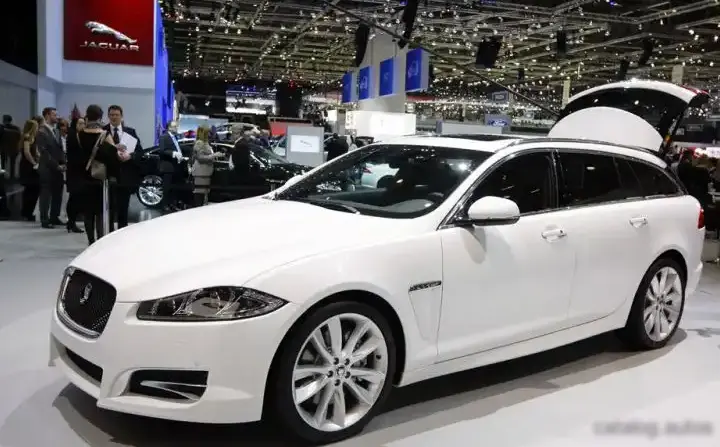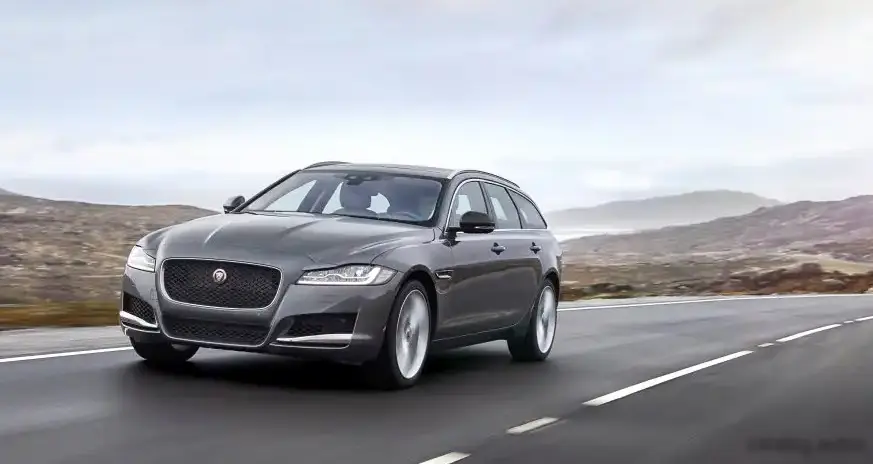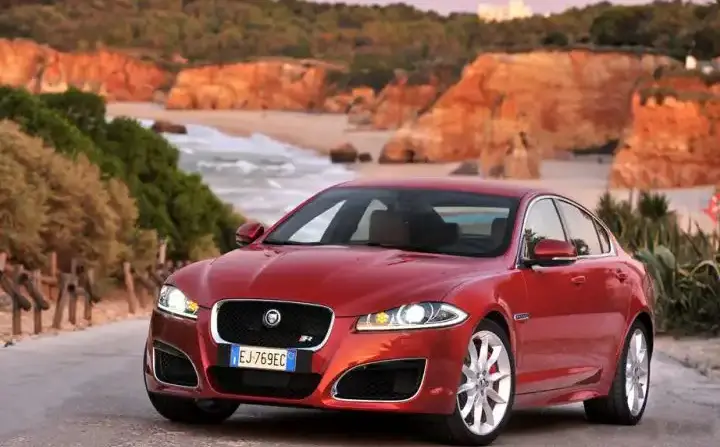
The Jaguar XF (X250) facelift, introduced in 2011 and produced through 2015, represented a significant update to Jaguar’s mid-size luxury sedan. Among the engine options available, the 2.0-liter turbocharged four-cylinder producing 240 horsepower paired with an eight-speed automatic transmission was a key addition, particularly for markets outside of North America where smaller displacement engines were more readily accepted. This variant aimed to broaden the XF’s appeal by offering a more fuel-efficient and accessible entry point into the Jaguar lineup, while still delivering a premium driving experience. It occupied a mid-range position within the XF portfolio, slotting below the supercharged 3.0-liter V6 and the high-performance XFR.
Technical Specifications
| Brand | Jaguar |
| Model | XF |
| Generation | XF (X250, facelift 2011) |
| Type (Engine) | 2.0 (240 Hp) Automatic |
| Start of production | 2012 |
| End of production | 2015 |
| Powertrain Architecture | Internal Combustion engine |
| Body type | Sedan |
| Seats | 5 |
| Doors | 4 |
| Fuel consumption (urban) | 11.6 l/100 km (20.3 US mpg) |
| Fuel consumption (extra urban) | 6.1 l/100 km (38.6 US mpg) |
| Fuel consumption (combined) | 8.1 l/100 km (29 US mpg) |
| CO2 emissions | 189 g/km |
| Fuel Type | Petrol (Gasoline) |
| Acceleration 0 – 100 km/h | 7.9 sec |
| Acceleration 0 – 62 mph | 7.9 sec |
| Acceleration 0 – 60 mph | 7.5 sec |
| Maximum speed | 241 km/h (149.75 mph) |
| Weight-to-power ratio | 6.9 kg/Hp |
| Weight-to-torque ratio | 4.9 kg/Nm |
| Power | 240 Hp @ 5500 rpm |
| Torque | 340 Nm @ 2000-4000 rpm (250.77 lb.-ft. @ 2000-4000 rpm) |
| Engine layout | Front, Longitudinal |
| Engine Model/Code | 204PT |
| Engine displacement | 1999 cm3 (121.99 cu. in.) |
| Number of cylinders | 4 |
| Engine configuration | Inline |
| Fuel injection system | Direct injection |
| Engine aspiration | Turbocharger, Intercooler |
| Engine oil capacity | 5.4 l (5.71 US qt | 4.75 UK qt) |
| Coolant capacity | 8.1 l (8.56 US qt | 7.13 UK qt) |
| Kerb Weight | 1660 kg (3659.67 lbs.) |
| Max. weight | 2230 kg (4916.31 lbs.) |
| Max load | 570 kg (1256.63 lbs.) |
| Trunk (boot) space – minimum | 540 l (19.07 cu. ft.) |
| Trunk (boot) space – maximum | 963 l (34.01 cu. ft.) |
| Fuel tank capacity | 70.1 l (18.52 US gal | 15.42 UK gal) |
| Length | 4961 mm (195.31 in.) |
| Width | 1939 mm (76.34 in.) |
| Width including mirrors | 2077 mm (81.77 in.) |
| Height | 1468 mm (57.8 in.) |
| Wheelbase | 2909 mm (114.53 in.) |
| Front track | 1559 mm (61.38 in.) |
| Rear (Back) track | 1605 mm (63.19 in.) |
| Minimum turning circle | 11.5 m (37.73 ft.) |
| Drivetrain Architecture | Rear wheel drive |
| Number of gears | 8 |
| Gearbox type | Automatic transmission |
| Front brakes | Ventilated discs |
| Rear brakes | Ventilated discs |
| Wheel rims size | 7.5J x 17; 8.5J x 18; 8.5J x 19; 8.5J x 20 |
Powertrain & Engine Architecture
The heart of this XF variant is Jaguar’s 204PT 2.0-liter inline-four cylinder engine. This engine utilizes direct fuel injection and is coupled with a twin-scroll turbocharger and intercooler to maximize power and efficiency. The engine’s design prioritizes responsiveness and a broad torque curve. The eight-speed automatic transmission, sourced from ZF, plays a crucial role in delivering smooth and efficient power delivery. This transmission features a wide gear ratio spread, allowing for both relaxed cruising and quick acceleration. The transmission’s programming is tailored to provide a balance between comfort and performance, with selectable driving modes influencing shift points.
Driving Characteristics
The 2.0-liter XF offers a noticeably different driving experience compared to its six-cylinder siblings. While lacking the outright punch of the larger engines, it provides ample power for everyday driving and confident highway passing. The turbocharger provides a surge of torque at lower RPMs, making it feel more powerful than its displacement might suggest. The eight-speed automatic transmission contributes to a refined driving experience, with smooth and almost imperceptible gear changes. Compared to the manual transmission options available on other XF models, the automatic prioritizes ease of use and comfort over driver engagement. The 0-60 mph time of around 7.5 seconds is respectable for a luxury sedan of this size, but falls short of the quicker V6 models.
Equipment & Trim Levels
The 2.0-liter XF typically came equipped with a generous level of standard features, reflecting Jaguar’s commitment to luxury. Standard equipment generally included leather upholstery, dual-zone climate control, a touchscreen infotainment system, and a suite of safety features such as ABS, traction control, and multiple airbags. Optional extras included features like a panoramic sunroof, premium audio systems, heated and ventilated seats, and advanced driver-assistance systems like adaptive cruise control and blind-spot monitoring. Trim levels varied by market, but generally offered increasing levels of luxury and technology. The base trim focused on providing a well-equipped vehicle at a competitive price point, while higher trims added more premium materials and features.
Chassis & Braking
The XF’s chassis is based on Jaguar’s aluminum-intensive architecture, contributing to its relatively lightweight construction. The suspension system utilizes double wishbones at the front and a multi-link setup at the rear, providing a comfortable and controlled ride. Braking duties are handled by ventilated discs on all four wheels, providing ample stopping power. ABS (Anti-lock Braking System) is standard, enhancing safety and stability during hard braking. The suspension tuning is geared towards providing a balance between comfort and handling, making it suitable for both city driving and long-distance journeys. Stabilizer bars are fitted front and rear to reduce body roll during cornering.
Market Reception & Comparison
The 2.0-liter XF was generally well-received by critics, who praised its fuel efficiency and refined driving experience. It was seen as a more practical and accessible option for buyers who didn’t require the outright performance of the V6 models. Compared to its competitors, such as the BMW 520i and Audi A6 2.0 TFSI, the XF offered a unique blend of British luxury and sporty handling. Fuel economy was a key selling point, with the 2.0-liter XF achieving significantly better mileage than its larger-engined counterparts. Reliability was generally good, although some owners reported minor issues with the infotainment system.
Legacy
The 2.0-liter XF (X250) played a significant role in expanding the XF’s market reach. It demonstrated Jaguar’s ability to offer a compelling luxury sedan with a smaller, more efficient engine. On the used car market today, these models represent a good value proposition, offering a luxurious and well-equipped vehicle at a relatively affordable price. The 204PT engine has proven to be reasonably reliable, although regular maintenance is essential to ensure long-term durability. The eight-speed automatic transmission is also known for its robustness. Overall, the 2.0-liter XF remains a desirable option for buyers seeking a stylish and refined luxury sedan.