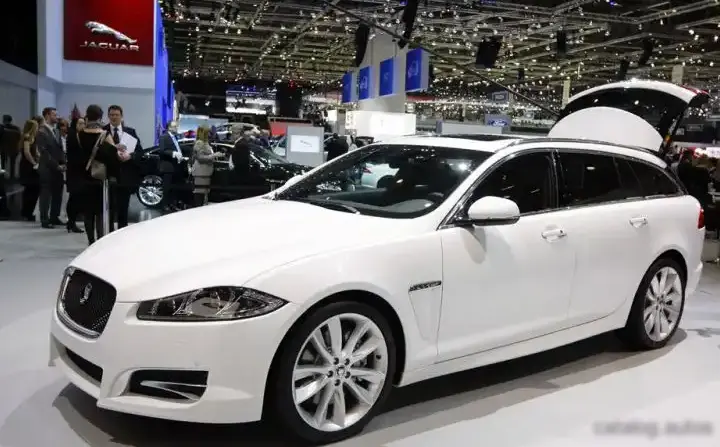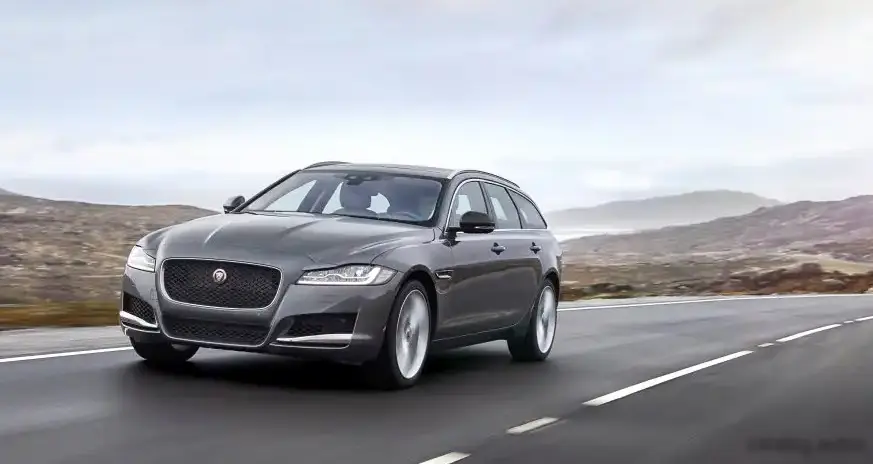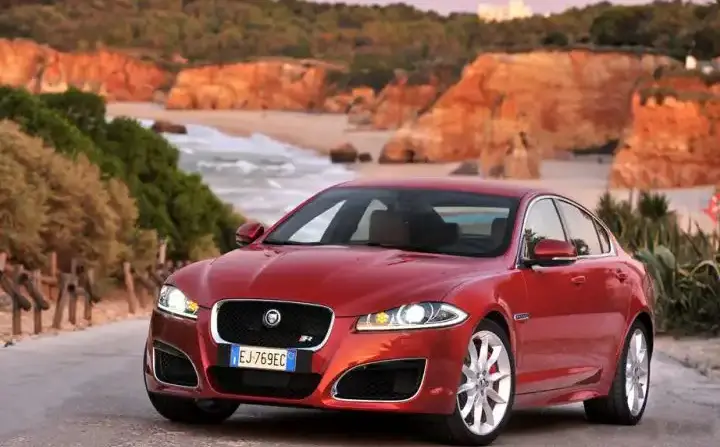
The Jaguar XF (X250) facelift 2.2d Automatic, produced from 2011 to 2012, represented a significant step in Jaguar’s attempt to broaden its appeal and compete more effectively in the executive sedan market. This variant, powered by a 2.2-liter four-cylinder diesel engine producing 190 horsepower, occupied a mid-range position within the XF lineup, offering a balance between performance, fuel efficiency, and luxury. It was positioned below the higher-powered six-cylinder and supercharged models, and above any potential base-level trims. The X250 facelift brought revised styling, improved interior quality, and updated technology to the XF, solidifying its position as a stylish and capable alternative to established German rivals.
Technical Specifications
| Brand | Jaguar |
| Model | XF |
| Generation | XF (X250, facelift 2011) |
| Type (Engine) | 2.2d (190 Hp) Automatic |
| Start of production | 2011 |
| End of production | 2012 |
| Powertrain Architecture | Internal Combustion engine |
| Body type | Sedan |
| Seats | 5 |
| Doors | 4 |
| Fuel consumption (combined) | 5.4 l/100 km |
| Fuel consumption (US mpg) | 43.6 US mpg |
| Fuel consumption (UK mpg) | 52.3 UK mpg |
| Fuel consumption (km/l) | 18.5 km/l |
| CO2 emissions | 149 g/km |
| Fuel Type | Diesel |
| Acceleration 0 – 100 km/h | 8.5 sec |
| Acceleration 0 – 62 mph | 8.5 sec |
| Acceleration 0 – 60 mph | 8.1 sec |
| Maximum speed | 225 km/h (139.81 mph) |
| Emission standard | Euro 5 |
| Power | 190 Hp @ 3500 rpm |
| Power per litre | 87.2 Hp/l |
| Torque | 450 Nm @ 2000 rpm (331.9 lb.-ft. @ 2000 rpm) |
| Engine layout | Front, Longitudinal |
| Engine Model/Code | 224DT |
| Engine displacement | 2179 cm3 (132.97 cu. in.) |
| Number of cylinders | 4 |
| Engine configuration | Inline |
| Compression ratio | 15.8:1 |
| Number of valves per cylinder | 4 |
| Fuel injection system | Diesel Commonrail |
| Engine aspiration | Turbocharger, Intercooler |
| Engine oil capacity | 5.9 l (6.23 US qt | 5.19 UK qt) |
| Coolant capacity | 11.5 l (12.15 US qt | 10.12 UK qt) |
| Trunk (boot) space – minimum | 540 l (19.07 cu. ft.) |
| Trunk (boot) space – maximum | 963 l (34.01 cu. ft.) |
| Fuel tank capacity | 70.1 l (18.52 US gal | 15.42 UK gal) |
| Length | 4961 mm (195.31 in.) |
| Width | 1939 mm (76.34 in.) |
| Width including mirrors | 2077 mm (81.77 in.) |
| Height | 1468 mm (57.8 in.) |
| Wheelbase | 2909 mm (114.53 in.) |
| Front track | 1559 mm (61.38 in.) |
| Rear track | 1605 mm (63.19 in.) |
| Drag coefficient (Cd) | 0.29 |
| Minimum turning circle | 11.5 m (37.73 ft.) |
| Drivetrain | Rear wheel drive |
| Number of gears | 8 |
| Gearbox type | Automatic transmission |
| Front brakes | Ventilated discs |
| Rear brakes | Ventilated discs |
Powertrain & Engine Architecture
The heart of the XF 2.2d was the 224DT engine, a 2.2-liter inline-four cylinder diesel. This engine was part of the PSA-Ford DV6 family, but extensively modified by Jaguar for its application. It featured a cast iron block and aluminum cylinder head, incorporating a single turbocharger with an intercooler to boost power and efficiency. The engine utilized a common rail direct injection system, delivering fuel at extremely high pressures for optimized combustion. The 224DT produced 190 horsepower at 3500 rpm and a substantial 450 Nm (331.9 lb-ft) of torque at just 2000 rpm. This torque output was a key characteristic, providing strong low-end and mid-range acceleration. The engine also featured a particulate filter to reduce emissions, meeting Euro 5 standards. The transmission was a ZF 8HP80 eight-speed automatic, known for its smooth shifting and responsiveness. This transmission was a crucial component in maximizing fuel economy and providing a refined driving experience.
Driving Characteristics
The 2.2d Automatic offered a comfortable and refined driving experience, prioritizing smoothness and efficiency over outright performance. While not as quick as the XF’s six-cylinder variants, the 2.2d still provided respectable acceleration, achieving 0-60 mph in around 8.1 seconds. The eight-speed automatic transmission played a vital role in keeping the engine in its optimal power band. Gear changes were generally seamless, and the transmission was quick to downshift when needed. The rear-wheel-drive configuration contributed to balanced handling, although it wasn’t as sporty as some of its competitors. The emphasis was on effortless cruising and relaxed long-distance driving. Compared to the manual transmission versions of the 2.2d, the automatic offered greater convenience, but at the expense of some driver engagement and potentially slightly lower fuel economy.
Equipment & Trim Levels
The XF 2.2d Automatic typically came well-equipped, reflecting Jaguar’s commitment to luxury. Standard features included leather upholstery, dual-zone climate control, a touchscreen infotainment system, and a comprehensive suite of safety features, including ABS, traction control, and multiple airbags. Optional extras included a premium sound system, heated seats, parking sensors, and a panoramic sunroof. Trim levels varied depending on the market, but generally offered increasing levels of luxury and technology. The XF 2.2d Automatic was often positioned as a step up from the base models, offering a more refined interior and a more comprehensive feature set.
Chassis & Braking
The XF’s chassis was based on Jaguar’s XJ aluminum architecture, providing a rigid and lightweight platform. The suspension consisted of double wishbones at the front and a multi-link setup at the rear. The 2.2d variant typically featured slightly softer spring rates and dampers compared to the higher-powered models, prioritizing ride comfort. Braking was handled by ventilated discs on all four wheels, providing ample stopping power. Anti-lock braking system (ABS) and electronic brakeforce distribution (EBD) were standard features. Stabilizer bars were fitted front and rear to reduce body roll during cornering.
Market Reception & Comparison
The Jaguar XF 2.2d Automatic was generally well-received by critics, who praised its stylish design, comfortable ride, and refined interior. The 2.2-liter diesel engine was considered a good compromise between performance and fuel economy. However, some reviewers noted that it lacked the outright performance of its six-cylinder rivals. Compared to the XF 3.0d, the 2.2d offered significantly better fuel economy, but at the cost of around 40 horsepower and a noticeable difference in acceleration. The 2.2d also offered a more affordable entry point into the XF range, making it a more accessible option for a wider range of buyers. Reliability was generally good, although some owners reported issues with the diesel particulate filter (DPF).
Legacy
The Jaguar XF 2.2d Automatic remains a popular choice in the used car market, offering a blend of luxury, style, and efficiency. The 224DT engine, while not without its potential issues (particularly with the DPF), has proven to be relatively durable when properly maintained. The ZF 8HP80 transmission is renowned for its reliability and smooth operation. Today, these XFs represent a relatively affordable way to experience Jaguar ownership, offering a comfortable and refined driving experience. However, potential buyers should be aware of the potential for DPF-related problems and ensure that the vehicle has been regularly serviced.