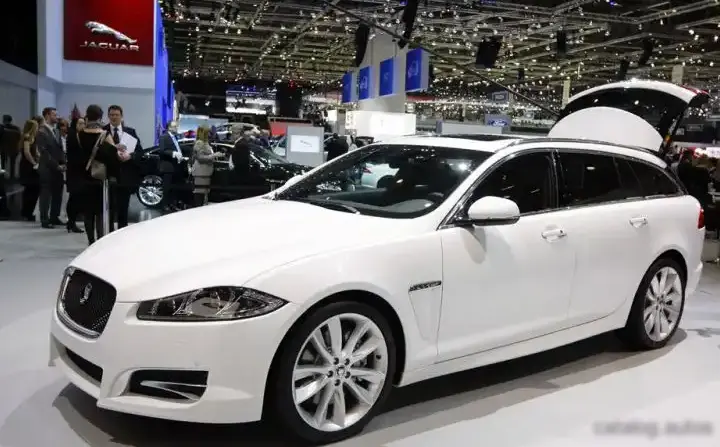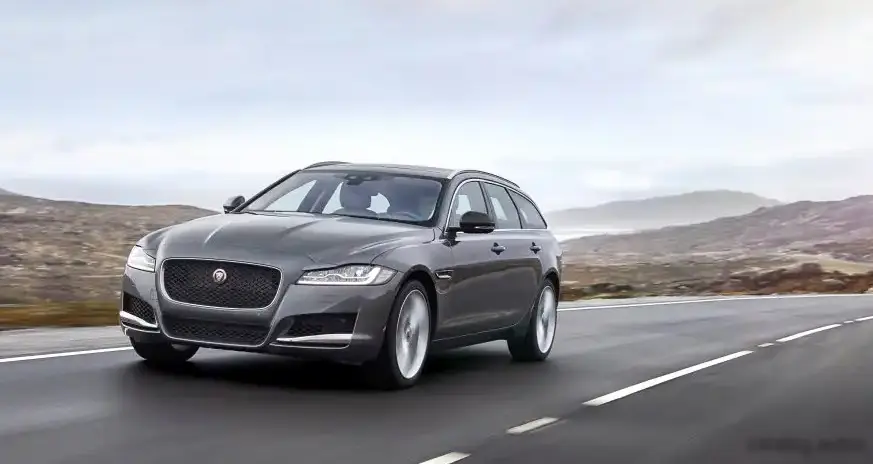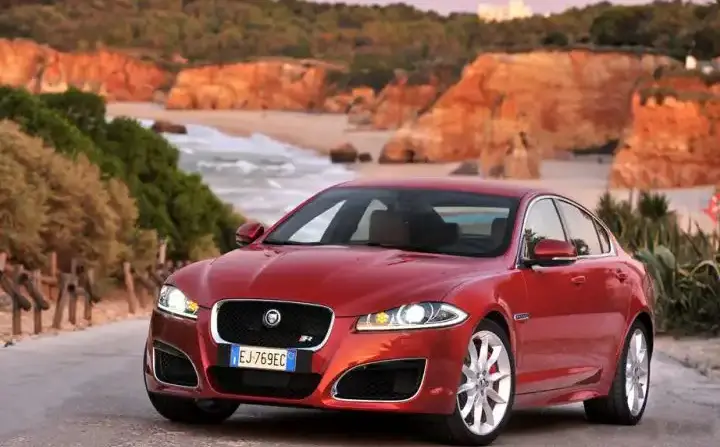
The Jaguar XF (X250) facelift, produced from 2011 to 2015, represented a significant evolution of Jaguar’s mid-size luxury sedan. Introduced as a replacement for the X-Type and S-Type, the XF aimed to blend sporting dynamics with sophisticated luxury. The 3.0 V6 Supercharged AWD Automatic variant, introduced in 2012, occupied the upper echelon of the XF lineup, offering a substantial performance upgrade over the naturally aspirated engines while providing the all-weather confidence of all-wheel drive. This model year saw a refresh of the XF, with revised styling cues and updated technology.
Technical Specifications
| Brand | Jaguar |
| Model | XF |
| Generation | XF (X250, facelift 2011) |
| Type (Engine) | 3.0 V6 (340 Hp) AWD Automatic |
| Start of production | 2012 |
| End of production | 2015 |
| Powertrain Architecture | Internal Combustion engine |
| Body type | Sedan |
| Seats | 5 |
| Doors | 4 |
| Fuel consumption (urban) | 14.2 l/100 km (16.6 US mpg, 19.9 UK mpg, 7 km/l) |
| Fuel consumption (extra urban) | 7.2 l/100 km (32.7 US mpg, 39.2 UK mpg, 13.9 km/l) |
| Fuel consumption (combined) | 9.8 l/100 km (24 US mpg, 28.8 UK mpg, 10.2 km/l) |
| CO2 emissions | 229 g/km |
| Fuel Type | Petrol (Gasoline) |
| Acceleration 0 – 100 km/h | 6.4 sec |
| Acceleration 0 – 62 mph | 6.4 sec |
| Acceleration 0 – 60 mph | 6.1 sec |
| Maximum speed | 250 km/h (155.34 mph) |
| Weight-to-power ratio | 5.5 kg/Hp, 180.9 Hp/tonne |
| Weight-to-torque ratio | 4.2 kg/Nm, 239.4 Nm/tonne |
| Power | 340 Hp @ 6500 rpm |
| Power per litre | 113.5 Hp/l |
| Torque | 450 Nm @ 3500-5000 rpm (331.9 lb.-ft. @ 3500-5000 rpm) |
| Engine layout | Front, Longitudinal |
| Engine Model/Code | 306PS |
| Engine displacement | 2995 cm3 (182.77 cu. in.) |
| Number of cylinders | 6 |
| Engine configuration | V-engine |
| Fuel injection system | Direct injection |
| Engine aspiration | Supercharger, Intercooler |
| Engine oil capacity | 7.25 l (7.66 US qt | 6.38 UK qt) |
| Coolant capacity | 13.5 l (14.27 US qt | 11.88 UK qt) |
| Kerb Weight | 1880 kg (4144.69 lbs.) |
| Max. weight | 2415 kg (5324.16 lbs.) |
| Max load | 535 kg (1179.47 lbs.) |
| Trunk (boot) space – minimum | 540 l (19.07 cu. ft.) |
| Trunk (boot) space – maximum | 963 l (34.01 cu. ft.) |
| Fuel tank capacity | 70.1 l (18.52 US gal | 15.42 UK gal) |
| Length | 4961 mm (195.31 in.) |
| Width | 1939 mm (76.34 in.) |
| Width including mirrors | 2077 mm (81.77 in.) |
| Height | 1468 mm (57.8 in.) |
| Wheelbase | 2909 mm (114.53 in.) |
| Front track | 1559 mm (61.38 in.) |
| Rear (Back) track | 1605 mm (63.19 in.) |
| Minimum turning circle | 11.5 m (37.73 ft.) |
| Drive wheel | All wheel drive (4×4) |
| Number of gears | 8 |
| Gearbox type | Automatic transmission |
| Front brakes | Ventilated discs |
| Rear brakes | Ventilated discs |
| Wheel rims size | 7.5J x 17; 8.5J x 18; 8.5J x 19; 8.5J x 20 |
Powertrain & Engine Architecture
At the heart of the XF 3.0 V6 AWD resided Jaguar’s AJ306 engine, a 3.0-liter supercharged V6. This engine, part of the AJ-V6 family, utilized a sixth-generation Eaton supercharger, providing near-instantaneous boost and a broad torque curve. Direct fuel injection, combined with variable valve timing (VVT) on both intake and exhaust valves, optimized efficiency and performance. The engine code 306PS indicates the metric horsepower rating. The supercharger, mounted centrally in the V, contributed to the engine’s compact dimensions and balanced weight distribution. The engine was longitudinally mounted, driving all four wheels through a ZF 8HP80 eight-speed automatic transmission. This transmission was renowned for its smooth shifts and responsiveness, offering both automatic and manual shift modes via steering wheel-mounted paddles.
Driving Characteristics
The combination of the supercharged V6 and the eight-speed automatic resulted in a compelling driving experience. Acceleration from 0-60 mph was achieved in approximately 6.1 seconds, and the car felt significantly faster in real-world driving thanks to the readily available torque. The all-wheel-drive system provided excellent traction, particularly in inclement weather. Compared to the naturally aspirated 4.2-liter V8 models, the 3.0 V6 offered a more accessible powerband and felt less demanding to drive. While not as sonorous as the V8, the supercharged V6 still delivered a satisfying exhaust note. The eight-speed transmission’s close ratios kept the engine in its optimal power range, contributing to responsive acceleration. The gear ratios were tuned for a balance of performance and fuel efficiency.
Equipment & Trim Levels
The 3.0 V6 AWD Automatic typically came well-equipped, positioning it as a mid-to-high-range trim level within the XF lineup. Standard features included leather upholstery, power-adjustable front seats with memory function, a touchscreen infotainment system with navigation, a premium sound system, and automatic climate control. Optional extras included adaptive cruise control, blind-spot monitoring, a panoramic sunroof, and upgraded interior trim materials. The XF offered a range of interior color schemes and wood or metal trim options, allowing buyers to personalize their vehicles.
Chassis & Braking
The XF’s chassis featured a sophisticated independent suspension system, with double wishbones at the front and a multi-link setup at the rear. The AWD system added weight, but the suspension was tuned to maintain a comfortable ride quality while providing responsive handling. The 3.0 V6 models were equipped with ventilated disc brakes on all four wheels, providing ample stopping power. Anti-lock braking system (ABS) and electronic stability control (ESC) were standard safety features. Wheel sizes ranged from 17 to 20 inches, depending on the trim level and options selected.
Market Reception & Comparison
The Jaguar XF 3.0 V6 AWD Automatic was generally well-received by automotive critics. It was praised for its blend of performance, luxury, and technology. Fuel economy, while not exceptional, was reasonable for a vehicle of its size and performance. Compared to its rivals, such as the BMW 5 Series and Mercedes-Benz E-Class, the XF offered a distinctive British character and a more engaging driving experience. Reliability was generally good, although some owners reported minor electrical issues. The 3.0 V6 offered a compelling alternative to the more expensive V8 models, providing a significant performance upgrade over the base 2.0-liter engine.
Legacy
The Jaguar XF (X250) 3.0 V6 AWD Automatic has proven to be a relatively reliable and desirable used car. The AJ306 engine, when properly maintained, is known for its durability. The ZF 8HP80 transmission is also highly regarded for its robustness. These vehicles represent a sweet spot in the XF lineup, offering a good balance of performance, luxury, and value. As with any used luxury car, prospective buyers should carefully inspect the vehicle’s maintenance history and address any potential issues before purchasing. The XF’s distinctive styling and engaging driving dynamics continue to appeal to enthusiasts today.