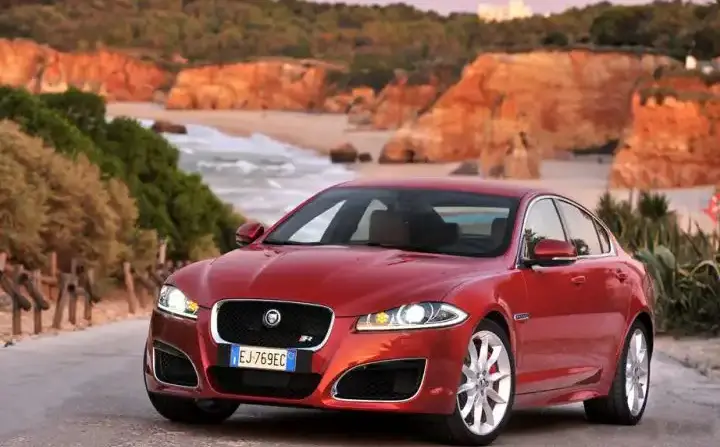
The Jaguar XF (X250) facelift, introduced in 2011 and continuing through 2015, represented a significant refresh of Jaguar’s mid-size luxury sedan. Among the engine options available, the 3.0d V6 with 240 horsepower paired with an eight-speed automatic transmission was a popular choice, particularly in European and Asian markets. This variant aimed to balance performance, refinement, and fuel efficiency within the XF lineup, offering a compelling alternative to its petrol-powered siblings and the more economy-focused four-cylinder diesels.
Technical Specifications
| Brand | Jaguar |
| Model | XF |
| Generation | XF (X250, facelift 2011) |
| Type (Engine) | 3.0d V6 (240 Hp) Automatic |
| Start of production | 2011 |
| End of production | 2015 |
| Powertrain Architecture | Internal Combustion engine |
| Body type | Sedan |
| Seats | 5 |
| Doors | 4 |
| Fuel consumption (urban) | 7.5 l/100 km (31.4 US mpg) |
| Fuel consumption (extra urban) | 5 l/100 km (47 US mpg) |
| Fuel consumption (combined) | 6 l/100 km (39.2 US mpg) |
| CO2 emissions | 159 g/km |
| Fuel Type | Diesel |
| Acceleration 0 – 100 km/h | 7.1 sec |
| Acceleration 0 – 62 mph | 7.1 sec |
| Acceleration 0 – 60 mph | 6.7 sec |
| Maximum speed | 240 km/h (149.13 mph) |
| Weight-to-power ratio | 7.4 kg/Hp |
| Weight-to-torque ratio | 3.5 kg/Nm |
| Power | 240 Hp @ 4000 rpm |
| Torque | 500 Nm @ 2000 rpm (368.78 lb.-ft. @ 2000 rpm) |
| Engine layout | Front, Longitudinal |
| Engine Model/Code | 306DT |
| Engine displacement | 2993 cm3 (182.64 cu. in.) |
| Number of cylinders | 6 |
| Engine configuration | V-engine |
| Fuel injection system | Diesel Commonrail |
| Engine aspiration | Turbocharger, Intercooler |
| Engine oil capacity | 6.6 l (6.97 US qt | 5.81 UK qt) |
| Coolant capacity | 12.53 l (13.24 US qt | 11.02 UK qt) |
| Kerb Weight | 1770 kg (3902.18 lbs.) |
| Max. weight | 2360 kg (5202.91 lbs.) |
| Max load | 590 kg (1300.73 lbs.) |
| Trunk (boot) space – minimum | 540 l (19.07 cu. ft.) |
| Trunk (boot) space – maximum | 963 l (34.01 cu. ft.) |
| Fuel tank capacity | 70.1 l (18.52 US gal | 15.42 UK gal) |
| Length | 4961 mm (195.31 in.) |
| Width | 1939 mm (76.34 in.) |
| Width including mirrors | 2077 mm (81.77 in.) |
| Height | 1468 mm (57.8 in.) |
| Wheelbase | 2909 mm (114.53 in.) |
| Front track | 1559 mm (61.38 in.) |
| Rear track | 1605 mm (63.19 in.) |
| Minimum turning circle | 11.5 m (37.73 ft.) |
| Drivetrain Architecture | Rear wheel drive |
| Number of gears | 8 |
| Gearbox type | Automatic transmission |
| Front brakes | Ventilated discs |
| Rear brakes | Ventilated discs |
| Assisting systems | ABS (Anti-lock braking system) |
| Steering type | Steering rack and pinion |
INTRODUCTION
The 2011-2015 Jaguar XF 3.0d V6 Automatic was a key component of the X250 model’s appeal, particularly in markets where diesel engines were favored. Positioned as a mid-range offering, it slotted between the more affordable 2.2d models and the performance-oriented 5.0-liter supercharged V8 variants. The facelift brought revised styling, an updated interior, and improvements to the XF’s infotainment system, enhancing its overall competitiveness in the luxury sedan segment. Built on the Jaguar XF (X250) platform, this variant aimed to deliver a refined driving experience with a balance of power and efficiency.
Powertrain & Engine Architecture
At the heart of the XF 3.0d was Jaguar’s 306DT engine, a 3.0-liter V6 diesel. This engine utilized a common rail direct injection system, delivering fuel at extremely high pressure for optimized combustion. The engine featured a single turbocharger with an intercooler, boosting power and torque. The 306DT engine was known for its relatively smooth operation and responsiveness. The eight-speed automatic transmission, sourced from ZF, was a crucial element of this powertrain. This transmission offered smooth and quick shifts, contributing to both performance and fuel economy. It featured a wide range of gear ratios, allowing the engine to operate efficiently at various speeds. The transmission also included a ‘Sport’ mode for more aggressive shifting and a manual shift option for driver control.
Driving Characteristics
The 240 horsepower and 500 Nm (368 lb-ft) of torque provided by the 3.0d V6 delivered brisk acceleration. The 0-60 mph sprint took approximately 6.7 seconds, making it a capable performer for everyday driving and highway overtaking. While not as overtly sporty as the supercharged V8 models, the 3.0d offered ample power for most drivers. The eight-speed automatic transmission played a significant role in the driving experience, providing seamless gear changes and contributing to a relaxed cruising experience. Compared to the 2.2d models, the 3.0d offered noticeably more power and a more refined feel. However, it wasn’t quite as engaging as the manual transmission options available with other engines in the XF lineup. The rear-wheel-drive configuration provided a balanced handling characteristic, typical of Jaguar sedans.
Equipment & Trim Levels
The XF 3.0d V6 Automatic typically came well-equipped, reflecting its position as a mid-range offering. Standard features included leather upholstery, dual-zone climate control, a touchscreen infotainment system, and parking sensors. Higher trim levels, such as the Portfolio and Premium, added features like heated and ventilated seats, a panoramic sunroof, upgraded audio systems, and adaptive cruise control. Optional extras included a rear seat entertainment system, premium leather options, and various cosmetic enhancements. The interior design was characterized by Jaguar’s signature blend of luxury and sportiness, with a focus on high-quality materials and craftsmanship.
Chassis & Braking
The XF’s chassis featured a sophisticated suspension system designed to provide a comfortable ride and responsive handling. The front suspension utilized double wishbones, while the rear suspension employed a multi-link setup. The 3.0d variant typically came with ventilated disc brakes on all four wheels, providing ample stopping power. Anti-lock braking system (ABS) and electronic stability control (ESC) were standard safety features. The suspension tuning was geared towards comfort, but still offered a reasonable level of control in corners. Stabilizer bars were fitted front and rear to reduce body roll.
Market Reception & Comparison
The Jaguar XF 3.0d V6 Automatic was generally well-received by automotive critics. It was praised for its refined engine, smooth transmission, and comfortable ride. Fuel economy was also a strong point, making it an attractive option for drivers who wanted a luxury sedan without the high running costs of a petrol engine. Compared to the 2.2d models, the 3.0d offered a significant improvement in performance and refinement. However, it was more expensive to purchase and maintain. Against its rivals, such as the BMW 5 Series and Mercedes-Benz E-Class, the XF 3.0d offered a distinctive British character and a compelling combination of luxury, performance, and efficiency.
Legacy
The 306DT engine, while generally reliable, can require attention to the diesel particulate filter (DPF) and the fuel injectors with higher mileage. The ZF eight-speed automatic transmission is known for its durability, but regular fluid changes are essential for long-term reliability. Today, the XF 3.0d V6 Automatic represents a good value proposition in the used car market. It offers a luxurious and refined driving experience at a relatively affordable price. However, potential buyers should be aware of the potential maintenance costs associated with a diesel engine and ensure that the vehicle has been properly maintained.