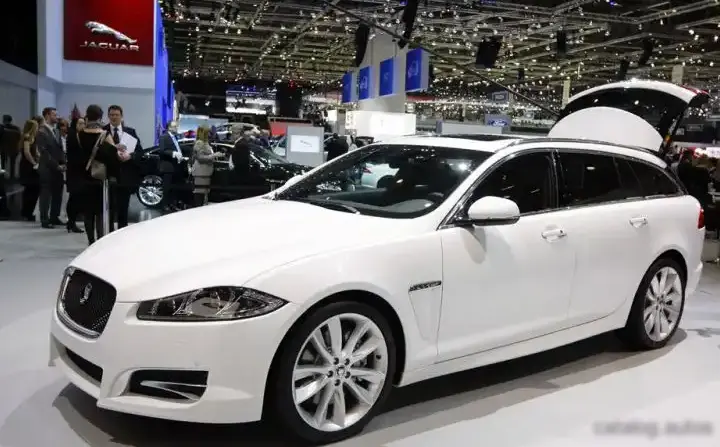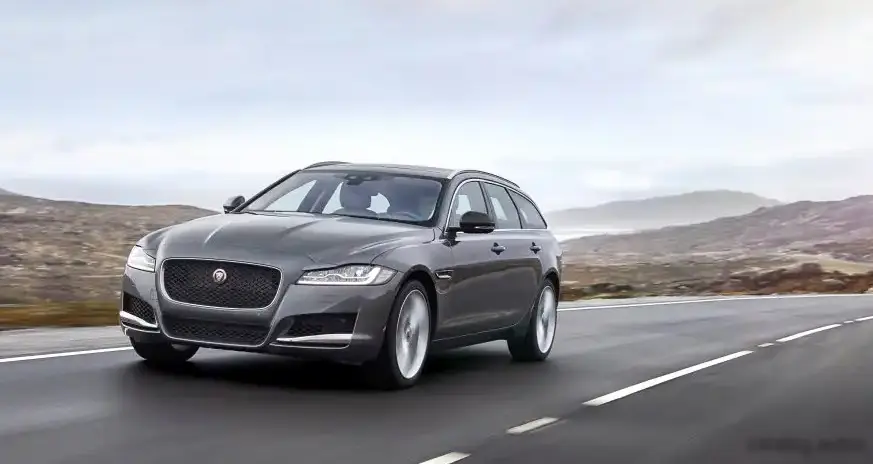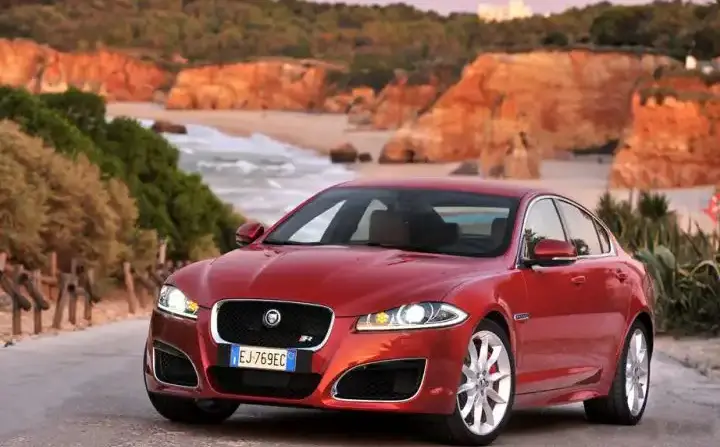
The Jaguar XF (X250) facelift, produced from 2011 to 2012, represented a significant mid-cycle refresh of Jaguar’s mid-size luxury sedan. Among the engine options available, the 5.0-liter V8 producing 385 horsepower paired with a six-speed automatic transmission was positioned as the performance-oriented variant, sitting atop the XF range. This model aimed to deliver a blend of British luxury, exhilarating performance, and sophisticated technology, competing with established German rivals like the BMW 5 Series and Mercedes-Benz E-Class. The facelift brought revised styling, improved interior materials, and updated technology, enhancing the XF’s appeal in a competitive segment.
Technical Specifications
| Brand | Jaguar |
| Model | XF |
| Generation | XF (X250, facelift 2011) |
| Type (Engine) | 5.0 V8 (385 Hp) Automatic |
| Start of production | 2011 |
| End of production | 2012 |
| Powertrain Architecture | Internal Combustion engine |
| Body type | Sedan |
| Seats | 5 |
| Doors | 4 |
| Fuel consumption (economy) – urban (NEDC) | 17.3 l/100 km (13.6 US mpg, 16.3 UK mpg, 5.8 km/l) |
| Fuel consumption (economy) – extra urban (NEDC) | 7.8 l/100 km (30.2 US mpg, 36.2 UK mpg, 12.8 km/l) |
| Fuel consumption (economy) – combined (NEDC) | 11.1 l/100 km (21.2 US mpg, 25.4 UK mpg, 9 km/l) |
| CO2 emissions (NEDC) | 264 g/km |
| Fuel Type | Petrol (Gasoline) |
| Acceleration 0 – 100 km/h | 5.7 sec |
| Acceleration 0 – 62 mph | 5.7 sec |
| Acceleration 0 – 60 mph | 5.5 sec |
| Maximum speed | 250 km/h (155.34 mph), Electronically limited |
| Emission standard | Euro 5 |
| Weight-to-power ratio | 4.6 kg/Hp, 216.3 Hp/tonne |
| Weight-to-torque ratio | 3.5 kg/Nm, 289.3 Nm/tonne |
| Power | 385 Hp @ 6500 rpm |
| Power per litre | 77 Hp/l |
| Torque | 515 Nm @ 3500 rpm (379.84 lb.-ft. @ 3500 rpm) |
| Engine layout | Front, Longitudinal |
| Engine Model/Code | AJ133, 508PN |
| Engine displacement | 5000 cm3 (305.12 cu. in.) |
| Number of cylinders | 8 |
| Engine configuration | V-engine |
| Cylinder Bore | 92.5 mm (3.64 in.) |
| Piston Stroke | 93 mm (3.66 in.) |
| Compression ratio | 11.5:1 |
| Number of valves per cylinder | 4 |
| Fuel injection system | Direct injection |
| Engine aspiration | Naturally aspirated engine |
| Valvetrain | DOHC |
| Engine oil capacity | 7.25 l (7.66 US qt, 6.38 UK qt) |
| Coolant | 12.5 l (13.21 US qt, 11 UK qt) |
| Kerb Weight | 1780 kg (3924.23 lbs.) |
| Max. weight | 2300 kg (5070.63 lbs.) |
| Max load | 520 kg (1146.4 lbs.) |
| Trunk (boot) space – minimum | 540 l (19.07 cu. ft.) |
| Trunk (boot) space – maximum | 963 l (34.01 cu. ft.) |
| Fuel tank capacity | 69.5 l (18.36 US gal, 15.29 UK gal) |
| Permitted trailer load with brakes (12%) | 1850 kg (4078.55 lbs.) |
| Permitted trailer load without brakes | 750 kg (1653.47 lbs.) |
| Permitted towbar download | 75 kg (165.35 lbs.) |
| Length | 4961 mm (195.31 in.) |
| Width | 1877 mm (73.9 in.) |
| Width including mirrors | 2053 mm (80.83 in.) |
| Height | 1460 mm (57.48 in.) |
| Wheelbase | 2909 mm (114.53 in.) |
| Front track | 1559 mm (61.38 in.) |
| Rear (Back) track | 1605 mm (63.19 in.) |
| Minimum turning circle (turning diameter) | 11.48 m (37.66 ft.) |
| Drivetrain Architecture | The Internal combustion engine (ICE) drives the rear wheels of the vehicle. |
| Drive wheel | Rear wheel drive |
| Number of gears and type of gearbox | 6 gears, automatic transmission |
| Front suspension | Coil spring, Double wishbone, Transverse stabilizer |
| Rear suspension | Independent multi-link spring suspension with stabilizer |
| Front brakes | Ventilated discs |
| Rear brakes | Ventilated discs |
| Assisting systems | ABS (Anti-lock braking system) |
| Steering type | Steering rack and pinion |
| Power steering | Hydraulic Steering |
| Tires size | 245/45 R18; 245/40 R19; 255/35 R20 |
| Wheel rims size | 8.5J x 18; 8.5J x 19; 8.5J x 20 |
Powertrain & Engine Architecture
The heart of this XF variant is Jaguar’s AJ133 5.0-liter naturally aspirated V8 engine, designated 508PN. This engine is a significant departure from earlier Jaguar V8s, featuring a lightweight aluminum block and cylinder heads. It utilizes direct fuel injection, a variable valve timing system, and a four-valve-per-cylinder configuration to maximize power and efficiency. The engine produces 385 horsepower at 6,500 rpm and 515 Nm (379.84 lb-ft) of torque at 3,500 rpm. The six-speed automatic transmission, sourced from ZF, was specifically calibrated to handle the V8’s substantial output. This transmission features a torque converter and offers a manual shift mode for more driver control. The transmission’s gear ratios are tuned for a balance of acceleration and cruising efficiency.
Driving Characteristics
The 5.0-liter V8 with the automatic transmission delivers a distinctly different driving experience compared to the XF’s four-cylinder or diesel options. Acceleration is brisk, with 0-60 mph achieved in around 5.5 seconds. The automatic transmission provides smooth and relatively quick shifts, although it isn’t as responsive as some dual-clutch transmissions found in competitors. The engine’s torque is readily available across a wide rev range, providing strong in-gear acceleration. While the automatic transmission offers a manual mode, it doesn’t provide the same level of engagement as a traditional manual gearbox. The rear-wheel-drive configuration contributes to a balanced chassis, offering good handling characteristics, though it can be prone to oversteer if pushed to its limits.
Equipment & Trim Levels
The 5.0 V8 Automatic XF typically came with a high level of standard equipment. This included leather upholstery, wood veneer trim, a premium audio system, automatic climate control, and parking sensors. Optional extras included a panoramic sunroof, upgraded leather options, adaptive cruise control, and a rear-seat entertainment system. The XF’s interior was known for its “rising rotary selector” for the transmission, a unique design element. Trim levels varied slightly by market, but generally, the 5.0 V8 represented the highest level of luxury and performance available in the XF range.
Chassis & Braking
The XF’s chassis features a double wishbone front suspension and an independent multi-link rear suspension, providing a comfortable ride and good handling. Stabilizer bars are fitted to both axles to reduce body roll. Braking duties are handled by ventilated discs on all four wheels, coupled with an anti-lock braking system (ABS). The braking system provides ample stopping power, although the pedal feel can be somewhat soft. The XF’s steering is hydraulically assisted, offering a good balance of weight and precision.
Market Reception & Comparison
Critics generally praised the 5.0-liter V8 XF for its performance, luxurious interior, and distinctive styling. However, the fuel economy was often cited as a drawback, particularly compared to the more efficient four-cylinder and diesel options. The XF’s infotainment system, while visually appealing, was sometimes criticized for its complexity and slow response times. Compared to its German rivals, the XF offered a more characterful driving experience and a more distinctive interior design, but it often lagged behind in terms of technology and overall refinement.
Legacy
The 5.0-liter V8 engine in the XF (X250) has proven to be a relatively reliable powertrain, although regular maintenance is essential. Common issues include oil leaks and occasional problems with the timing chain tensioners. The six-speed ZF automatic transmission is also generally reliable, but it may require servicing at higher mileages. Today, the 5.0 V8 XF is sought after by enthusiasts who appreciate its performance and character. Values for well-maintained examples have remained relatively stable, making it an attractive option for those looking for a luxurious and engaging British sedan.